

Nissan Frontier Coolant Temperature Sensor Guide (1998-2013)
Learn about the symptoms of a bad coolant temperature sensor and how to choose the right replacement for your truck.
- A bad coolant temp sensor will almost always trigger a Check Engine Light with codes like P0117 or P0118.
- Symptoms include poor fuel economy, rough idle, black smoke, and potential overheating.
- Replacement is a simple DIY job, but access can be tight on V6 models.
- Using a quality aftermarket brand like NTK or Standard is recommended over generic parts to ensure accuracy.
Is Your Frontier's Coolant Temp Sensor Failing?

A bad Engine Coolant Temperature (ECT) sensor can cause a surprising number of problems. Because the sensor's reading affects so many engine functions, a false signal can make your truck run poorly. If the sensor incorrectly tells the computer the engine is cold, it will run too rich, leading to poor fuel economy and even black smoke from the exhaust. Conversely, if it sends a constant 'hot' signal or fails completely, your cooling fans might not turn on when needed, creating a risk of overheating.
Choosing the Right Aftermarket Sensor

When it comes to sensors for Nissan vehicles, many owners and mechanics report that the trucks can be sensitive to aftermarket electronic parts. While OEM is often recommended for critical sensors, quality aftermarket brands can be a reliable and cost-effective alternative. Brands like NTK (made by NGK), Standard Motor Products, and Beck/Arnley are generally well-regarded and produce sensors that meet or exceed original specifications. Cheaper, unbranded sensors found on sites like eBay or Amazon carry a higher risk of being poorly calibrated right out of the box. An inaccurate sensor can cause persistent running issues, even if it's brand new. For a part this critical to engine management, investing in a reputable brand is a smart choice.
| Part | Price Range |
|---|---|
| New Aftermarket Coolant Temperature Sensor | $20.36 |
Known Issues, Recalls, and Bulletins

Searches for recalls and Technical Service Bulletins (TSBs) related specifically to the coolant temperature sensor on the 1998-2013 Nissan Frontier did not reveal any widespread, specific campaigns. However, there was a significant issue for 2005-2010 models known as "SMOD" (Strawberry Milkshake of Death), where a breach in the radiator assembly allowed coolant to mix with transmission fluid, causing transmission failure. While not a direct failure of the ECT sensor, it is a critical cooling system issue owners of those model years should be aware of. No other relevant recalls for the specified time frame were found.
Frequently Asked Questions
Where is the coolant temperature sensor located on the Nissan Frontier?
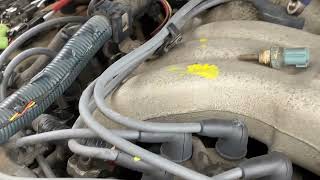
The location varies by engine and year. For first-generation (D22, 1998-2004) models, the sensor for the 3.3L V6 (VG33E) is on the front of the engine, while the 2.4L 4-cylinder (KA24DE) sensor is on the side of the engine block. For second-generation (D40, 2005-2013) models with the 4.0L V6 (VQ40DE), the sensor is often found in a coolant pipe at the rear of the engine, near the firewall, which can be tight to access.
What's the difference between the ECT sensor and the temperature sender?
On many earlier models, there are two separate components. The Engine Coolant Temperature (ECT) sensor has two or more wires and sends data to the engine computer (ECU). The temperature sender (or thermal transmitter) typically has only one wire and its sole job is to operate the temperature gauge on your dashboard. A failure in one does not necessarily affect the other.
Is it better to use an OEM or aftermarket sensor?
Many Nissan specialists recommend using OEM sensors for critical electronics to avoid compatibility or accuracy issues. However, premium aftermarket brands like NTK, Standard, or Beck/Arnley are often reliable alternatives that perform to OE specifications. It is generally advised to avoid no-name, budget sensors, as their calibration can be inaccurate and lead to further issues.
Can I replace the coolant temperature sensor myself?
Yes, for most home mechanics with basic tools, this is a straightforward job. The main challenges are accessing the sensor, which can be in a tight spot especially on V6 models, and minimizing coolant loss. The job typically takes less than an hour.
Helpful Videos

Technical Specifications
OEM Part Numbers: 22630-7Y000 22630-0M200 22630-44B20 25080-89907 22630-ZJ70A
The sensor is a thermistor, meaning its electrical resistance changes with temperature. The ECU reads this change in resistance to determine coolant temperature. Most sensors for this application use a brass housing and include a new O-ring or require thread sealant for installation.

The information in this article is provided for general reference and educational purposes only. Vehicle specifications, procedures, and part compatibility can vary by production date, trim level, and region. Always consult your vehicle's factory service manual and verify part numbers before purchasing or performing repairs. Safety-critical components such as airbags, seat belts, and braking systems should be installed by a qualified professional.
- Nissan Frontier: