

A Guide to the Knock Sensor for the 1998-2007 Honda Accord
Experiencing poor acceleration or a check engine light in your Accord? A faulty knock sensor could be the problem.
- A faulty knock sensor will almost always trigger a P0325 check engine light code.
- Symptoms include poor acceleration, reduced fuel economy, and audible engine pinging.
- The sensor is located in a hard-to-reach spot on the back of the engine; replacement can be difficult for a DIYer.
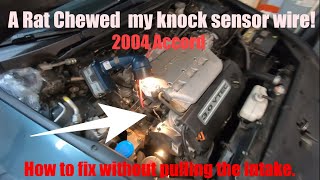
- Always check the wiring for damage before replacing the sensor, as rodents are known to chew the wires.
Symptoms of a Bad Knock Sensor in a 1998-2007 Accord

When a knock sensor fails, your Accord's computer can no longer make the necessary adjustments to prevent engine knock. While you might not always feel a difference in how the car drives, there are several key symptoms to watch for. Ignoring these signs for too long can potentially lead to more severe engine problems.
Common Failure Signs
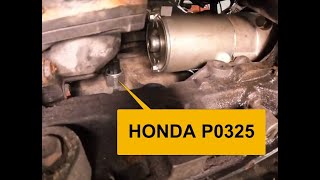
- Check Engine Light: This is the most common sign. The system will store a diagnostic trouble code, most often P0325, indicating a fault in the knock sensor circuit. 🎬 Watch this step-by-step guide to diagnosing and fixing the P0325 code.
- Reduced Engine Power: Your Accord may feel sluggish, hesitate during acceleration, or have a general lack of power. This can happen because the ECU may put the engine into a safer, less powerful "limp mode."
- Worse Fuel Economy: With the engine not running at its most efficient timing, you may notice a decrease in your gas mileage.
- Audible Engine Pinging: You might hear a metallic pinging or knocking sound, especially when the engine is under load, like going up a hill or accelerating hard.
Choosing an Aftermarket Replacement Sensor

When replacing the knock sensor on your Accord, you have the choice between an original equipment manufacturer (OEM) part from Honda and various aftermarket options. For many electronic sensors on Honda vehicles, enthusiasts and mechanics often recommend sticking with OEM or specific OEM-supplier brands like NTK or Denso to ensure compatibility and long-term reliability. Cheap, unbranded aftermarket sensors have been known to fail quickly or not work correctly with the Honda ECU, sometimes causing the check engine light to return.
However, a quality aftermarket part can be a cost-effective solution that performs as expected. The key is to choose a reputable brand. Since the provided inventory is for a "Replacement" brand part, it falls into the budget-friendly category. It can resolve the P0325 code and restore performance, but be aware that many experienced Honda owners prefer the proven reliability of an OEM sensor for critical engine components.
Known Issues and Problems

For the 1998-2007 Honda Accord, the most common issue is the P0325 trouble code. This code specifically points to a malfunction in the knock sensor circuit. While this often means the sensor itself has failed due to age and heat exposure, the problem can also be in the wiring. Rodents have been known to chew on the knock sensor wire, which is located in a warm, sheltered spot on the engine block, causing an open or short circuit. Before replacing the sensor, it's always a good idea to visually inspect the wiring harness for any signs of damage.
No recalls or Technical Service Bulletins (TSBs) from the National Highway Traffic Safety Administration (NHTSA) were found specifically for the knock sensor on 1998-2007 Honda Accords.
🎬 Check out other critical Honda Accord recalls you should fix immediately.| Part/Service | Estimated Cost |
|---|---|
| New OEM Honda Part | $100 - $184 |
| New Aftermarket Part | $34.71 |
| Shop Labor | $130 - $191 |
| Total Professional Replacement | $230 - $375 |
Installation Pro-Tip
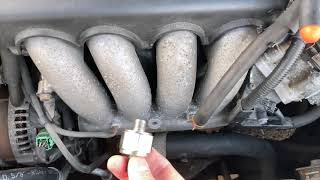
The knock sensor is located on the back of the engine block, underneath the intake manifold, making it difficult to reach. On V6 models, some mechanics remove the power steering pump to gain access instead of the entire intake manifold. 🎬 See how to replace the sensor without removing the intake manifold. When installing the new sensor, it is critical to tighten it to the correct torque specification (typically around 23 ft-lbs). Over-tightening the sensor can damage it or cause it to be overly sensitive, while under-tightening can prevent it from detecting knock correctly. Do not use any thread sealant on the new sensor.
Frequently Asked Questions

Where is the knock sensor located on a 1998-2007 Honda Accord?
The knock sensor is screwed into the back of the engine block, below the intake manifold. Its location is similar for both 4-cylinder and V6 engines, but access can be more challenging on the V6.
What does the code P0325 mean on my Honda Accord?
P0325 is a generic diagnostic trouble code that means "Knock Sensor 1 Circuit Malfunction (Bank 1 or Single Sensor)." This indicates that the engine's computer is not receiving the correct signal from the knock sensor, which could be due to a failed sensor, damaged wiring, or a poor electrical connection.
Can I drive my Accord with a bad knock sensor?
Yes, you can usually drive with a bad knock sensor, but it is not recommended for an extended period. You may experience symptoms like reduced power and poor fuel economy. Driving for a long time without a functioning knock sensor could risk engine damage if a real engine knock condition occurs and is not corrected by the ECU.
Is an OEM Honda knock sensor better than an aftermarket one?
Many Honda specialists prefer OEM sensors for their proven reliability and compatibility with the vehicle's computer system. While a quality aftermarket sensor can work perfectly well and save money, some cheaper options are known to fail prematurely or cause persistent check engine light issues. If you choose aftermarket, select a brand with a good reputation.
Helpful Videos


Technical Specifications
OEM Part Numbers: 30530-PNA-003 30530-PPL-A01
The knock sensor for the 1998-2007 Honda Accord is a single-wire piezoelectric sensor that mounts directly to the engine block. It requires a 24mm or 27mm deep socket for removal and installation. The correct installation torque is critical for proper function, typically specified around 23 ft-lbs (31 Nm).

The information in this article is provided for general reference and educational purposes only. Vehicle specifications, procedures, and part compatibility can vary by production date, trim level, and region. Always consult your vehicle's factory service manual and verify part numbers before purchasing or performing repairs. Safety-critical components such as airbags, seat belts, and braking systems should be installed by a qualified professional.
- Honda Accord: