

Guide to the 1998-2006 Toyota Sienna Coolant Temperature Sensor
Is your first-generation Sienna running rough, getting bad gas mileage, or overheating? Your coolant sensor could be the problem.
- A failing coolant sensor on your Sienna can cause a Check Engine Light (P0115, P0117, P0118), poor gas mileage, and potentially critical overheating.
- Replacement is a simple DIY job for most owners, requiring less than an hour and a 19mm deep socket.
- While aftermarket sensors are affordable, many Toyota owners recommend using an OEM (Denso) sensor for best accuracy and longevity.
- Do not drive if the engine is overheating, as this can lead to severe engine damage.
Symptoms of a Failing Coolant Temperature Sensor

When the coolant temperature sensor starts to fail, it sends bad information to the engine's computer. This can cause a range of problems. Some are minor annoyances, while others can lead to serious engine trouble. Here are the most common signs to watch for:
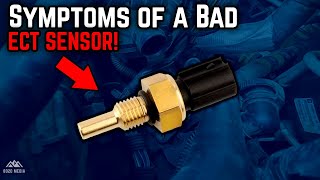
🎬 Watch this video to see common symptoms of a bad sensor.- Check Engine Light: This is often the first warning. The computer will detect a signal from the sensor that is outside the normal range and trigger a fault code. Common codes include P0115, P0117, and P0118.
- Poor Fuel Economy: If the sensor wrongly tells the computer the engine is cold, the computer will make the fuel mixture richer, causing your Sienna to use more gas than it needs to.
- Engine Overheating: A critical failure is when the sensor doesn't tell the computer that the engine is hot. This can prevent the radiator fans from turning on, leading to overheating.
- Rough Idle or Hard Starting: Incorrect temperature readings can lead to the wrong fuel mixture, causing the engine to idle poorly or be difficult to start.
- Black Smoke from Exhaust: In some cases, a constantly rich fuel mixture can result in unburned fuel exiting the exhaust as black smoke.
Don't Ignore an Overheating Engine
If your temperature gauge shows the engine is overheating, or if you see steam coming from under the hood, pull over and shut off the engine as soon as it is safe to do so. Driving an overheating engine can cause severe and expensive damage, such as a warped cylinder head or a blown head gasket.
Choosing the Right Aftermarket Sensor

For many parts, aftermarket options provide a good balance of quality and value. However, with engine sensors on Toyota vehicles, the conversation is more nuanced. The original equipment manufacturer (OEM) for many Toyota sensors is Denso. Forum discussions among Toyota owners often show a strong preference for using Denso or genuine Toyota sensors, as they are calibrated precisely for the vehicle's computer. Cheaper aftermarket sensors can sometimes have slightly different resistance values, which might not cause a check engine light but could still affect fuel economy and performance. That said, for a simple and inexpensive sensor like the ECT, a quality aftermarket part can be a perfectly acceptable repair to get you back on the road, especially if the OEM part is not readily available or is significantly more expensive.
Pro Tip: When replacing the sensor, it's a good idea to also inspect the electrical connector for any corrosion or damage. A bad connection can cause the same symptoms as a failed sensor.
Cost of Replacing a Coolant Temperature Sensor (1998-2006 Toyota Sienna)
| Part Type | Estimated Cost |
|---|---|
| New Aftermarket | $19.57 |
| New OEM (Toyota/Denso) | $65 - $98 |
| Shop Labor | $90 - $130 |
Note: Costs are estimates and can vary based on your location and the specific repair shop. The labor cost reflects the short time required for this repair, but many shops have a one-hour minimum charge.
Frequently Asked Questions

Where is the coolant temperature sensor located on a 1998-2006 Sienna?
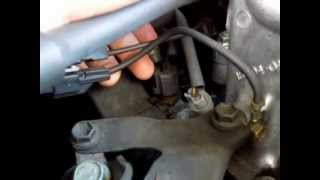
On the 3.0L V6 engine (1998-2003), the sensor is located on the driver's side of the engine. 🎬 See exactly where the sensor is located on the 3.0L engine. You can find it by following the upper radiator hose to where it connects to the engine's water inlet housing. It is a two-wire sensor, often with a bronze-colored tip. For the 3.3L V6 (2004-2006), the sensor is in a similar location, near the thermostat housing on top of the engine.
Can I replace this sensor myself?
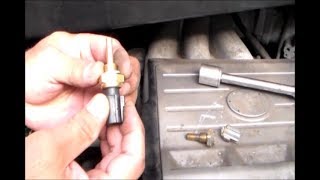
Yes, this is a very DIY-friendly job for someone with basic hand tools. The main tools needed are a ratchet and a deep 19mm socket. The job can typically be completed in under an hour. 🎬 Follow this step-by-step guide to replace the sensor yourself. Make sure the engine is completely cool before starting to avoid burns and pressurized coolant spray. You will lose a small amount of coolant, so have a drain pan ready.
Is there a recall for this sensor on my Sienna?
No, there are no specific recalls or widespread Technical Service Bulletins (TSBs) from Toyota or the NHTSA for coolant temperature sensor failure on the 1998-2006 Sienna. There was a recall for the spare tire carrier on these models due to corrosion, but it is unrelated to the engine management system.
What happens if I don't replace a bad sensor?
Ignoring a faulty sensor can lead to persistently poor fuel economy and failed emissions tests. More critically, if the sensor fails in a way that prevents the cooling fans from turning on, your engine can severely overheat. This can lead to catastrophic damage like a warped cylinder head, which is a very expensive repair.
Helpful Videos
Technical Specifications
OEM Part Numbers: 89422-35010
Fits 1998-2003 Toyota Sienna with 3.0L 1MZ-FE V6 and 2004-2006 Toyota Sienna with 3.3L 3MZ-FE V6. This is a two-wire sensor that sends the temperature signal to the Engine Control Unit (ECU).

The information in this article is provided for general reference and educational purposes only. Vehicle specifications, procedures, and part compatibility can vary by production date, trim level, and region. Always consult your vehicle's factory service manual and verify part numbers before purchasing or performing repairs. Safety-critical components such as airbags, seat belts, and braking systems should be installed by a qualified professional.
- Toyota Sienna: