

Ford E-150 Econoline Starter Solenoid Guide (1998-2002)
Having trouble starting your van? This guide explains the part most likely causing your 'click-no-start' issue.
- The part most likely to fail and cause a 'click-no-start' is the fender-mounted starter relay, commonly called a solenoid.
- Before replacing the solenoid, confirm your battery is charged and check for corroded battery terminals and body ground straps.
- A single, loud click points to a bad solenoid, while rapid clicking usually means a dead battery.
- This is a very DIY-friendly repair that can be completed in under an hour with basic tools.
Is it the Solenoid or the Relay?
For 1998-2002 Ford E-150 Econoline vans, mechanics and owners almost always use the terms 'starter solenoid' and 'starter relay' for the same part: the black, cube-shaped switch mounted on the fender near the battery. While there is another solenoid on the starter motor, it is usually replaced with the entire starter assembly. 🎬 See how to tell if the starter or solenoid is bad If you are experiencing a 'click-no-start' issue, the fender-mounted relay is the most likely culprit and the part you are likely looking to replace.
Symptoms of a Failing Starter Solenoid
A bad starter solenoid on your E-150 has very specific symptoms. Knowing them can save you from replacing the wrong parts.
- Single, Loud Click, But No Crank: This is the most common sign. When you turn the key, you hear one distinct 'CLICK' from the engine bay, but the engine doesn't turn over. This means the solenoid is receiving power from the ignition but isn't successfully sending the high current to the starter motor.
- No Sound at All: Sometimes, the solenoid can fail completely and you won't hear any click or noise when you turn the key. This can point to a dead solenoid or a problem in the ignition circuit leading to it.
- Intermittent Starting: The van starts fine one day, but the next day it only clicks. This on-again, off-again behavior is a classic sign of a solenoid that is wearing out internally.
- Engine Cranks Slowly: While less common, high resistance inside a failing solenoid can cause the starter motor to turn the engine over slower than usual.
Check Your Battery and Grounds First!
Before replacing the solenoid, always make sure your battery is fully charged and the terminals are clean and tight. Also, these Econoline vans are known for having bad ground straps between the frame and body, which can cause a no-start condition that mimics a bad solenoid. A rapid, machine-gun-like clicking noise usually points to a weak or dead battery, not a bad solenoid.
Choosing a New Aftermarket Starter Solenoid
For a vehicle like the 1998-2002 E-150, a quality aftermarket starter solenoid is a perfectly reliable choice. The original Ford technology is not complex, and reputable aftermarket brands can meet or exceed the original specifications.
Standard Ignition (Standard Motor Products): This is a well-known and generally trusted brand in the aftermarket world. They often manufacture parts for original equipment suppliers. Their solenoids are described as having heavy-duty copper contacts and more copper windings to create a stronger magnetic field, which helps with longevity and reliable starting. Reviews are generally positive, with users noting good performance, though some have mentioned concerns about modern replacements not being as robust as older parts. Given the low cost of the part, choosing a quality brand like Standard Ignition is a wise investment.
Cost of Replacing a Starter Solenoid (1998-2002 E-150)
| Part / Service | Estimated Cost |
|---|---|
| New Aftermarket Solenoid (e.g., Standard Ignition) | $25 - $70 |
| Shop Labor Cost | $73 - $107 |
| Total Professional Replacement | $98 - $177 |
Pro Tip: Replacing the fender-mounted starter solenoid is a very common DIY repair. It is easily accessible in the engine compartment and typically requires only basic hand tools. Doing it yourself can save you over $100 in labor costs.
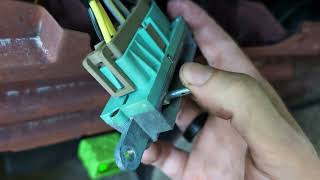
🎬 Watch this easy walkthrough to replace the solenoid yourselfFrequently Asked Questions (FAQ)
Can I drive my E-150 with a bad starter solenoid?
No. If the solenoid has failed, your van will not start, leaving you stranded. It's an issue that needs to be fixed before the vehicle can be driven.
Is this a difficult part to replace myself?
For most people with basic tools, this is an easy repair. The solenoid is located on the passenger side fender wall near the battery. The process involves disconnecting the battery, removing a few nuts to swap the cables to the new solenoid, and bolting the new solenoid back in place. It typically takes less than an hour.
What is the difference between the solenoid on the fender and the one on the starter?
The fender-mounted part is technically a relay, which is an electric switch. It takes a small signal from the key to switch on a high-power circuit. The part on the starter is a true solenoid; it's an electromagnet that does mechanical work (pushing the starter gear out) and also acts as a relay. For these vans, when people say 'starter solenoid,' they almost always mean the one on the fender.
Are there any recalls for this part on my van?
There are no specific recalls from the National Highway Traffic Safety Administration (NHTSA) for the starter solenoid on the 1998-2002 Ford E-150 Econoline.
Helpful Videos
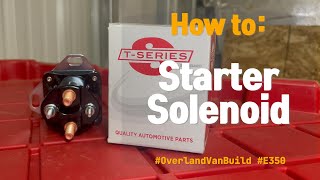
Technical Specifications
Fender-mounted starter relay/solenoid, typically with 4 terminals (two large studs, two small posts).
We Have This Part in Stock


The information in this article is provided for general reference and educational purposes only. Vehicle specifications, procedures, and part compatibility can vary by production date, trim level, and region. Always consult your vehicle's factory service manual and verify part numbers before purchasing or performing repairs. Safety-critical components such as airbags, seat belts, and braking systems should be installed by a qualified professional.
- Ford E-150 Econoline: