

Ford Mustang Ignition Coil Guide: 1997-2009 Models
Experiencing misfires or a rough idle? Your Mustang's ignition coils might be the culprit.
- Identify your system: 1997-98 models use coil packs, while 1999-2009 V8s use individual Coil-on-Plugs (COPs).
- A misfire code (P0301-P0308) is the most common sign of a bad coil. Swap coils between cylinders to confirm the failure.
- For most owners, a quality OEM-style replacement from brands like Motorcraft, Delphi, or NGK is a better choice than expensive performance coils.
- If you have a 2005-2008 GT, be aware of the potential for spark plugs to break during removal; it's often best to let an experienced mechanic handle the job.
Understanding Your Mustang's Ignition System: 1997-2009

The 1997-2009 model years span two different Mustang generations, the SN95 and the S197, and they use different ignition setups. It's crucial to know which one your car has.
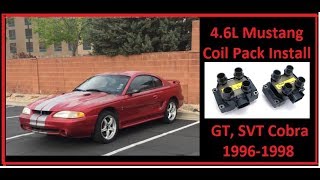
- 1997-1998 (SN95): V8 models with the 4.6L 2V engine and V6 models with the 3.8L engine used a 'wasted spark' system with two ignition coil packs. 🎬 Watch: How to install coil packs on 1996-1998 4.6L Mustangs. Each pack fires two spark plugs at the same time.
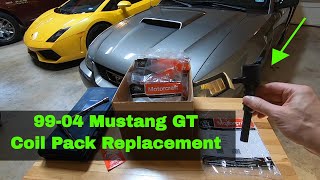
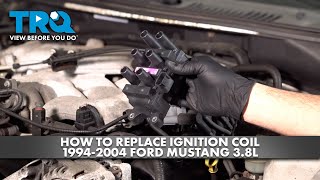
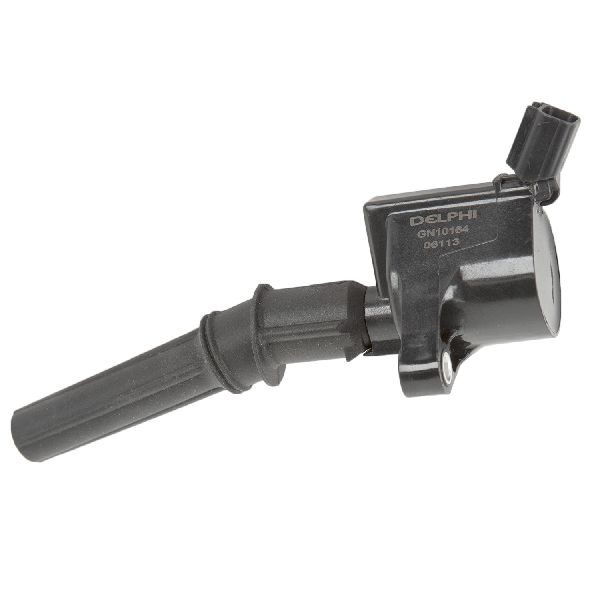
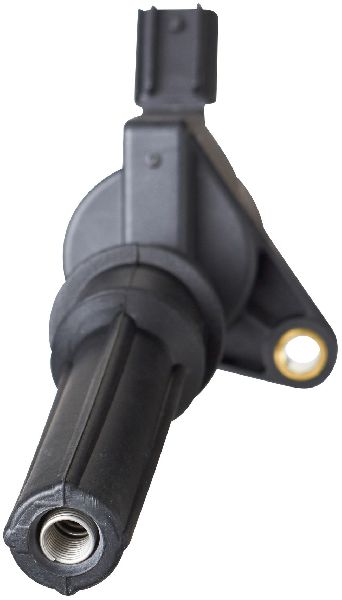
- 1999-2004 (New Edge SN95): The GT models with the 4.6L 2V V8 engine switched to a modern Coil-On-Plug (COP) system. This means each cylinder has its own dedicated ignition coil mounted directly on the spark plug. The 3.8L V6 models continued to use a coil pack. 🎬 See this walkthrough for replacing coils on 3.8L V6 models.
- 2005-2009 (S197): All engines, including the 4.0L V6 and the 4.6L 3V V8, use the individual Coil-On-Plug (COP) system. This provides more precise spark timing and better performance.
Choosing the Right Aftermarket Ignition Coil

When your original coils fail, you have many aftermarket options. They generally fall into three tiers. For a daily driven Mustang, sticking with OEM-equivalent or a reputable standard replacement is a reliable and cost-effective choice. Performance coils are best for modified engines.
Brand Quality Tiers
- OEM / Premium Aftermarket: Motorcraft is Ford's original equipment brand and is the benchmark for fit and reliability. Brands like Bosch, Delphi, NGK, and Hitachi are also top-tier choices, often supplying parts to manufacturers directly. They offer factory-level performance and durability.
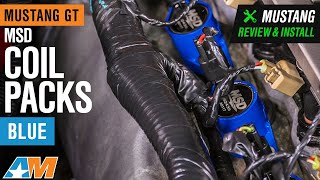
- Performance Aftermarket: Brands like MSD, Granatelli, and Edelbrock are designed for enthusiasts. 🎬 Watch: Review and installation of MSD performance coils on S197 Mustangs. They often claim higher voltage output for a stronger spark, which can be beneficial for modified engines with forced induction or nitrous, but may not offer a noticeable difference on a stock engine.
- Standard Aftermarket: Brands such as Spectra, DriveWire, and Standard Ignition (SMP) offer a balance of quality and value. They are a good option for budget-conscious repairs on daily drivers.
Cost at a Glance
| Part Type | Estimated Price Range |
|---|---|
| New Aftermarket (Single Coil) | $22.24 - $85.00 |
| New Aftermarket (Set of 8) | $150.00 - $403.65 |
| New OEM (Motorcraft, Single Coil) | $50.00 - $90.00 |
| Shop Labor (Single Coil) | $52.00 - $100.00 |
Known Issues & TSBs

While there are no major recalls for ignition coils on these Mustangs, some Technical Service Bulletins (TSBs) have been issued. For 2005-2008 Mustangs with the 4.6L 3V engine, TSB 08-7-6 notes that the original two-piece spark plugs can break during removal. This is a well-known issue among owners. If you are replacing coils on a high-mileage engine with original plugs, it's wise to have a specialized tool for broken plug extraction on hand or entrust the job to a mechanic familiar with this issue. TSB 05-22-8 provides diagnostic tips for misfires on various Ford vehicles, including the Mustang.
Frequently Asked Questions

Should I replace all my ignition coils at once?
It's not strictly necessary, but it is often recommended, especially on higher-mileage vehicles. Ignition coils are subjected to the same conditions, and if one has failed, others may be nearing the end of their service life. Replacing them all at once can save you from future repeat repairs. If accessing the coils requires removing other components, replacing them all at once is more labor-efficient.
What's the difference between a coil pack and a coil-on-plug?
A coil pack is a module containing multiple ignition coils that sends voltage to the spark plugs through spark plug wires. A coil-on-plug (COP) system places a small, individual coil directly on top of each spark plug, eliminating the need for spark plug wires. This provides a more efficient and reliable spark. Your 1999-2009 V8 Mustang uses a COP system.
Are expensive performance coils worth it for my stock Mustang?
For a stock or lightly modified daily driver, the answer is generally no. While performance coils from brands like MSD can provide a stronger spark, you are unlikely to see any significant power gains or performance improvements over a quality OEM-style coil. Their benefits are most realized in highly modified, high-RPM, or forced-induction applications.
Do I need special tools to replace my ignition coils?
For the coils themselves, you typically only need a basic socket set (a 7mm socket is common for the hold-down bolts) and maybe a small flathead screwdriver to release the electrical connector clip. However, it is highly recommended to replace the spark plugs at the same time. This requires a spark plug socket and a torque wrench. For 2005-2008 4.6L 3V engines, a broken spark plug extraction tool is a wise precaution due to the known issue of plugs breaking in the head.
Helpful Videos
Technical Specifications
OEM Part Numbers: DG508 3L3Z-12029-BA F7TZ-12029-BA DG530 DG543
System Type: Coil Pack (1997-1998 V8, 1997-2004 V6) or Coil-On-Plug (1999-2009 V8, 2005-2009 V6). Connector Type: Varies by year, typically a 2-pin or 3-pin connector. Hold-down Bolt Size: Commonly 7mm.
We Have This Part in Stock


The information in this article is provided for general reference and educational purposes only. Vehicle specifications, procedures, and part compatibility can vary by production date, trim level, and region. Always consult your vehicle's factory service manual and verify part numbers before purchasing or performing repairs. Safety-critical components such as airbags, seat belts, and braking systems should be installed by a qualified professional.
- Ford Mustang: