

A Mechanic's Guide to the 1997-2004 Honda CR-V Idle Air Control Valve
Solve your CR-V's frustrating idle problems and clear that P0505 code for good.
- Common symptoms of a bad IACV are a surging idle, stalling, and a P0505 check engine code.
- Try cleaning the valve and throttle body with carb cleaner before replacing it; this often fixes the issue.
- The part is in a different location for 1997-2001 (intake manifold) vs. 2002-2004 (throttle body) models.
- An idle relearn procedure is required after replacement to ensure the engine idles correctly.
Is Your CR-V's Idle Air Control Valve Failing?

A bad IAC valve on the first or second-generation CR-V makes itself known quickly. Carbon buildup is the most common enemy, causing the valve's internal plunger or rotary gate to stick. This prevents it from adjusting the airflow correctly. Watch for these classic symptoms:
- Erratic or Surging Idle: The most common sign. The RPMs will bounce up and down, sometimes between 1,000 and 2,000 RPM, while in park or at a stoplight.
- Stalling: The engine may stall right after starting or when you come to a stop, especially when the engine is cold.
- High or Low Idle: The idle speed might be stuck consistently too high or so low that the engine feels like it's about to shut off.
- Check Engine Light: A failing IAC system will almost always trigger a Check Engine Light, with the code P0505 (Idle Control System Malfunction) being the most frequent.
Generation Differences: 1997-2001 vs. 2002-2004

It is critical to order the correct part for your year. The IAC valve is completely different between the first and second-generation CR-V.
- 1997-2001 CR-V (First Gen): The IACV is a rectangular valve bolted to the back of the intake manifold. It's held on by two 12mm bolts and has two coolant hoses and one electrical connector, making it relatively easy to access and replace. 🎬 Watch this easy replacement walkthrough for 1999-2001 models.
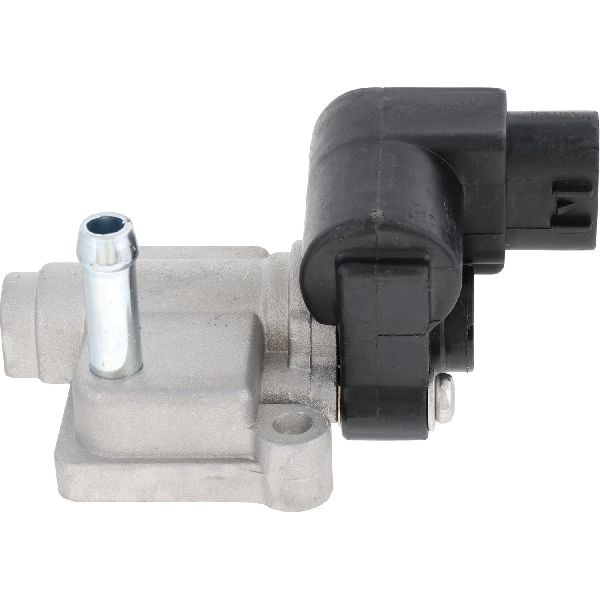
- 2002-2004 CR-V (Second Gen): The IACV is a rotary-style valve mounted to the bottom of the throttle body. Accessing it requires removing the entire throttle body assembly first. The valve itself is often attached with stubborn Phillips head screws that may require an impact driver to remove without stripping.
Common Ordering Mistake
Do not confuse the Idle Air Control Valve with the Fast Idle Thermo Valve found on some first-generation models. While they can cause similar symptoms, they are different parts. Double-check the location and part number before ordering.
Choosing the Right Aftermarket IAC Valve

When your IAC valve fails, you have a choice between OEM and aftermarket. A genuine Honda valve offers the highest quality and guaranteed fit, but it comes at a very high price and some may be discontinued. For a vehicle of this age, a quality aftermarket part from a reputable brand offers a sensible balance of reliability and cost.
Brands like Standard Ignition and Holstein are established names in the aftermarket. While direct reviews comparing them for this specific CR-V part are scarce, they are generally considered reliable mid-tier options. Forum users often mention Denso as a top-tier aftermarket choice, as they are a known OEM supplier for many Honda components. Ultimately, choosing a part from a recognized brand is safer than opting for a no-name online part, which can fail quickly and cause the same problems all over again.
Pro Tip: Try Cleaning It First
Before spending money on a new part, consider cleaning your existing IAC valve and the air passages in the throttle body. A can of carburetor cleaner and a small brush can often remove the carbon buildup that causes the valve to stick. If cleaning doesn't solve the surging idle or P0505 code, the valve's internal motor has likely failed 🎬 See how to clean your IAC valve and throttle body. and replacement is necessary.
Cost of Replacing a Honda CR-V IAC Valve
| Part Type | Estimated Cost |
|---|---|
| New Aftermarket (Holstein, Standard Ignition) | $93.57 - $259.47 |
| New OEM | $320 - $550+ |
| Shop Labor | $100 - $225 |
Frequently Asked Questions

Where is the IAC valve located on my CR-V?
For 1997-2001 models, it's on the back of the intake manifold, held by two bolts. For 2002-2004 models, it's attached to the bottom of the throttle body.
Do I need to perform an "idle relearn" after replacing the IAC valve?
Yes, this is a critical step. After reconnecting the battery, start the engine and let it warm up completely (the radiator fans should cycle on at least once). Then, let the engine idle for 5-10 minutes with all accessories (A/C, radio, lights) turned OFF. 🎬 Watch a step-by-step guide on the idle relearn procedure. This allows the engine computer (ECU) to learn the new valve's airflow characteristics.
What happens if I don't replace a bad IAC valve?
You will continue to experience an annoying erratic idle, poor performance at low speeds, and frequent stalling. This can be a safety issue in stop-and-go traffic. It will also prevent you from passing an emissions test due to the active Check Engine Light.
Can a vacuum leak cause the same symptoms?
Yes. A cracked intake hose or a leaking intake manifold gasket can cause a P0505 code and idle problems that mimic a bad IAC valve. It's always a good idea to check for vacuum leaks before replacing parts.
Helpful Videos





Technical Specifications
OEM Part Numbers: 36450-P3F-004 36450-P0D-004 16022-PPA-A11
For 1997-2001 CR-V, the IACV is a 2-bolt valve located on the intake manifold. For 2002-2004 CR-V, it is a rotary-style valve located on the throttle body.
We Have This Part in Stock


The information in this article is provided for general reference and educational purposes only. Vehicle specifications, procedures, and part compatibility can vary by production date, trim level, and region. Always consult your vehicle's factory service manual and verify part numbers before purchasing or performing repairs. Safety-critical components such as airbags, seat belts, and braking systems should be installed by a qualified professional.
- Honda CR-V: