

Plymouth Voyager (1996-2000) Engine Intake Manifold Temperature Sensor Guide
Learn about the small sensor that can cause big problems like poor gas mileage and rough running in your Voyager.
- A bad IAT sensor on a Voyager most often causes a Check Engine Light (P0113/P0112), poor gas mileage, and rough running.
- Replacement is a very easy DIY job, typically taking less than 15 minutes with no special tools required.
- For this vehicle, a quality aftermarket brand like Standard Ignition provides reliable performance for less cost than an OEM part.
- Always check the sensor's wiring and connector for damage before buying a new part, as this can cause the same symptoms.
Is Your Voyager Running Rough or Getting Bad Gas Mileage?
A failing Intake Air Temperature (IAT) sensor can be the hidden cause behind several frustrating engine problems. Because this sensor's data is critical for calculating the correct air-fuel mixture, a bad sensor can make your Voyager's engine run too rich (too much fuel) or too lean (not enough fuel). This can lead to a noticeable drop in performance and fuel efficiency. Fortunately, on the 1996-2000 Plymouth Voyager, this is one of the easiest and most affordable sensors to replace yourself.
Common Symptoms of a Bad IAT Sensor
When the IAT sensor fails, it sends incorrect data to the engine's computer. This can cause a variety of issues. Look out for these common signs:
- Check Engine Light: This is often the first and most obvious sign. The computer will store a trouble code, most commonly P0112 or P0113.
- Poor Fuel Economy: If the sensor incorrectly tells the computer the air is cold, the engine will run rich, wasting fuel.
- Rough Idle: The engine may idle unevenly, surge, or even stall because the air-fuel mixture is unstable.
- Engine Hesitation: You might notice a stumble or lack of power when you press the gas pedal.
- Hard Starting: An incorrect temperature reading can make the engine difficult to start, especially when cold.
- Failed Emissions Test: An incorrect air-fuel ratio will lead to higher emissions, causing a failed smog check.
Check the Wiring First!
Before you replace the sensor, take a moment to inspect the wiring and connector. On older vehicles like the Voyager, wires and plastic connectors can become brittle and break. A bad connection or a chewed wire can cause the exact same symptoms as a failed sensor.
Choosing the Right Aftermarket Sensor for Your Voyager
For a vehicle like the 1996-2000 Voyager, you don't need to pay high dealership prices for an OEM Mopar sensor. A quality aftermarket part can offer the same performance and reliability for much less money. Here’s a look at the brands available:
- Reputable Aftermarket (e.g., Standard Ignition): Brands like Standard Ignition (Standard Motor Products) are a top choice for professional mechanics. They have a long history of making parts that meet or exceed original specifications. For a critical sensor, spending a few extra dollars on a trusted brand is a smart investment in reliability.
- Economy Brands (e.g., True Tech): Economy brands offer the lowest price. While "True Tech" appears to be a brand name, there is very little information available about it as a parts manufacturer, though it is sold by some retailers. These parts can be an option for a tight budget, but quality and lifespan can be inconsistent. If you choose an economy brand, check the warranty and return policy before buying.
| Part Type | Estimated Cost |
|---|---|
| New OEM (Mopar) | $45 - $90 |
| New Aftermarket (Our Inventory) | $28.35 - $47.35 |
| Shop Labor | $60 - $90 |
Pro Tip: Replacement is an extremely easy DIY job that takes less than 15 minutes, saving you the entire cost of shop labor.
Frequently Asked Questions (FAQ)
Where is the IAT sensor located on a 1996-2000 Plymouth Voyager?
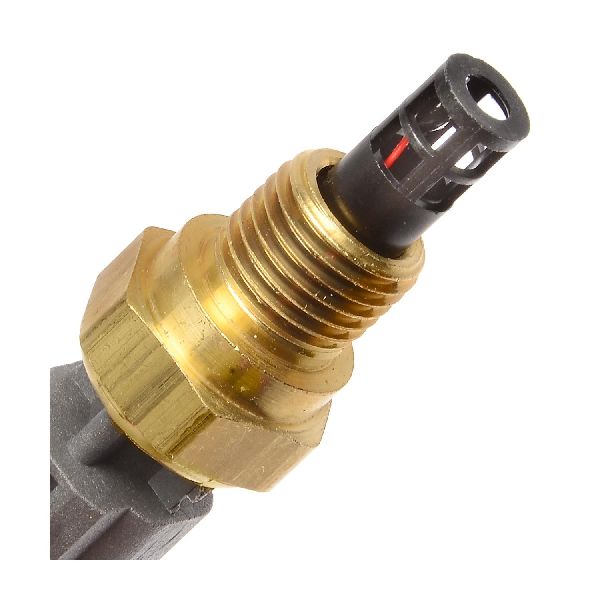
The IAT sensor is located in the black plastic air intake tube that runs between the air filter box and the engine's throttle body. It's a small, two-wire plastic sensor that is either pushed into a rubber grommet or threaded into the intake tube.
What do the codes P0113 and P0112 mean?
P0113 stands for "Intake Air Temperature Sensor Circuit High Input." This is a very common code for a failed IAT sensor. It means the computer sees a high voltage, which it interprets as an impossibly cold temperature (like -40°F). This is often caused by a failed sensor, a disconnected plug, or a broken wire. P0112 is the opposite, indicating a low voltage and an impossibly high temperature.
Can I just clean my old IAT sensor?
Sometimes, if the sensor tip is covered in oil or dirt, cleaning it with a dedicated Mass Airflow (MAF) sensor cleaner can help. However, these sensors usually fail internally due to age. If cleaning doesn't solve the problem, the sensor needs to be replaced.
Are there any recalls for this part on my Voyager?
No. A search of the National Highway Traffic Safety Administration (NHTSA) database shows no recalls or technical service bulletins (TSBs) specifically related to the Intake Air Temperature sensor for the 1996-2000 Plymouth Voyager.
Technical Specifications
OEM Part Numbers: 5149182AB 5149279AC
2-terminal, blade-style connector. Mounts in the air intake duct between the air filter and throttle body.
We Have This Part in Stock


The information in this article is provided for general reference and educational purposes only. Vehicle specifications, procedures, and part compatibility can vary by production date, trim level, and region. Always consult your vehicle's factory service manual and verify part numbers before purchasing or performing repairs. Safety-critical components such as airbags, seat belts, and braking systems should be installed by a qualified professional.
- Plymouth Voyager: