

Toyota Corolla Crankshaft Position Sensor Guide (1995-2010)
Experiencing stalling, a no-start condition, or a check engine light? Your Corolla's crankshaft position sensor could be the problem.
- A failing sensor is a primary cause of stalling or a no-start condition in a 1995-2010 Corolla.
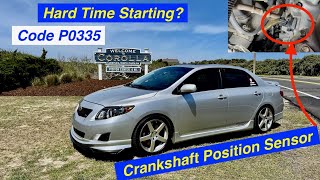
- The most common trouble code associated with this failure is P0335.
- For most of these model years, replacement is a simple DIY job requiring basic tools and access behind the passenger-side wheel.
- Quality aftermarket sensors provide a reliable and cost-effective repair solution for these vehicles.
Symptoms of a Failing Crankshaft Position Sensor in a Toyota Corolla


When a crankshaft position sensor starts to fail on a 1995-2010 Corolla, the signs can range from annoying to leaving you stranded. The most common code that will appear on a scanner is P0335 (Crankshaft Position Sensor "A" Circuit Malfunction). Here are the key symptoms to watch for:
- Engine Cranks but Won't Start: This is a classic sign. The ECU isn't getting the signal it needs to start the ignition and fuel delivery process.
- Intermittent Stalling: The engine may shut off unexpectedly while driving, often at low speeds or when stopped at a light. This happens because the sensor signal cuts out, and the ECU loses track of the engine's rotation. This can be very dangerous.
- Check Engine Light: A faulty sensor will almost always trigger the check engine light on your dashboard.
- Rough Idle and Engine Vibrations: Your Corolla might feel shaky or uneven when idling. This is caused by inconsistent signals from the sensor leading to minor misfires.
- Poor Acceleration and Hesitation: You may notice the engine stumbles or hesitates when you press the gas pedal. The car might feel sluggish and lack power because the ECU can't time the spark and fuel correctly.
- Reduced Fuel Economy: When the sensor provides bad data, the engine's timing is off, leading to inefficient combustion and worse gas mileage.
Generation Specific Information
For early models in this range, specifically the 1995-1997 Corollas with a distributor, the crankshaft position sensor is housed inside the distributor assembly itself. For later models (approx. 1998-2010), it is a separate sensor mounted on the engine block, typically near the crankshaft pulley.
Choosing a New Aftermarket Crankshaft Position Sensor

For a vehicle like the 1995-2010 Toyota Corolla, a new aftermarket crankshaft position sensor is a very popular and practical choice. While some owners prefer to stick with Original Equipment (OEM) parts from the dealer for critical sensors, the reality is that many aftermarket brands produce reliable parts that meet or exceed original specifications. For an older, non-performance vehicle, the cost savings of an aftermarket part are significant and often make the most sense.
The key is to choose a quality aftermarket brand. While some very low-cost, unbranded sensors can be unreliable, reputable aftermarket manufacturers offer a good balance of quality and value. Since this sensor is critical for engine operation, it's wise to avoid the absolute cheapest option and select a part from a known brand with positive reviews.
Cost of Replacing a Toyota Corolla Crankshaft Position Sensor
The cost to replace the crankshaft position sensor can vary based on your vehicle's year and whether you do the work yourself or hire a professional mechanic.
| Part / Service | Estimated Cost |
|---|---|
| New OEM Part | $90 - $194 |
| New Aftermarket Part | $26.45 - $31.86 |
| Shop Labor | $90 - $140 |
| Total (DIY Aftermarket) | $26.45 - $31.86 |
| Total (Shop Install Aftermarket) | $116 - $172 |
Frequently Asked Questions (FAQ)

Where is the crankshaft position sensor located on the 1995-2010 Corolla?
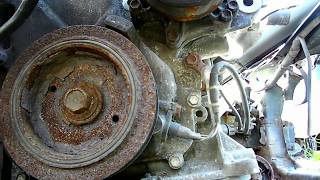
The location varies by year. On later models (approx. 1998-2010), it's typically on the front of the engine block, near the main crankshaft pulley, and held 🎬 Watch this video to see exactly how to remove the sensor. in by a single 10mm bolt. You may need to remove the front passenger wheel and a plastic splash shield to get access from the side. On early models (approx. 1995-1997), the sensor is integrated into the distributor assembly.
Can I replace this sensor myself?
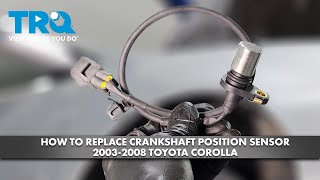
Yes, for most 1998-2010 models, this is a DIY-friendly job for someone with basic tools. It involves removing 🎬 Watch this step-by-step replacement guide for 2003-2008 models. the wheel, a splash guard, unplugging the electrical connector, and removing one 10mm bolt. The main challenge can be reaching the sensor and its connector. For 1995-1997 models where the sensor is in the distributor, the job is more involved.
What happens if I ignore a failing crankshaft sensor?
Ignoring the symptoms is not recommended. The stalling can become more frequent, creating a serious safety hazard, especially in traffic or at high speeds. Eventually, the sensor will fail completely, and your Corolla will not start, leaving you stranded. Continued misfiring can also potentially damage other components like the catalytic converter over time.
Are there any recalls for the Corolla crankshaft position sensor?
Searches did not find a specific recall for the crankshaft position sensor itself across the entire 1995-2010 range. However, there was a recall for some 2016-2017 Tacomas for this sensor and investigations into stalling for 2006 Corollas related to the engine computer. It's always best to check the official NHTSA or Toyota recall websites with your car's VIN to be certain.
Helpful Videos
Technical Specifications
OEM Part Numbers: 90919-05030 90919-A5004 90919-T5005
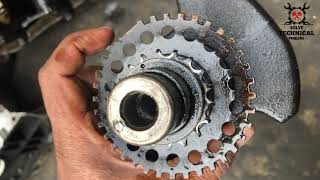
The sensor is typically a magnetic or hall-effect type sensor that reads teeth on a reluctor wheel on the crankshaft. It is usually secured by a single 10mm bolt. For 1995-1997 models, it is part of the distributor assembly.

The information in this article is provided for general reference and educational purposes only. Vehicle specifications, procedures, and part compatibility can vary by production date, trim level, and region. Always consult your vehicle's factory service manual and verify part numbers before purchasing or performing repairs. Safety-critical components such as airbags, seat belts, and braking systems should be installed by a qualified professional.
- Toyota Corolla: