

Honda Odyssey Coolant Temperature Sensor Guide (1995-2006)
Is your Odyssey running rough, getting bad gas mileage, or showing a check engine light? Your coolant temperature sensor might be the problem.
- A bad ECT sensor is a common cause of a check engine light with codes P0117 or P0118 on a 1995-2006 Odyssey.
- Symptoms directly impact performance and safety, including poor mileage, hard starting, and potential overheating.
- Replacement is a simple, 30-minute DIY job with basic tools, making an aftermarket sensor a very cost-effective repair.
- Be sure you are replacing the correct sensor; some models have a separate unit for the gauge and another for the computer.
What is a Coolant Temperature Sensor?


Think of the Engine Coolant Temperature (ECT) sensor as a crucial messenger for your Odyssey's engine. This small sensor constantly checks how hot or cold the engine coolant is. It then reports this temperature to your van's main computer. The computer uses this information to manage everything from how much fuel to inject to when the radiator fans should kick on to prevent overheating. Without an accurate signal, the computer is flying blind, which can cause a variety of problems.
Symptoms of a Failing Coolant Temperature Sensor
A bad coolant temperature sensor can make your Odyssey act up in several ways. Because the computer is getting wrong information, it might make the wrong adjustments. Here are the most common signs to watch for:
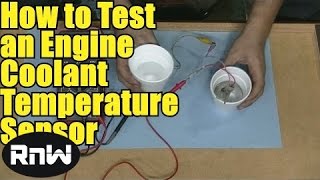
- Check Engine Light: This is often the first sign. You may see codes like P0117 (sensor circuit low voltage) 🎬 Watch: How to test your sensor with a basic multimeter or P0118 (sensor circuit high voltage).
- Poor Fuel Economy: If the sensor wrongly tells the computer the engine is cold, the computer will inject too much fuel, hurting your gas mileage.
- Black Smoke from Exhaust: A rich fuel mixture from a bad sensor reading can result in unburned fuel leaving through the exhaust as black smoke.
- Engine Overheating: A faulty sensor may fail to signal the cooling fans to turn on when needed, causing the engine to overheat.
- Hard Starting: When the engine is cold, it needs a richer fuel mix to start. If the sensor is bad, the computer might not provide enough fuel, making the engine difficult to start.
- Rough Idle: An incorrect fuel mixture can cause the engine to idle poorly or even stall.
One Part, Two Functions?
On many 1995-2006 Odysseys, there are two different sensors. One is the ECT sensor that talks to the engine computer (this is the part that causes the symptoms above). A second, separate sensor is the sending unit, which only operates the temperature gauge on your dashboard. It's important to know which one you are replacing. Later models in this range (around 2005-2006) may have two identical ECT sensors.
Choosing the Right Aftermarket Sensor

For a simple and inexpensive part like the coolant temperature sensor, a quality aftermarket replacement is often a smart choice. The original Honda parts are excellent, but you can get a reliable aftermarket sensor for a fraction of the price. There is little evidence from owners that aftermarket ECT sensors for the computer cause significant issues. However, some owners have reported problems with aftermarket gauge sending units giving inaccurate readings on the dash. Since this article focuses on the ECT sensor that affects engine performance, a well-reviewed aftermarket part should perform well.
| Part Type | Estimated Price | Notes |
|---|---|---|
| New Aftermarket | $20.32 | The price for the available Replacement brand sensor. A cost-effective and reliable option for DIY repair. |
| New OEM (Honda) | $46 - $90 | Highest quality and perfect fit, but at a significantly higher cost. |
| Shop Labor | $50 - $100 | Most shops will charge for 0.5 hours of labor to install the part. |
Pro Tip: Quick Swap
When replacing the sensor, have the new one ready to go. As soon as you unscrew the old one, quickly thread the new one in. This will minimize the amount of coolant you lose. Always do this on a cold engine.
Frequently Asked Questions (FAQ)

Where is the coolant temperature sensor located on my Odyssey?
The location varies by generation:
- 1995-1998 (1st Gen): Typically found on the cylinder head, near the thermostat housing where the upper radiator hose connects to the engine.
- 1999-2004 (2nd Gen): Located on the engine block near the thermostat housing. For easier access, you may need to remove the battery. One owner noted it was under a cover near the battery.
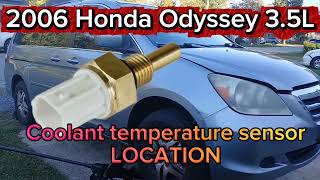
- 2005-2006 (3rd Gen): These models have two ECT sensors. The first is easy to see, located on the water outlet housing on the front of the engine. The second is identical and located on the back of the thermostat housing, behind the throttle body. 🎬 See this video for 3rd Gen sensor locations
Is this a difficult part to replace myself?
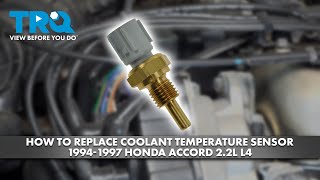
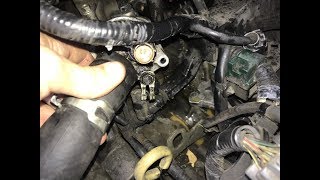
No, this is a great DIY job for beginners. It usually requires only a 19mm wrench or a deep socket. The main challenges are reaching the sensor and dealing with minor coolant spillage. The job should take less than 30 minutes.
🎬 Watch this walkthrough for a 1st Gen sensor replacementAre there any recalls for the Odyssey coolant temperature sensor?
No, there are no specific recalls or technical service bulletins (TSBs) from Honda for the coolant temperature sensor on the 1995-2006 Honda Odyssey.
What happens if I don't replace a bad sensor?
Ignoring a bad ECT sensor can lead to more serious problems. Persistently running rich can foul spark plugs and damage the catalytic converter. More critically, if the sensor fails to trigger the cooling fans, you risk severe engine damage from overheating. For the low cost of the part, it's a repair you shouldn't put off.
Helpful Videos
Technical Specifications
OEM Part Numbers: 37870-PNA-003 37870-PK2-015 37870-PJ7-003 37870-RTA-005
Two-pin electrical connector. Threaded brass body with O-ring seal. Typically requires a 19mm wrench or deep socket for installation.

The information in this article is provided for general reference and educational purposes only. Vehicle specifications, procedures, and part compatibility can vary by production date, trim level, and region. Always consult your vehicle's factory service manual and verify part numbers before purchasing or performing repairs. Safety-critical components such as airbags, seat belts, and braking systems should be installed by a qualified professional.
- Honda Odyssey: