

Toyota Tacoma Knock Sensor Guide: 1995-2005 Replacement and Diagnosis
Learn to identify a failing knock sensor in your first-generation Tacoma and understand the critical differences in replacing it.
- On V6 engines, the job is very labor-intensive; always replace both sensors and the wiring harness at the same time.
- The wiring harness is a frequent failure point due to heat and rodent damage; inspect it carefully.
- For V6 models, strongly consider OEM or Denso parts, as the high labor cost makes aftermarket part failure very expensive.
- The replacement on a 4-cylinder engine is significantly easier and less costly than on a V6.
Is Your Tacoma's Knock Sensor Failing?

A failing knock sensor is a common issue, especially on the V6 engine. The most frequent sign is a Check Engine Light on your dashboard. You will also likely notice a significant drop in engine power and acceleration. This happens because when the ECU loses the signal from the sensor, it defaults to a safe mode to prevent damage, which dramatically reduces performance. In some cases, you might hear a metallic pinging or knocking sound from the engine, especially when accelerating or going uphill.
4-Cylinder vs. V6: A Tale of Two Replacements

Replacing the knock sensor on a 1995-2005 Tacoma is a completely different job depending on your engine.
- 4-Cylinder (2.7L 3RZ-FE): The single knock sensor is located on the driver's side of the engine block, underneath the intake manifold. Access requires removing the intake, but it is a manageable job for a skilled DIY mechanic.
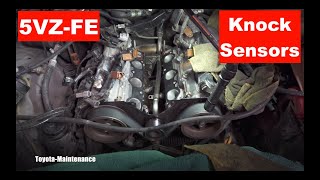
- V6 (3.4L 5VZ-FE): This is a much more difficult and labor-intensive job. The two knock sensors and a short wiring harness are located deep in the engine valley, underneath the lower intake manifold. Because of the extensive labor required to access them, it is strongly recommended to replace both sensors and the wiring harness at the same time, even if only one has failed.
A Warning on Aftermarket Parts for the V6
Due to the extremely high labor cost involved in the V6 knock sensor replacement, using a cheap aftermarket sensor is a significant gamble. Many owners report that non-OEM sensors fail quickly, forcing them to pay for the entire job a second time. For the V6 engine, it is highly recommended to use OEM Toyota or OEM-supplier (like Denso) parts to ensure reliability and avoid a costly repeat repair.
Common Causes of Failure

While the sensor itself can fail, the wiring harness is often the true culprit, especially on the V6. Over many years, the heat in the engine valley makes the harness brittle, causing it to crack and fail. These trucks are also known for rodent damage; mice and other pests often build nests in the engine valley and chew through the knock sensor wires.
Estimated Replacement Costs

| Part | Estimated Cost |
|---|---|
| New OEM Knock Sensor (Each) | $140 - $260 |
| New Aftermarket Knock Sensor (Each) | $27 - $32 |
| Shop Labor (4-Cylinder) | $250 - $450 |
| Shop Labor (V6 - Sensors & Harness) | $800 - $1,500+ |
Frequently Asked Questions
Where is the knock sensor located on my Tacoma?
On V6 models, there are two sensors located under the lower intake manifold in the valley of the engine. On 4-cylinder models, there is one sensor on the side of the engine block, also beneath the intake manifold.
Can I replace the knock sensor myself?
For a 4-cylinder engine, a confident DIY mechanic can typically perform the replacement. For the V6 engine, the job is very complex and requires significant disassembly of the top of the engine. It is considered a difficult job (4/5 difficulty) and is often best left to a professional unless you are a very experienced mechanic.
What happens if I don't replace a bad knock sensor?
Your truck's computer will put the engine in a 'limp mode,' causing poor acceleration and bad fuel economy. While this protects the engine from immediate damage, ignoring a true knocking condition could lead to severe internal engine failure over time.
Do I really need to replace the wiring harness too?
On the V6 engine, yes. The harness is a common point of failure due to heat and rodent damage and is inaccessible without removing the intake manifold. Replacing it along with the sensors is critical to avoid having to do the job again.
Helpful Videos

Technical Specifications
OEM Part Numbers: 89615-12090 89615-12050 89615-20090 82219-34010 (Harness)
The V6 (5VZ-FE) engine uses two knock sensors, while the 4-cylinder (3RZ-FE/2RZ-FE) uses one. The sensors are piezoelectric, generating an AC voltage signal in response to engine vibrations.

The information in this article is provided for general reference and educational purposes only. Vehicle specifications, procedures, and part compatibility can vary by production date, trim level, and region. Always consult your vehicle's factory service manual and verify part numbers before purchasing or performing repairs. Safety-critical components such as airbags, seat belts, and braking systems should be installed by a qualified professional.
- Toyota Tacoma: