

Toyota Tacoma Coolant Temperature Sensor Guide (1995-2004)
Is your first-gen Tacoma running rough, getting bad gas mileage, or overheating? Your coolant temperature sensor might be the culprit.
- A bad coolant temp sensor can cause poor MPG, overheating, and a check engine light with codes like P0117 or P0125.
- For reliability, choose an OEM or Denso brand sensor; cheap aftermarket versions are known to cause persistent issues.
- On V6 engines the sensor is at the front; on 4-cylinders it's in a hard-to-reach spot at the rear of the engine.
- Your dash gauge and engine computer use two different sensors; one can fail without affecting the other.
Symptoms of a Failing Coolant Temperature Sensor

When the coolant temperature sensor starts to fail, it can send incorrect signals to your truck's computer, leading to a variety of noticeable problems. Ignoring these signs can lead to poor performance, failed emissions tests, and potentially severe engine damage from overheating.
Choosing the Right Aftermarket Sensor

When it comes to electronic sensors for your Tacoma, quality matters. While there are many budget-friendly aftermarket options, the engine computer is sensitive to the data from the ECT sensor. Forum discussions among Tacoma owners consistently recommend using either a genuine Toyota OEM part or a sensor from the original equipment manufacturer, which is often Denso. A cheap, low-quality sensor can provide inaccurate readings right out of the box or fail quickly, leaving you with the same problems you started with. Brands like Denso, Beck Arnley, and Hella are well-regarded in the aftermarket, but for this specific part, sticking close to the original is the safest bet for reliability.
Replacement Cost
| Part Type | Part Cost | Shop Labor Cost |
|---|---|---|
| New OEM | $70 - $100 | $100 - $250 |
| New Aftermarket (Replacement) | $19.57 |
Note: Costs are estimates and can vary based on your location and the specific repair shop. The labor cost for this repair can vary significantly depending on the engine, as the sensor is much harder to access on 4-cylinder models.
Known Issues, Recalls, or TSBs
As of this writing, there are no specific recalls or widespread Technical Service Bulletins (TSBs) from Toyota or the NHTSA related to the engine coolant temperature sensor for the 1995-2004 Toyota Tacoma. Any failures are typically due to normal wear and tear over the vehicle's lifespan.
Frequently Asked Questions

Where is the coolant temperature sensor located on a 1995-2004 Tacoma?
The location depends on your engine. On the 3.4L V6, the main sensor for the ECU is on the front of the engine, on the lower intake manifold behind the timing cover. For 2.4L and 2.7L 4-cylinder engines, it is often located on the back of the cylinder head near the firewall, making it much more difficult to access. The single-wire sender for the gauge is typically in a separate location.
Is it okay to use a cheap aftermarket sensor?
It is generally not recommended. The Tacoma's ECU relies on accurate data from this sensor to manage the engine properly. A low-quality sensor might provide incorrect readings, leading to persistent performance issues, or it may fail prematurely. Most owners and mechanics recommend using an OEM or OEM-supplier part like Denso for best results.
Can I replace the coolant temperature sensor myself?
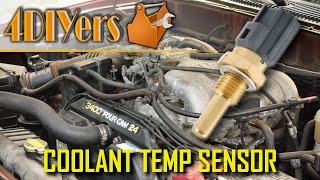
Yes, for many owners this is a DIY-friendly job. The main challenge is access. On the V6 engine, the job is more straightforward. 🎬 Watch this step-by-step replacement guide for the 3.4L V6 engine. On 4-cylinder engines, the sensor's location at the rear of the engine can make it a tight squeeze. 🎬 See how to access and change the sensor on 2.7L models. The process involves draining a small amount of coolant, unplugging the connector, and unscrewing the sensor. Always work on a cold engine to avoid burns.
Why is my temperature gauge not working but I have no check engine light?
This is a common point of confusion. The temperature gauge on your dash is often operated by a separate, single-wire sensor (a "sender") than the two-wire sensor used by the engine computer (ECU). It's possible for the gauge sender to fail while the main ECU sensor is still working perfectly, which is why you wouldn't get a check engine light. Conversely, the main ECU sensor can fail and trigger a light, while your dash gauge continues to read normally 🎬 Learn how to replace the specific sensor for your temperature gauge. (or not at all).
Helpful Videos
Technical Specifications
OEM Part Numbers: 89422-35010 89422-20010
Typically a two-pin sensor for the ECU and a single-pin sender for the gauge. The ECU sensor is a thermistor, meaning its electrical resistance changes with temperature.

The information in this article is provided for general reference and educational purposes only. Vehicle specifications, procedures, and part compatibility can vary by production date, trim level, and region. Always consult your vehicle's factory service manual and verify part numbers before purchasing or performing repairs. Safety-critical components such as airbags, seat belts, and braking systems should be installed by a qualified professional.
- Toyota Tacoma: