

Choosing the Right Aftermarket Brake Pads for Your 1995-1999 BMW M5
Understand the unique brake systems of the E34 and E39 M5 to make the best choice for your high-performance sedan.
- First, confirm if you have a 1995 E34 M5 or a later E39 M5 (sold as a 2000-2003 model in the US), as the brake pads are different.
- Always replace the single-use electronic brake pad wear sensors when you replace your brake pads.
- Aftermarket ceramic pads (like Akebono or Centric) offer a great reduction in brake dust compared to OEM pads.
- For optimal performance and safety, it is strongly recommended to replace your brake rotors at the same time as the pads.
A Note on the 1995-1999 BMW M5 Generation
Before buying parts, it's crucial to know which M5 you own. The specified '1995-1999' range covers two different generations with a production gap in between. The E34 M5 generation ended in 1995. There was no M5 model for North America from 1996 to 1998. The E39 M5 was introduced in 1998 but arrived in the North American market for the 2000 model year, with production starting in late 1999. Therefore, a '1995 M5' is an E34, while a '1999 M5' in North America would be a very early production model of the E39 generation, typically sold as a 2000 model. Always confirm your vehicle's generation (E34 or E39) before purchasing brake pads, as they are not interchangeable.
Symptoms of Worn Brake Pads
Your M5 is equipped with systems to let you know when it's time for new brake pads. Ignoring these signs can lead to reduced stopping power and more expensive repairs.
- Brake Warning Light: Your M5 has electronic brake pad wear sensors. When a pad wears down to a certain point, it breaks a circuit and illuminates a warning light on your dashboard. This is the most direct indicator.
- Squealing or Grinding Noises: A high-pitched squeal when you apply the brakes is often caused by the wear indicators built into the pads. A louder, more violent grinding noise means the pad material is completely gone, and the metal backing plate is grinding against the rotor. This is a critical situation that requires immediate attention.
- Vibration or Pulsation: If you feel a pulsing or vibration through the brake pedal or steering wheel when braking, it could mean your brake rotors are warped, often from being overheated by worn pads.
- Reduced Performance: If the car takes longer to stop or the brake pedal feels soft and requires more travel, your pads may be worn out or your brake fluid may need attention.
Aftermarket Brake Pad Options for Your M5
Original Equipment (OE) BMW pads provide excellent performance but are known for producing a lot of brake dust and can be expensive. Aftermarket pads offer a wide range of choices to suit your driving style and budget, from low-dust ceramic pads for daily driving to aggressive semi-metallic compounds for spirited use.
| Brand Tier | Description & Suitable For | Available Brands |
|---|---|---|
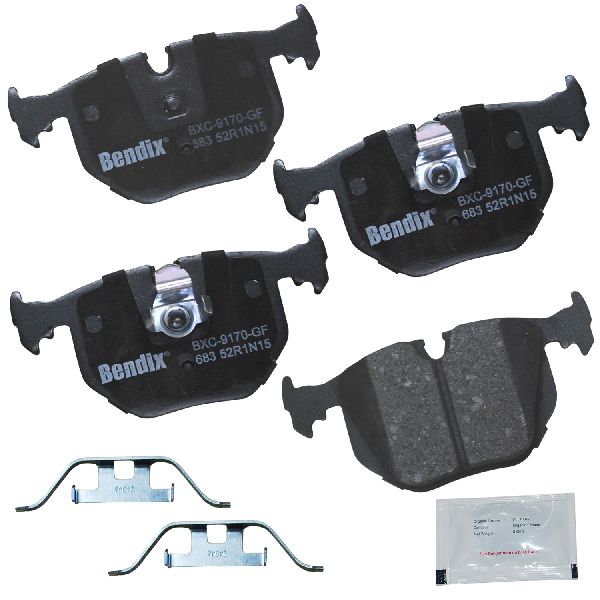
| Standard Replacement | These pads are designed to meet or exceed OEM specifications for daily driving. They offer a good balance of stopping power, low noise, and reasonable pad life. Ideal for the M5 owner who uses their car as a daily driver and wants reliable, quiet performance. | Bendix, Centric (Posi-Quiet series) |
| Premium / Ceramic | Ceramic pads are a popular upgrade for M5 owners looking to reduce brake dust significantly. They offer smooth, quiet stopping and are very rotor-friendly. While their initial "bite" might feel slightly less aggressive than semi-metallic pads, they provide excellent performance for street use. | Centric, Akebono |
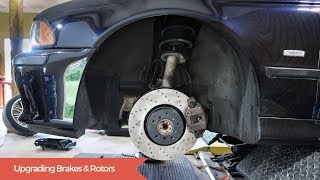
| Performance / Sport | For the enthusiast who enjoys spirited driving or occasional track days. These pads, often made from semi-metallic or para-aramid composites, offer a higher friction level and resistance to brake fade at high temperatures. The trade-off can be more noise and dust compared to ceramic options. | StopTech, Hawk Performance | 🎬 Watch this E39 M5 brake and rotor upgrade featuring these brands.
| Economy | While budget-friendly, economy pads like those from Total Stopping Solutions are generally not recommended for a high-performance vehicle like the M5. They may not provide the necessary heat dissipation or stopping power required, leading to premature fade and compromised safety. | Total Stopping Solutions |
Pro-Tip: Bedding In Your New Pads
Properly bedding-in your new brake pads is essential for performance and longevity. This process involves a series of controlled stops to evenly transfer a layer of friction material onto the brake rotor. It prevents glazing, reduces noise, and ensures you get the full stopping power from your new pads. Always follow the manufacturer's specific bedding-in procedure.
Known Issues, Recalls, and TSBs
No specific recalls or technical service bulletins (TSBs) related directly to the disc brake pads for the 1995 E34 M5 or 2000-2003 E39 M5 were found in the search. However, there was a recall for the brake lamp switch on some 2000 models which could fail and leave the brake lights either always on or always off. Additionally, a major recall involving Takata airbags affects 2000-2003 E39 M5 models, with BMW issuing a "Do Not Drive" warning for unrepaired vehicles. While not a brake pad issue, it is a critical safety warning for all E39 M5 owners.
Frequently Asked Questions (FAQ)
Do I need to replace my brake pad wear sensors?
Yes. BMW M5s use electronic wear sensors that are designed for one-time use. Once the sensor is triggered and the warning light comes on, the sensor must be replaced along with the brake pads. It's wise to have new sensors on hand before starting the job.
What's the difference between E34 and E39 M5 brakes?
The E34 M5 (1995) used a braking system derived from the 535i chassis. The later E39 M5 (2000-2003) featured a more advanced system with larger rotors and calipers designed to handle the power of its V8 engine. The parts are not interchangeable, making it critical to order for your specific model year and generation.
Why are my new aftermarket pads so dusty or noisy?
High-performance and semi-metallic brake pads, like those from StopTech, often create more dust and can be noisier than ceramic or OEM pads. This is a normal trade-off for increased friction and heat resistance. If the noise is a grinding or scraping sound, the pads may have been installed incorrectly. A squeal can sometimes be fixed by applying anti-squeal compound to the back of the pads during installation.
Should I replace my rotors at the same time as my pads?
🎬 See a step-by-step guide for installing new performance pads and rotors.It is highly recommended. Installing new pads on old or worn rotors can lead to uneven wear, vibrations, and reduced braking performance. For a vehicle with the performance capabilities of an M5, starting with a fresh, flat surface for the new pads to bed into is the best practice for safety and performance.
Helpful Videos
Technical Specifications
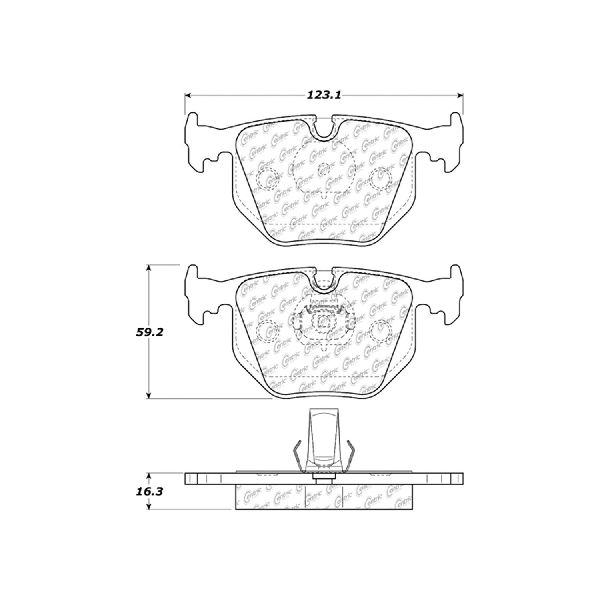
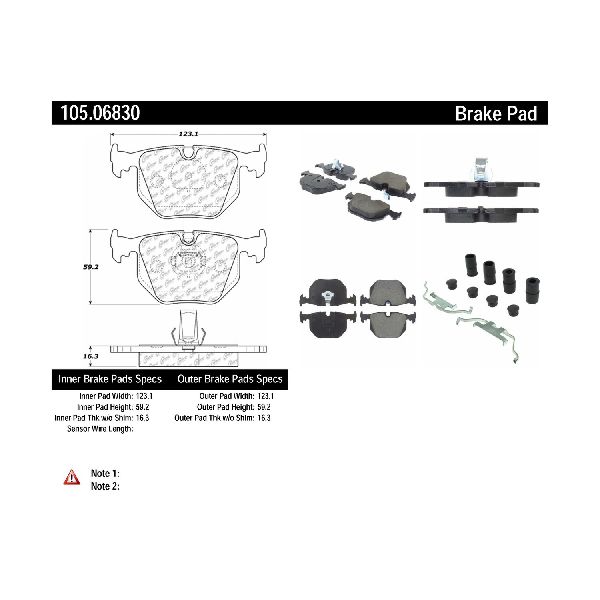
OEM Part Numbers: 34112282165 (E39 M5 Front) 34216761248 (E39 M5 Rear) 34112282995 (E34 M5 Front)
The specified year range includes two distinct vehicle generations: the 1995 E34 M5 and the 1999-2003 E39 M5 (North American sales began with the 2000 model year). Brake systems are not interchangeable between these generations. Both generations utilize a four-wheel disc brake system with electronic wear sensors on select pads.
We Have This Part in Stock
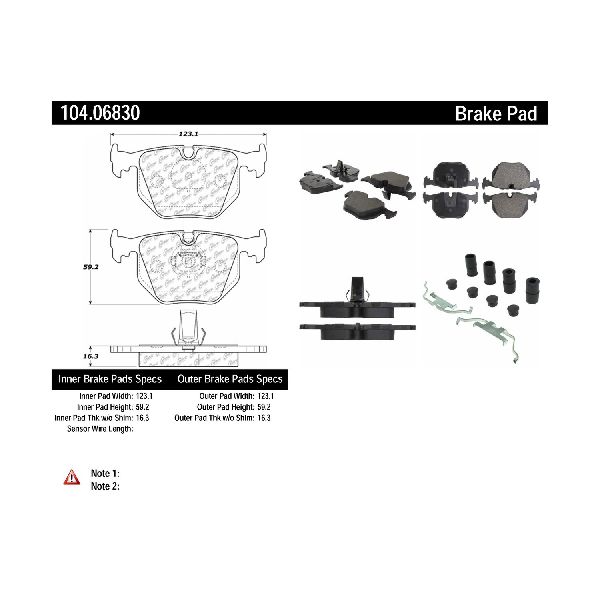
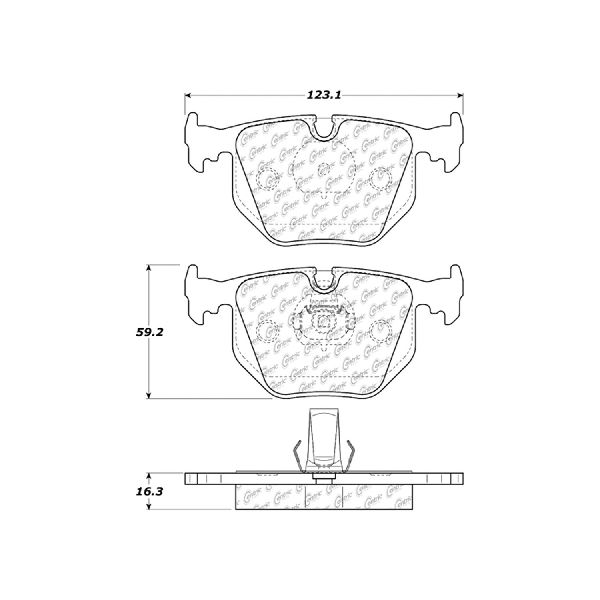


The information in this article is provided for general reference and educational purposes only. Vehicle specifications, procedures, and part compatibility can vary by production date, trim level, and region. Always consult your vehicle's factory service manual and verify part numbers before purchasing or performing repairs. Safety-critical components such as airbags, seat belts, and braking systems should be installed by a qualified professional.
- BMW M5: