

A Guide to Oxygen Sensors for the 1994-2001 Toyota Camry
Restore your Camry's fuel economy and clear that check engine light by choosing the right replacement oxygen sensor.
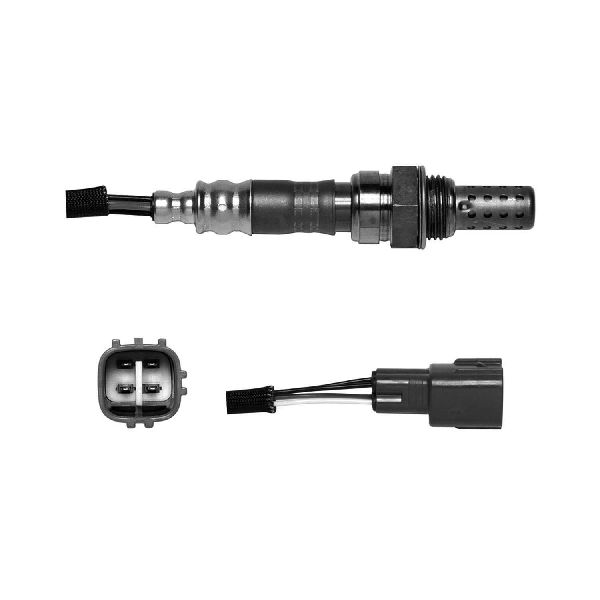
- Denso is the Original Equipment Manufacturer (OEM) for Toyota and is the most recommended brand for a reliable, long-lasting replacement.
- Before ordering, check the emissions sticker under the hood to determine if your Camry has California (CARB) or Federal emissions, as the sensors may differ.
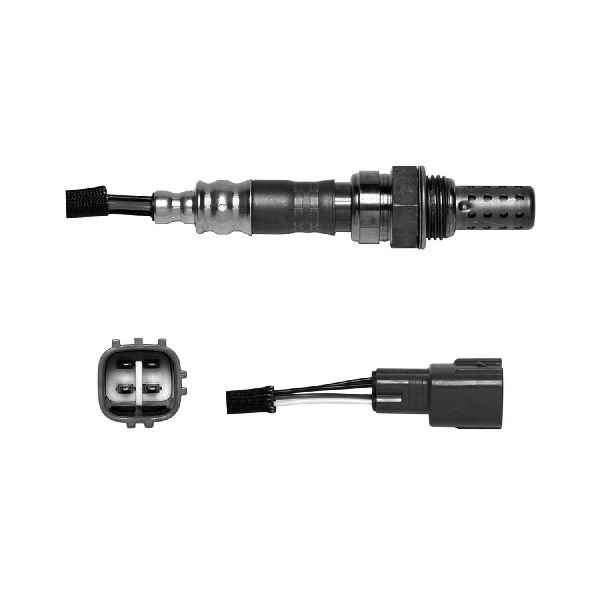
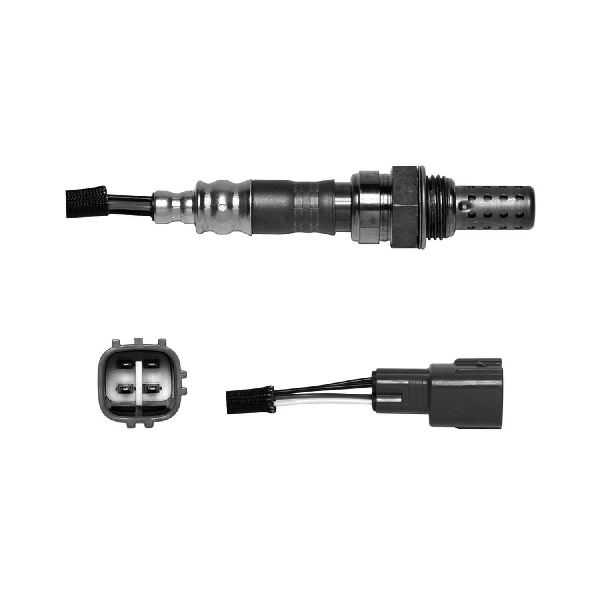
- Always buy a direct-fit sensor. Avoid universal sensors that require cutting and splicing wires.
- Replacing a bad O2 sensor promptly can prevent damage to your catalytic converter, saving you from a much more expensive repair down the road.
Understanding Oxygen Sensor Failure in Your Camry

Oxygen sensors don't last forever. Constant exposure to hot exhaust gas, carbon buildup, and contaminants eventually causes them to wear out, typically between 60,000 and 100,000 miles. When a sensor starts to fail, it sends slow or incorrect signals to the engine's computer. This can throw off the air-fuel mixture, leading to a variety of noticeable problems. Ignoring a bad O2 sensor can lead to poor performance, higher fuel costs, and can eventually damage your expensive catalytic converter.
Symptoms of a Bad Oxygen Sensor

- Check Engine Light: This is the most common sign. Codes like P0130, P0133, P0135, P0136, P0141, and P1135 often point directly to a faulty oxygen sensor or its circuit. A P0420 code can sometimes indicate a bad downstream sensor, but it may also mean the catalytic converter itself is failing.
- Poor Fuel Economy: If the engine computer gets a bad signal, it may default to a rich fuel mixture, meaning it uses more gas than necessary. This is one of the most frequent complaints from owners with a failing sensor.
- Rough Idle and Sluggish Performance: An incorrect air-fuel ratio can cause your Camry's engine to idle unevenly, hesitate during acceleration, or feel less powerful.
- Failed Emissions Test: A bad O2 sensor will prevent the engine from managing emissions correctly, leading to an automatic failure at the inspection station.
Choosing the Right Aftermarket O2 Sensor

When shopping for a replacement, you'll find many brands. For a Toyota, sticking close to the original equipment (OEM) quality is the best approach for a hassle-free repair. Forum discussions and mechanic recommendations consistently point to one brand as the top choice.
Pro Tip: Federal vs. California Emissions
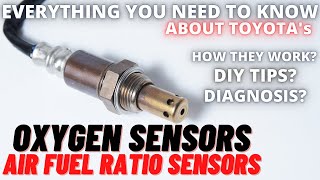
Some Camrys of this era were built to stricter California (CARB) emissions standards, while others were built to Federal (EPA) standards. These vehicles may use different types of oxygen sensors (sometimes called Air/Fuel Ratio sensors for CARB models) and often have different electrical connectors. Before ordering, check the emissions label under 🎬 Learn the difference between standard O2 and Air/Fuel sensors. your hood to see which standards your vehicle conforms to. Using the wrong one will likely keep the check engine light on.
Brand Quality Tiers
- Tier 1: OEM & Premium Aftermarket (Recommended)
- Denso: Denso is the original equipment manufacturer for Toyota. Choosing a Denso sensor is the safest bet for a direct-fit, reliable replacement that performs exactly like the original part. Many owners and mechanics will only use Denso on Toyotas to avoid issues.
- NGK (NTK): NGK, which markets its sensors under the NTK brand, is another top-tier Japanese manufacturer that is highly regarded and often an OEM supplier for other car brands. They are considered an excellent alternative to Denso.
- Tier 2: Quality Aftermarket
- Bosch: A huge name in auto parts, Bosch sensors are generally high quality. However, for Japanese vehicles like the Camry, some owners report mixed results or a shorter lifespan compared to Denso or NTK. Ensure you get a "direct-fit" model with the correct connector, not a universal one that requires splicing wires.
- Delphi: Delphi is a major OEM supplier, particularly for GM vehicles, and produces reliable aftermarket parts. They are a solid choice if a direct-fit sensor is available for your Camry.
- Tier 3: Standard & Budget
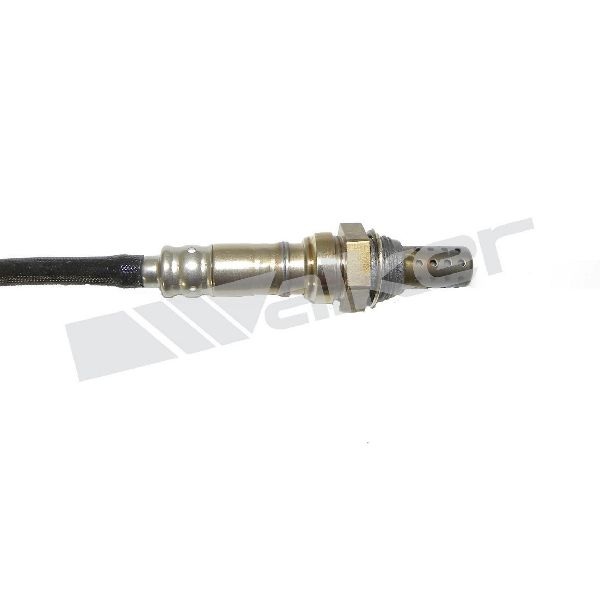
- Walker Products, Spectra, DriveWire, Hella: These brands offer a more budget-friendly option. While they can work, they may not have the same longevity or precise calibration as the OEM-level brands. They can be a viable choice if cost is the primary concern, but be aware that you might be replacing them again sooner.
Common Ordering Mistake
Pay close attention to the sensor's position. Your Camry has "upstream" (before the catalytic converter) and "downstream" (after the catalytic converter) sensors. On V6 models, you also have Bank 1 (rear, near the firewall) and Bank 2 (front, near the radiator). The sensors are not interchangeable. Always verify the exact position you are replacing 🎬 Watch this guide to locate sensors on V6 Camry models. before you buy.
Replacement Cost
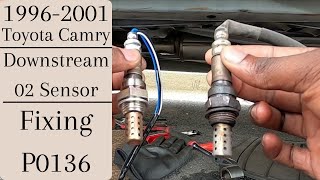
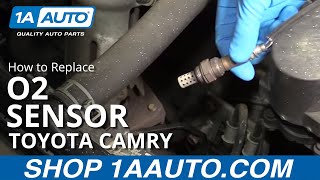
The cost to replace an oxygen sensor depends on the brand you choose and whether you do it yourself or use a repair shop. The job is feasible for a DIYer with the 🎬 Follow this step-by-step video to replace your O2 sensor. right tools.
| Item | Estimated Cost |
|---|---|
| New Aftermarket Oxygen Sensor | $22 - $392 |
| New OEM Oxygen Sensor | $110 - $170 |
| Shop Labor | $100 - $250 |
Frequently Asked Questions

How many oxygen sensors does my 1994-2001 Camry have?
A 4-cylinder Camry typically has two sensors: one upstream (before the catalyst) and one downstream (after the catalyst). A V6 model has four sensors: an upstream and a downstream sensor for each cylinder bank (Bank 1 and Bank 2).
What tools do I need to replace an O2 sensor?
You will need a special O2 sensor socket, which has a slot for the wire to pass through. You'll also need a ratchet and potentially some penetrating oil to loosen the old sensor, as it can be seized in the exhaust pipe due to heat and rust.
What is the difference between an upstream and a downstream sensor?
The upstream sensor (also called Sensor 1 or an Air/Fuel Ratio Sensor) is the primary sensor that the computer uses to make rapid adjustments to the fuel mixture. The downstream sensor (Sensor 2) primarily monitors the efficiency of the catalytic converter to make sure it's doing its job.
Can I use a "universal" oxygen sensor?
It is not recommended. Universal sensors require you to cut the old connector off and splice it onto the new sensor. This introduces a potential point of failure. A direct-fit sensor with the correct plug is a much more reliable and simpler installation.
Are there any recalls for the oxygen sensor on my Camry?
A search of the National Highway Traffic Safety Administration (NHTSA) database shows no specific recalls for oxygen sensors on the 1994-2001 Toyota Camry. Always check for the latest information using your vehicle's VIN.
Helpful Videos
Technical Specifications
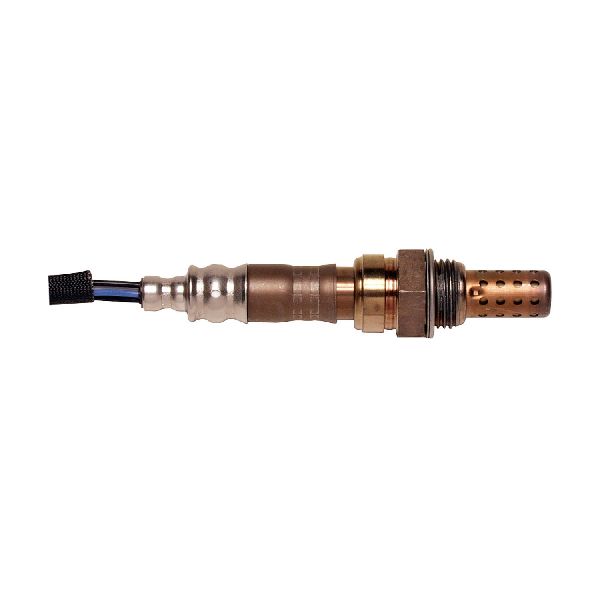
OEM Part Numbers: 89467-33040 89465-33330 234-9010 234-4622 234-4137
Vehicle will have between two and four oxygen sensors, depending on engine (2.2L L4 or 3.0L V6) and emissions type (Federal or California). Sensors are specific to their location (Upstream/Downstream, Bank 1/Bank 2). Direct-fit connectors are essential. Upstream sensors for some models may be wide-band Air/Fuel Ratio sensors.
We Have This Part in Stock


The information in this article is provided for general reference and educational purposes only. Vehicle specifications, procedures, and part compatibility can vary by production date, trim level, and region. Always consult your vehicle's factory service manual and verify part numbers before purchasing or performing repairs. Safety-critical components such as airbags, seat belts, and braking systems should be installed by a qualified professional.
- Toyota Camry: