

A Honda Civic Owner's Guide to the 1992-2001 Engine Coolant Thermostat
Keep your Civic's engine temperature in check by understanding this critical cooling system part.
- A thermostat can fail stuck-open (engine runs cold, P0128 code) or stuck-closed (engine overheats).
- For a daily driver, stick with an OEM temperature thermostat (170°F or 180°F).
- Always replace the thermostat gasket and bleed the cooling system of air after installation to prevent issues.
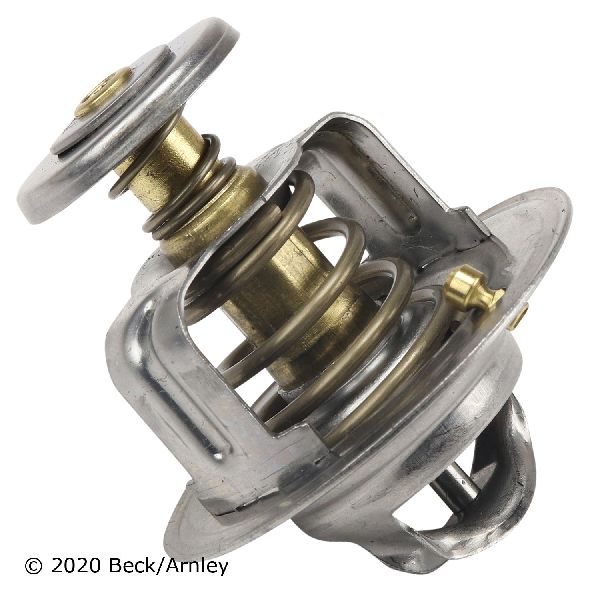
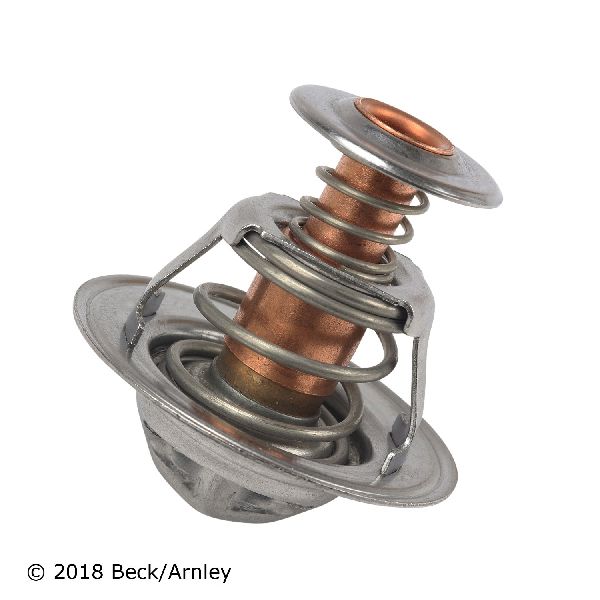
- OEM and premium aftermarket brands like Beck Arnley and Gates are reliable choices for this part.
Is Your Civic's Thermostat Failing?

A thermostat is a simple part, but when it fails, it can cause noticeable problems. It can fail in two ways: stuck open or stuck closed. A stuck-closed thermostat is the most dangerous, as it will trap heat and cause the engine to overheat quickly. A stuck-open thermostat is more common and will prevent your engine from reaching its proper operating temperature.
Key Symptoms of a Bad Thermostat:
- Overheating Engine: If the thermostat is stuck closed, the temperature gauge will climb into the red zone. This is a critical issue that requires immediate attention.
- Engine Not Warming Up: If the thermostat is stuck open, your temperature gauge may stay on cold or only rise slightly. Your heater might also blow lukewarm or cold air.
- Check Engine Light: A faulty thermostat can trigger a Check Engine Light, often with the code P0128, 🎬 Watch how to fix the P0128 error code which indicates the coolant temperature is below the thermostat's regulating temperature.
- Poor Fuel Economy: An engine that runs too cool is inefficient, leading to worse gas mileage.
Overheating is Serious
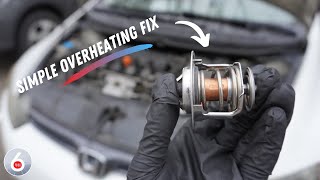
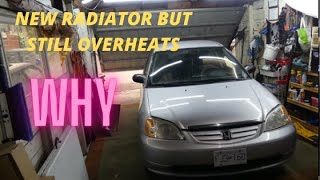
🎬 Watch this guide to diagnose Civic overheating issuesIf your temperature gauge is in the red, pull over and shut off the engine as soon as it is safe to do so. Driving with an overheating engine can cause severe and expensive damage, including a warped cylinder head or blown head gasket.
Choosing the Right Aftermarket Thermostat

For the 1992-2001 Civic, both OEM and quality aftermarket thermostats are excellent choices. The original Honda parts are known for their reliability, but reputable aftermarket brands offer comparable quality at a lower price. The key is to choose a trusted brand and the correct temperature rating.
Brand Quality Tiers
- Premium Aftermarket (OEM Equivalent): Brands like Beck Arnley and Gates are well-regarded in the Honda community. They often source parts from the original equipment manufacturers or meet those exact specifications. These are a reliable choice for peace of mind.
- Performance Aftermarket: A brand like Mishimoto offers thermostats that may open at a lower temperature. While this can be beneficial for highly modified or track-driven cars, for a daily-driven Civic, it's best to stick with the OEM temperature rating to ensure efficient engine operation and avoid potential issues.
- Standard Aftermarket: Brands like Motorad and Facet provide a budget-friendly option that meets basic requirements. While some users report success, others have noted inconsistencies, sometimes receiving a Motorad part in a box for a different brand.
The Jiggle Pin Matters
Many Honda thermostats have a small "jiggle pin" or air release valve. This pin helps bleed trapped air from the cooling system. When installing, make sure the new thermostat has this feature and that it is positioned at the top (12 o'clock position) to be most effective.
Estimated Costs
The cost to replace a thermostat can vary based on the parts you choose and whether you do the work yourself.
| Item | Estimated Cost |
|---|---|
| New OEM Thermostat | $25 - $50 |
| New Aftermarket Thermostat | $10 - $65 |
| Shop Labor | $75 - $150 |
Frequently Asked Questions

Do I need to replace the gasket too?
Yes, absolutely. Always install a new thermostat gasket or O-ring. Many new thermostats include one in the box. Reusing the old gasket is a sure way to cause a coolant leak.
What temperature thermostat should I buy for my Civic?
For a stock 1992-2001 Honda Civic, you should use a thermostat with the OEM-specified opening temperature, which is typically 170°F or 180°F (78°C or 82°C). Using a lower temperature thermostat on a stock engine can decrease fuel efficiency and cause the computer to think the engine isn't fully warmed up.
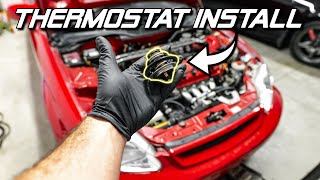
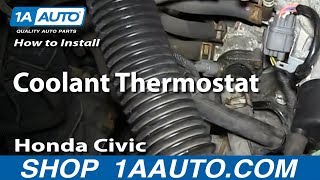
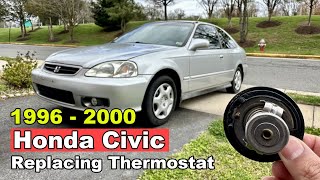
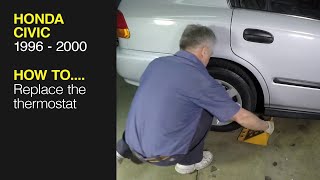
Is replacing the thermostat a DIY job? 🎬 See this step-by-step Civic thermostat replacement video
Yes, for most people with basic tools. The thermostat is located where the lower radiator hose connects to the engine block. The process involves draining some coolant, unbolting the housing, swapping the part, and then refilling and bleeding the system.
Do I have to bleed the cooling system after replacement?
Yes, this is a critical step. Air pockets trapped in the cooling system can cause overheating or erratic temperature readings. To bleed the system, leave the radiator cap off, turn the heater to full hot, and let the engine run until the cooling fan cycles on and off a couple of times, adding coolant as the level drops.
Are there any recalls for the thermostat on these Civics?
No, there are no specific recalls for the engine coolant thermostat on 1992-2001 Honda Civics. However, for 2001-2002 models, Honda did issue a Technical Service Bulletin (TSB 03-002) for the P0128 code, which involved a software update for the engine computer because its parameters were too sensitive. This is less common than a simple thermostat failure.
Helpful Videos
Technical Specifications
OEM Part Numbers: 19301-P08-316 19301-PAA-306 19301-P08-306 19301-P07-306 19301-PLC-315
Standard opening temperature is typically 170°F (78°C) or 180°F (82°C). Located at the engine block where the lower radiator hose connects. Requires a new gasket for installation.
We Have This Part in Stock


The information in this article is provided for general reference and educational purposes only. Vehicle specifications, procedures, and part compatibility can vary by production date, trim level, and region. Always consult your vehicle's factory service manual and verify part numbers before purchasing or performing repairs. Safety-critical components such as airbags, seat belts, and braking systems should be installed by a qualified professional.
- Honda Civic: