

Ford Explorer 1991-2002 Fuel Injection Throttle Body Reference
Restore performance and fix common idle and acceleration problems in your Explorer.
- A failing throttle body on a 1991-2002 Explorer commonly causes rough idle, hesitation, and stalling.
- You must verify your engine (4.0L OHV, 4.0L SOHC, or 5.0L V8) before ordering, as the parts are not interchangeable.
- Cleaning the throttle body and IAC valve is a good first step, but if sensors have failed, replacement is necessary.
- Aftermarket brands like BBK offer a performance upgrade for increased horsepower, not just a stock replacement.
Is Your Explorer's Throttle Body Failing?
For 1991-2002 Ford Explorers, especially those with the 4.0L (both OHV and SOHC) and 5.0L V8 engines, the throttle body is a common source of performance issues as the vehicle ages. Carbon buildup around the throttle plate and passages can cause it to stick or not close properly. Additionally, the integrated Throttle Position Sensor (TPS) and Idle Air Control (IAC) valve are frequent failure points that can cause a range of symptoms from a rough idle to stalling.
A Critical Ordering Mistake
The 1991-2002 Ford Explorer was available with three main engines: the 4.0L OHV V6, the 4.0L SOHC V6, and the 5.0L V8. The throttle bodies for these engines are NOT interchangeable. The SOHC and OHV versions of the 4.0L engine use different parts. Always verify your specific engine by checking your VIN or engine cover before ordering a replacement.
Choosing the Right Aftermarket Throttle Body
For an older vehicle like the 1991-2002 Explorer, finding a new OEM throttle body can be difficult and expensive. The aftermarket offers two main paths: standard replacement or a performance upgrade.
- Standard Replacement: Brands like Duralast offer direct-fit replacements designed to restore original functionality. However, some owners report mixed reliability with non-OEM electronic components.
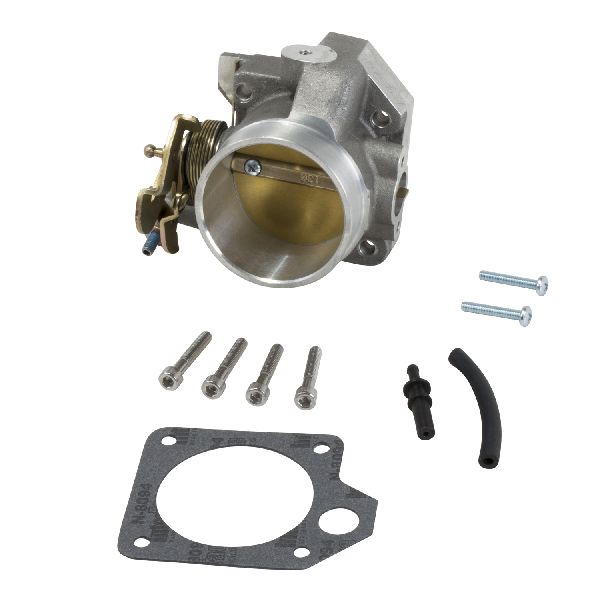
- Performance Upgrade (BBK): A popular option for enthusiasts is an aftermarket performance throttle body from a brand like BBK. These are designed with a larger diameter (bore) to allow more air into the engine, which can increase horsepower and improve throttle response. A BBK throttle body is a bolt-on upgrade and typically does not require a special computer tune.
OEM vs. Aftermarket Quality
While a new OEM part is often the gold standard, for this generation of Explorer, a high-quality aftermarket performance part like one from BBK can be a significant upgrade. BBK throttle bodies are CNC machined from aluminum and are made in the USA. They are built for performance gains, not just as a stock replacement. Some users report that aftermarket units can be sensitive and may require careful installation to avoid idle issues.
Estimated Costs
| Part Type | Estimated Cost |
|---|---|
| New Aftermarket (BBK Performance) | $299.99 |
| New Aftermarket (Standard) | $125 - $200 |
| Used OEM (Salvage Yard) | $50 - $125 |
| Shop Labor for Installation | $85 - $140 |
Frequently Asked Questions
Do I need a tune after installing a BBK throttle body?
No, a custom engine tune is generally not required after installing a BBK performance throttle body for this application. It is designed as a direct bolt-on upgrade.
Will a new throttle body fix my Check Engine Light?
It might. If the Check Engine Light is on due to a faulty Throttle Position Sensor (TPS) and you replace the entire throttle body assembly, it should resolve the code. Common codes related to the TPS include P0120, P0121, P0122, and P0123. Always use an OBD-II scanner to confirm the codes before replacing parts.
Can I just clean my old throttle body?
Yes, and it's often the first step. Cleaning carbon buildup from the throttle plate and Idle Air Control (IAC) valve passages can solve many idle and stalling issues. If cleaning doesn't work, or if the electronic sensors have failed, a full replacement is necessary.
What's the difference between the 4.0L OHV and 4.0L SOHC engines?
The OHV (Overhead Valve) engine was the standard V6 in early models (approx. 1991-2000), while the more powerful SOHC (Single Overhead Cam) V6 was introduced in 1997. They are different engine designs, and parts like the throttle body are not interchangeable. The 8th digit of your VIN can identify the engine: 'X' is for OHV and 'E' is for SOHC.
Technical Specifications
OEM Part Numbers: 1L2Z-9E926-BB
Aftermarket performance options like the BBK 1580 feature a 66mm bore, which is larger than stock to improve airflow. They are typically made from CNC machined cast aluminum. The original throttle body is cable-operated.
We Have This Part in Stock

The information in this article is provided for general reference and educational purposes only. Vehicle specifications, procedures, and part compatibility can vary by production date, trim level, and region. Always consult your vehicle's factory service manual and verify part numbers before purchasing or performing repairs. Safety-critical components such as airbags, seat belts, and braking systems should be installed by a qualified professional.
- Ford Explorer: