

A Practical Guide to Oxygen Sensors for the 1990-2001 Toyota 4Runner
Fix your check engine light and improve gas mileage by choosing the right oxygen sensor for your 4Runner.
- Denso is the original equipment manufacturer (OEM) and is the most highly recommended brand for reliability and compatibility.
- For 1996-2001 models, you must verify if your 4Runner has California or Federal emissions, as the upstream sensor is different.
- Always choose a direct-fit sensor to avoid cutting and splicing wires, which can lead to connection problems.
- A failing oxygen sensor will decrease fuel economy and can eventually damage your expensive catalytic converter if not replaced.
Symptoms of a Failing Oxygen Sensor

A bad oxygen sensor won't typically leave you stranded, but it will cause noticeable problems. The most common sign is a Check Engine Light on your dashboard. You may also experience a significant drop in fuel economy, a rough or shaky idle, and sluggish acceleration. In some cases, you might smell rotten eggs or gasoline from the exhaust, or even see black smoke. Ignoring a bad O2 sensor for too long can lead to a much more expensive problem: a damaged catalytic converter.
Generation Differences: How Many Sensors Do I Have?

The number and type of oxygen sensors on your 4Runner depend on the model year.
- 2nd Generation (1990-1995): These earlier models usually have a simpler system. Most have only one oxygen sensor located on the exhaust manifold, before the catalytic converter.
- 3rd Generation (1996-2001): These models are equipped with two sensors.
- Upstream Sensor (Front / Sensor 1): This is located before the catalytic converter. It is the primary sensor for adjusting the air-fuel mixture.
- Downstream Sensor (Rear / Sensor 2): This is located after the catalytic converter. Its main job is to monitor the converter's efficiency.
California vs. Federal Emissions
For 3rd Gen 4Runners (1996-2001), it is critical to know if your vehicle has California or Federal (49-State) emissions. You can find this information on a sticker under your hood. California-spec trucks often use a different, more expensive upstream sensor called an Air/Fuel Ratio (A/F) Sensor. These parts are not interchangeable, so you must order the correct one for your vehicle.
Choosing the Right Aftermarket Oxygen Sensor

When it comes to electronics on a Toyota, not all brands are created equal. Owner and technician feedback is very clear on this topic.
Tier 1: OEM & OEM-Equivalent
Denso: Denso is the Original Equipment Manufacturer (OEM) for Toyota. This means they made the original sensor that came with your 4Runner from the factory. For reliability and guaranteed compatibility with your truck's computer, Denso is the most recommended choice by a wide margin. Many owners who try cheaper brands end up replacing them with Denso later.
NGK (also known as NTK): NGK is another highly respected Japanese electronics manufacturer and is considered a top-tier choice for oxygen sensors. They are a solid alternative if a Denso part is not available.
Tier 2: Reputable Aftermarket
Bosch: Bosch is a massive parts supplier that invented the modern O2 sensor. While they are a quality brand, some Toyota technicians report that their sensors can be hit-or-miss with Toyota ECUs. Some owners use them without issue, but they are generally not preferred over Denso for this specific vehicle.
Tier 3: Budget Brands
Walker Products, Delphi, DriveWire, Spectra, URO Parts: These brands fall into the budget category. While the low price is tempting, forum discussions contain mixed reviews, including reports of premature failure. Given the strong consensus from experienced owners to use OEM (Denso) sensors to avoid future headaches, these should be considered with caution.
Always Choose Direct-Fit
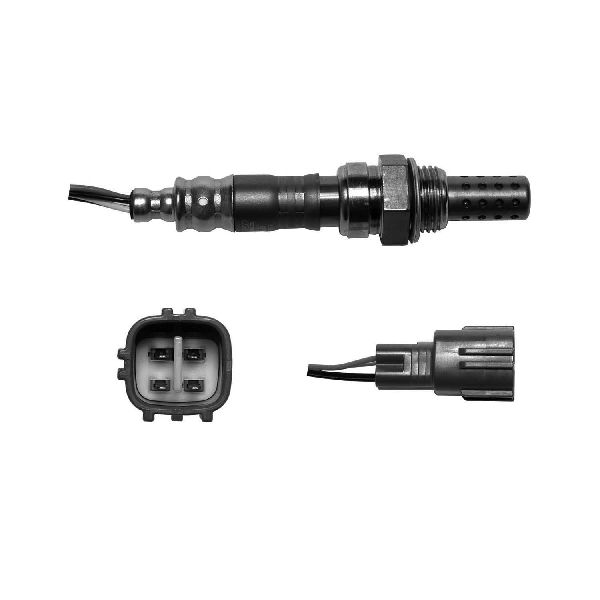
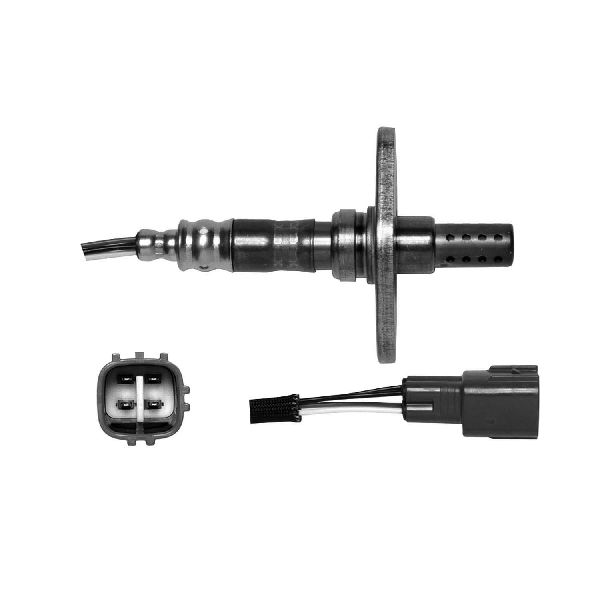
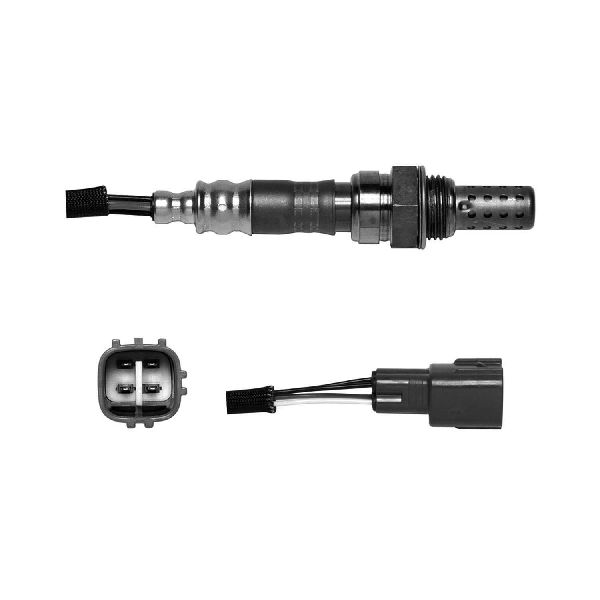
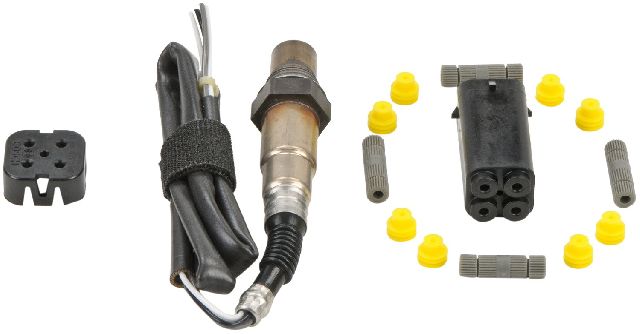
Oxygen sensors are available in "direct-fit" and "universal" styles. Universal sensors require you to cut your old connector off and splice it onto the new sensor. Always choose a direct-fit sensor. It comes with the correct plug for your 4Runner, making the installation much easier and more reliable.
Estimated Oxygen Sensor Replacement Costs
| Part Type | Estimated Cost |
|---|---|
| New Aftermarket (Budget) | $25 - $75 |
| New Aftermarket (OEM-Quality) | $80 - $180+ |
| Shop Labor | $100 - $200 |
Costs are estimates and can vary based on your vehicle's specific needs (e.g., California emissions A/F sensor) and local labor rates.
Frequently Asked Questions

What tools do I need to replace the oxygen sensor?
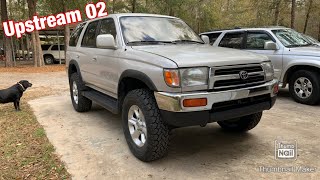
For most 1996-2001 4Runners with flange-style sensors, you'll need a ratchet and a 12mm socket. A flex-head ratchet is highly recommended for the upstream sensor due to tight clearances. 🎬 See how to swap your upstream sensor to improve gas mileage. You will also want penetrating oil to loosen rusted nuts. If your vehicle has a screw-in type sensor, you will need a special 22mm oxygen sensor socket.
What is the difference between an upstream and downstream sensor?
The upstream (or front) sensor is located before the catalytic converter and is the primary sensor used by the engine computer to manage the air-fuel ratio. The downstream (or rear) sensor is after the catalytic converter and primarily monitors the converter's health.
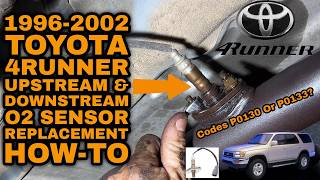
🎬 Watch: Complete walkthrough for replacing both upstream and downstream sensors.Can I clean my old oxygen sensor?
While some methods for cleaning O2 sensors exist, it is generally not a reliable or long-term fix. The sensors fail due to internal degradation over time, not just from being dirty. Replacement is the recommended repair.
My check engine light is for code P0420. Is it the O2 sensor?
A P0420 code means "Catalyst System Efficiency Below Threshold." While this often indicates a failing catalytic converter, it can also be caused by a bad downstream oxygen sensor or an exhaust leak. It is common practice to inspect for leaks and test or replace the downstream O2 sensor before replacing the much more expensive catalytic converter.
Do I need to disconnect the battery?
Yes, it is always a good safety practice to disconnect the negative battery terminal before working on any vehicle electronics, including oxygen sensors.
Helpful Videos
Technical Specifications
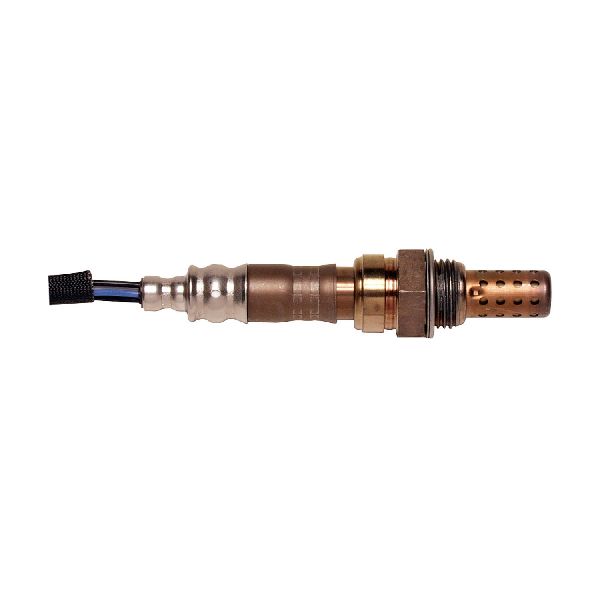
OEM Part Numbers: 89467-35110 89467-04060 89467-35010 89467-35070
Varies by year, engine, drivetrain (2WD/4WD), and emissions type (California/Federal). 2nd Gen (1990-95) typically uses one sensor. 3rd Gen (1996-2001) uses two sensors (upstream and downstream). Most 3rd Gen sensors are a 4-wire, heated, flange-mount type.
We Have This Part in Stock

The information in this article is provided for general reference and educational purposes only. Vehicle specifications, procedures, and part compatibility can vary by production date, trim level, and region. Always consult your vehicle's factory service manual and verify part numbers before purchasing or performing repairs. Safety-critical components such as airbags, seat belts, and braking systems should be installed by a qualified professional.
- Toyota 4Runner: