

Ford Probe Engine Coolant Thermostat Replacement Guide (1989-1997)
Keep your Probe's engine running at the correct temperature and prevent costly damage by understanding its thermostat.
- A failing thermostat can cause overheating or make the engine run too cold; both are bad for your Probe.
- For second-generation (93-97) 2.0L models, ensure you get the correct rubber ring gasket, not a paper one.
- Always install the new thermostat with the 'jiggle pin' at the top (12 o'clock position) to prevent air pockets.
- After replacement, you must properly 'burp' the cooling system to remove trapped air, which can cause overheating.
Is Your Ford Probe Overheating or Running Too Cold?
The Ford Probe, whether it's a first-generation (1989-1992) model with a Mazda-sourced inline-four or the second-generation (1993-1997) with its I4 or V6, relies on a properly functioning cooling system. A common failure point in any aging cooling system is the thermostat. When it fails, it can either stick open or stick closed. A thermostat stuck open will cause the engine to run too cool, leading to poor fuel economy and performance. A thermostat stuck closed is more serious, as it will cause the engine to overheat, which can lead to severe damage like a warped cylinder head or blown head gasket.
Key Signs of a Failing Thermostat
- Overheating: The temperature gauge climbs into the red, especially when idling or in stop-and-go traffic.
- Engine Not Reaching Temperature: The gauge stays on the cold side, and your heater may not blow hot air.
- Erratic Temperature Swings: The gauge needle jumps up and down unpredictably.
- Coolant Leaks: You may notice coolant leaking from the thermostat housing area.
Choosing the Right Aftermarket Thermostat for Your Probe
Since original Ford (Motorcraft) parts for this era can be difficult to source, the aftermarket is your go-to option. Quality can vary, so it's important to choose a reputable brand. For a critical, inexpensive part like a thermostat, it's wise to avoid the cheapest options.
Brand Tiers for Aftermarket Thermostats
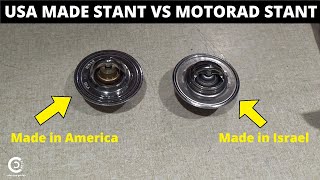
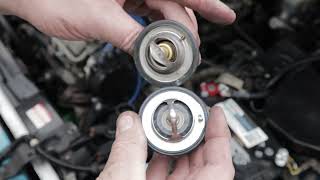
- Tier 1 (Recommended): Stant, Gates. These brands are well-regarded and often considered OEM-equivalent in quality. Many experienced mechanics trust them for reliability. However, be aware that even good brands can have an occasional faulty part, and some users report that Stant's quality has declined since being manufactured by MotoRad. 🎬 Watch this comparison of modern versus vintage Stant thermostat quality.
- Tier 2 (Standard): Beck Arnley, Motorad. Beck Arnley often re-packages OEM parts for import vehicles, which is a good sign for the Mazda-based Probe. Motorad is a massive manufacturer that supplies many store brands, but user reviews are often mixed, with some reporting inconsistent performance.
- Tier 3 (Budget): Facet, Mishimoto, and other less-known brands. While functional, these may not have the same calibration precision or long-term durability as higher-tier brands. Given the low cost of a quality thermostat, it's generally recommended to stick with Tier 1 or 2.
Pro Tip: Before installation, test your new thermostat by placing it in a pot of water on the stove. Use a thermometer to ensure it opens at the temperature specified on the part (usually stamped 180°F or 195°F). This simple step can save you from installing a defective part.
Common Ordering & Installation Mistakes
- Wrong Gasket: The 2.0L engine, in particular, uses a rubber ring-style gasket that fits around the thermostat itself, not a flat paper gasket for the housing. Make sure your new thermostat comes with the correct rubber O-ring or seal. The V6 models may use a paper-style gasket for the housing neck.
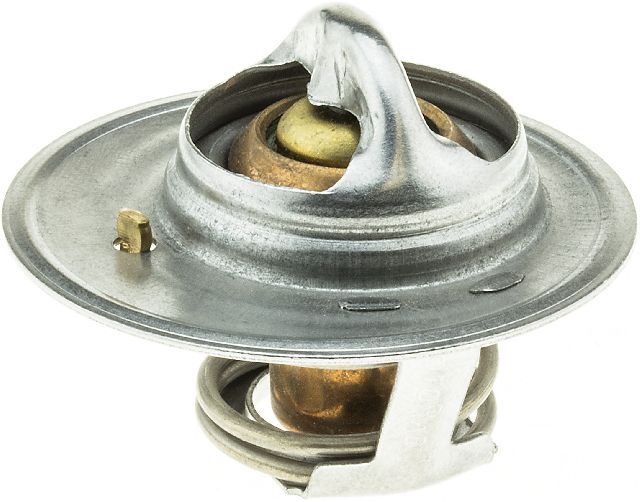
- Incorrect Orientation: Thermostats have a small 'jiggle pin' or bleed hole that allows trapped air to escape. This pin must be installed in the 12 o'clock (top) position to properly bleed air from the system.
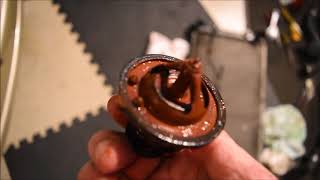
- Not Burping the System: After replacing the thermostat and refilling the coolant, you must 'burp' the cooling system to remove air pockets. Trapped air can cause overheating even with a new thermostat. 🎬 Learn how to properly burp air pockets from your cooling system.
Frequently Asked Questions (FAQ)
Where is the thermostat located on my Ford Probe?
For the 2.0L I4 engine (1993-1997): Follow the main radiator hose on the passenger side to where it connects to the engine block. The thermostat is inside the housing at that connection, held on by two bolts.
For the 2.5L V6 engine (1993-1997): The thermostat is located under the air intake assembly, beneath a coolant pipe housing. You will need to remove the intake tubing to access it. The job is more involved than on the 4-cylinder.
What temperature thermostat should I use?
Always use the OEM-specified temperature, which is typically 180°F for the Ford Probe. Using a cooler thermostat will not fix an overheating problem and can cause the engine to run inefficiently, hurting performance and fuel mileage.
Should I replace the gasket and O-rings too?
Absolutely. Always replace the thermostat gasket, O-ring, or seal when you replace the thermostat. These parts are single-use and compress over time, so reusing them will almost certainly cause a leak. Most quality thermostats come with the necessary seal.
Are there any recalls on the Ford Probe thermostat?
There are no specific recalls for the thermostat itself. However, Ford did issue recalls for cooling system issues on other models that could lead to overheating and engine fires, but these do not apply to the 1989-1997 Probe.
Helpful Videos

Technical Specifications
Standard Temperature: 180°F (82°C)
We Have This Part in Stock


The information in this article is provided for general reference and educational purposes only. Vehicle specifications, procedures, and part compatibility can vary by production date, trim level, and region. Always consult your vehicle's factory service manual and verify part numbers before purchasing or performing repairs. Safety-critical components such as airbags, seat belts, and braking systems should be installed by a qualified professional.
- Ford Probe: