

Engine Coolant Thermostat Guide for 1987-1995 Ford Mustang
Keep your Fox Body or SN95 Mustang's 5.0L or 3.8L engine from overheating by understanding and choosing the right thermostat.
- A stuck-closed thermostat will cause rapid overheating and can destroy your engine; pull over immediately if the temperature gauge spikes.
- For a stock or daily-driven Mustang, use a quality 192°F-195°F thermostat from a brand like Motorcraft or Stant for reliability.
- A 180°F thermostat is a popular performance upgrade for modified cars but isn't necessary for a stock engine.
- Always replace the gasket and inspect the housing for corrosion when changing the thermostat.
Is Your Mustang's Thermostat Failing?

A thermostat is a simple part, but a failure can cause serious problems. The two main ways a thermostat fails are by sticking open or sticking closed. For the 1987-1995 Mustang, you should watch for a few key symptoms.
Stuck Closed: The Overheating Danger
This is the most dangerous failure. When the thermostat is stuck closed, it traps coolant inside the engine block and never allows it to reach the radiator. Your temperature gauge will climb quickly into the red, and the engine will overheat. This can lead to severe engine damage, like a blown head gasket. If you see the temperature gauge rising rapidly and not coming back down, pull over immediately.
Stuck Open: The Overcooling Problem
If the thermostat is stuck open, the engine will take a very long time to warm up, or it may never reach its proper operating temperature. You might notice the temperature gauge staying at the low end, poor performance from your heater, and worse fuel economy. On these fuel-injected Mustangs, running too cool can cause the computer (EEC-IV) to stay in its warm-up mode ("open loop"), which can lead to running rich and poor drivability.
Choosing the Right Aftermarket Thermostat

When shopping for a new thermostat for your Mustang, you'll see different brands and temperature ratings. The choice depends on your car's setup and how you use it.
OEM vs. Aftermarket Quality
For a daily driven or stock Mustang, a quality OEM-style replacement like Motorcraft is a reliable choice. Many Mustang owners and mechanics trust OEM or high-quality aftermarket brands like Stant or Gates for their reliability. Some budget brands like Motorad have mixed reviews; while some users have no issues, others report premature failures. Given the low cost of the part and the high risk of engine damage, it's often worth spending a few extra dollars on a trusted brand.
Understanding Temperature Ratings
- 192°F-195°F (Stock): This is the factory temperature range for most 1987-1995 Mustangs. It's designed for the best balance of engine efficiency, emissions, and performance for a stock vehicle.
- 180°F (Performance): This is a very popular upgrade for modified Mustangs. It allows coolant to circulate sooner, which can help keep a modified engine running cooler and reduce the risk of detonation (engine knock), especially if you have increased ignition timing.
- 160°F (Race): A 160°F thermostat is generally only recommended for highly modified, track-only cars. On a street car, it can prevent the engine from reaching the temperature needed for the computer to operate efficiently, hurting fuel economy and drivability.
Pro Tip: When installing a lower-temperature thermostat (like 180°F or 160°F), remember that the thermostat only sets the minimum operating temperature. Your cooling system (radiator, fan, water pump) must be in good shape to actually keep the engine cool under load. For a 160°F thermostat to be effective, you may also need to adjust your car's computer tune to turn the electric fan on sooner.
Aftermarket Brand Tiers for 1987-1995 Mustang
| Tier | Brands | Notes |
|---|---|---|
| OEM / Premium Aftermarket | Motorcraft, Gates, Stant | Motorcraft is the original Ford part and a safe bet. Gates and Stant are generally considered reliable, quality aftermarket choices by mechanics and Mustang owners. |
| Performance Aftermarket | Mishimoto, Edelbrock, Mr. Gasket | These brands often offer lower temperature options (180°F or 160°F) for modified engines. Mishimoto offers a lifetime warranty and thermostats designed for greater cooling efficiency. Mr. Gasket is also a popular choice, but some users note that high-flow models can reduce heater performance. |
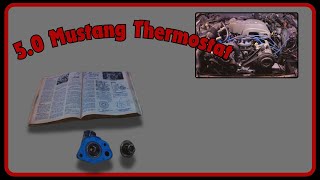
| Budget / Standard Aftermarket | Motorad, Calorstat | These are widely available and affordable. However, some users report a higher failure rate compared to premium brands. It's critical to test any thermostat in hot water before installation, regardless of brand. | 🎬 Watch: How to test a thermostat and identify bad symptoms.
Known Issues, Recalls, and TSBs

For the 1987-1995 model years, there are no specific recalls or Technical Service Bulletins (TSBs) directly for the engine coolant thermostat. However, there was a safety improvement campaign (NHTSA 01I011000) for 1995 Mustangs related to the engine cooling fan motor, which could seize and potentially cause a fire. A faulty fan can cause overheating symptoms similar to a stuck-closed thermostat, so it's important to ensure your entire cooling system is functional.
Frequently Asked Questions (FAQ)
What tools do I need to replace my Mustang's thermostat?
The job is straightforward and requires basic hand tools: a socket set, a scraper for the old gasket material, a drain pan for the coolant, and some gasket sealer. The thermostat is located at the front of the engine where the upper radiator hose connects to the intake manifold.
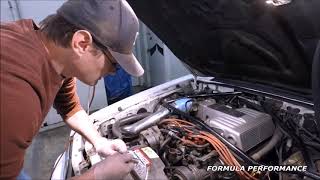
🎬 See this step-by-step Fox Body 5.0L thermostat replacement walkthrough.Should I replace the thermostat housing at the same time?
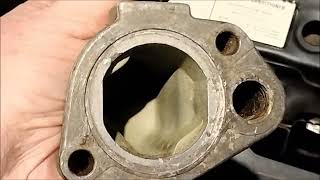
It's a good idea to inspect the housing when you replace the thermostat. These housings can corrode or crack over time, leading to coolant leaks. If it looks rusted or pitted, replacing it is cheap insurance against future leaks.
🎬 Watch: Easy thermostat replacement guide for 1994-1995 Mustang GT models.Do I need a new gasket?
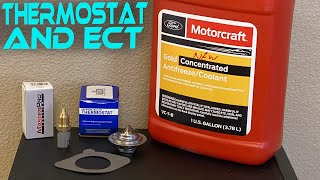
Yes, always use a new gasket when replacing the thermostat. Some thermostats come in a kit with a gasket. Applying a thin layer of RTV silicone or gasket sealer is also recommended to ensure a leak-free seal.
My car overheats even with a new thermostat. What else could be wrong?
Overheating can be caused by many issues. Common problems on Fox Body Mustangs include a worn-out fan clutch, a clogged radiator, collapsed radiator hoses, a water pump spinning the wrong direction (if an incorrect part was installed), or air trapped in the system. Also, ensure the lower radiator air deflector is in place, as it's crucial for proper airflow at cruising speeds.
Helpful Videos

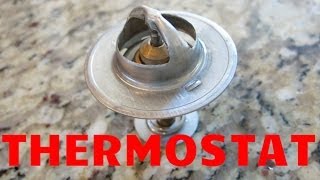
Technical Specifications
OEM Part Numbers: RT1225
Stock Temperature: 192°F-195°F. Popular Performance Temperatures: 180°F, 160°F. Location: Top front of engine, where the upper radiator hose connects to the intake manifold.
We Have This Part in Stock


The information in this article is provided for general reference and educational purposes only. Vehicle specifications, procedures, and part compatibility can vary by production date, trim level, and region. Always consult your vehicle's factory service manual and verify part numbers before purchasing or performing repairs. Safety-critical components such as airbags, seat belts, and braking systems should be installed by a qualified professional.
- Ford Mustang: