

Chevrolet Corvette Coolant Temperature Sensor Guide (1986-2022)
Erratic temperature gauge or cooling fans always on? Your Corvette's coolant sensor might be the culprit.
- A bad coolant sensor can cause more than just a wrong gauge reading; it affects engine performance, fuel economy, and cooling fan operation.
- For C4-C7 Corvettes (1986-2019), this is a simple, fast, and inexpensive DIY repair.
- For C8 Corvettes (2020+), this is a complex, powertrain-out job for a professional mechanic only.
- Before buying, confirm the sensor's location for your specific Corvette generation, as it varies widely.
Is Your Corvette's Coolant Sensor Failing?

When the coolant temperature sensor starts to go bad, it sends incorrect information to your car's computer. This can cause a range of confusing issues. Look out for these common signs.
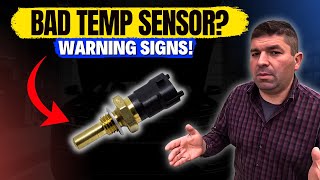
🎬 Watch: 8 common symptoms of a bad coolant temperature sensor- Check Engine Light: This is often the first sign. The sensor will trigger codes like P0117 (circuit low), P0118 (circuit high), or P0128 (thermostat issue).
- Erratic Temperature Gauge: The needle on your dash might jump wildly from cold to hot, or not move at all.
- Cooling Fans Run Constantly: The ECM may default to running the fans on high speed to be safe, even when the engine is cold. This can happen if the sensor sends a false overheating signal or no signal at all.
- Poor Engine Performance: A bad sensor can make the ECM think the engine is colder or hotter than it is. This leads to a rich fuel mixture, causing poor fuel economy, hesitation, or even stalling.
- Hard Starting: If the ECM thinks the engine is warm when it's actually cold, it won't provide the right fuel mixture for a smooth start.
Choosing the Right Aftermarket Sensor

For a high-performance car like a Corvette, using a quality part is important. While OEM sensors from GM or ACDelco are a safe bet, a quality aftermarket sensor can offer reliable performance at a better price.
- OEM Brands: ACDelco and Delphi are original equipment suppliers to GM. They offer a direct fit and performance you can trust.
- Aftermarket Brands: Brands like NTK and Standard Motor Products are well-regarded alternatives. Generic or "Replacement" branded sensors are the most budget-friendly option. They are designed to meet original specifications and are a functional choice for many owners. However, some forum users have noted that some aftermarket sensors may read slightly differently than the original part.
A Note on C4 Corvette Models (1986-1996)
Older Corvettes, especially C4 models, may have two separate sensors: one for the ECM and another for the dashboard gauge. Before buying, make sure you know which sensor has failed. If your gauge is wrong but the car runs fine, it might be the gauge sender, not the main ECT sensor.
Generation-Specific Sensor Locations

Finding the sensor is the first step. Its location varies significantly depending on your Corvette's generation.
- C4 (1986-1996): On L98 engines, it's on the front of the intake manifold, under the throttle body. On later LT1 engines, it's located on the front of the water pump. 🎬 See how to fix code P0118 on a C4 LT1
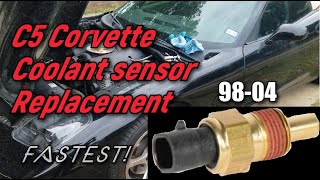
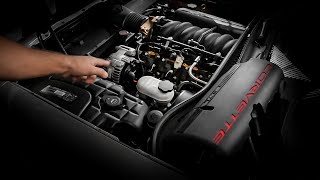
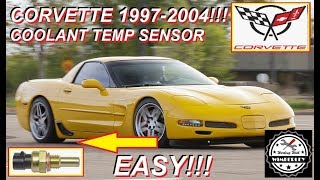
- C5 (1997-2004): Located on the driver's side cylinder head, toward the front of the engine, near the alternator. 🎬 Watch this C5 Corvette coolant sensor replacement walkthrough
- C6 (2005-2013): Also on the driver's side cylinder head, just above the first spark plug.
- C7 (2014-2019): The location moved to the passenger side of the engine, near the thermostat housing.
- C8 (2020-2022): Due to the mid-engine design, accessing the sensor is extremely difficult. This is not a simple DIY job and often requires the entire powertrain to be removed.
Estimated Replacement Costs

| Part Type | Estimated Cost |
|---|---|
| New Aftermarket | $18 - $21 |
| New OEM (ACDelco/GM) | $25 - $50 |
| Shop Labor (C4-C7) | $75 - $150 |
| Shop Labor (C8) | $1500+ (due to powertrain removal) |
Pro Tip: Quick Swap Method
For C4-C7 models, you can replace the sensor without fully draining the cooling system. When the engine is completely cool, work quickly to unscrew the old sensor and install the new one. You will only lose a small amount of coolant. Have the new sensor and a rag ready to go!
Frequently Asked Questions
Can a bad coolant sensor cause my Corvette to overheat?
Indirectly, yes. If the sensor fails to tell the ECM that the engine is getting hot, the cooling fans won't turn on. In traffic or on a hot day, this can lead to the engine overheating.
Do I have to drain all the coolant to change the sensor?
For front-engine Corvettes (C4-C7), it's not always necessary. If you work quickly while the engine is cool, you can swap the sensor with minimal coolant loss. However, the official service procedure recommends draining the coolant to a level below the sensor.
My temperature gauge dropped to its lowest reading and the fans are on full blast. Is it the sensor?
This is a classic symptom of a failed ECT sensor or a wiring issue. The car's computer loses the temperature signal and enters a fail-safe mode, turning the fans on high to prevent potential damage.
Is the replacement difficult?
On 1986-2019 Corvettes, this is a very easy DIY job, often taking less than 30 minutes with basic tools. On 2020 and newer C8 models, it is a major repair that requires a professional mechanic.
Helpful Videos


Technical Specifications
OEM Part Numbers: 15326388 19236568 213-4514 12608814 25036708
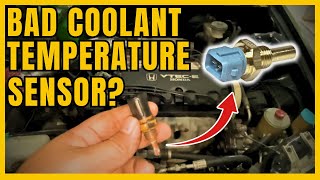
The sensor is a thermistor, meaning its electrical resistance changes with temperature. The ECM reads this resistance to determine coolant temperature. It typically has a two-wire connector and a threaded brass body.

The information in this article is provided for general reference and educational purposes only. Vehicle specifications, procedures, and part compatibility can vary by production date, trim level, and region. Always consult your vehicle's factory service manual and verify part numbers before purchasing or performing repairs. Safety-critical components such as airbags, seat belts, and braking systems should be installed by a qualified professional.
- Chevrolet Corvette: