

Subaru XT Engine Coolant Thermostat Guide (1985-1991)
Keeping your XT's engine at the right temperature is critical. Here’s what you need to know before replacing your thermostat.
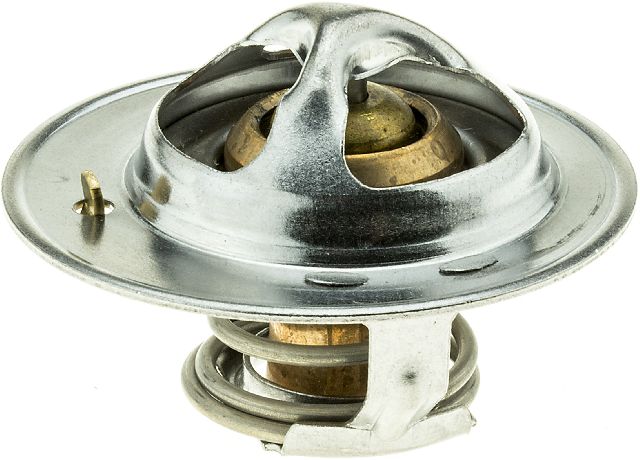
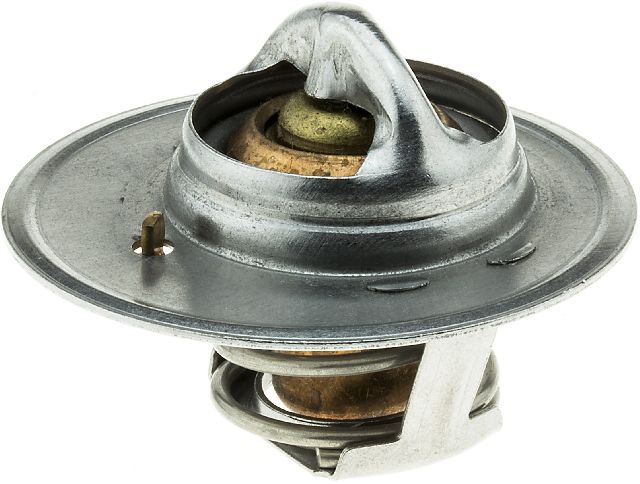
- A failing thermostat can cause overheating (stuck closed) or a cold-running engine (stuck open).
- For the 1985-1991 XT, using an OEM Subaru thermostat is strongly recommended by experienced owners for best performance.
- Replacement is a simple, DIY-friendly job that takes less than an hour with basic tools.
- Always use a new gasket and ensure the thermostat has the correct factory temperature rating (around 190-192°F).
Signs of a Failing Thermostat in Your XT
A thermostat is a wear item. After years of opening and closing, it can fail. Failure usually happens in two ways: stuck open or stuck closed. Both can cause problems for your 1.8L EA82 or 2.7L ER27 engine.
Critical Failure: Stuck Closed
This is the most dangerous failure. If the thermostat is stuck closed, it never allows coolant to reach the radiator. The engine will quickly overheat, which can lead to warped cylinder heads or a blown head gasket—expensive repairs for any Subaru. If you see the temperature gauge climbing into the red, pull over immediately and shut off the engine to prevent catastrophic damage.
Common Symptoms:
- Engine Overheating: The temperature gauge needle enters the red zone. This is the most common sign of a thermostat stuck closed.
- Engine Runs Too Cold: The temperature gauge never reaches the normal operating range, even after driving for a while. This is a classic sign of a thermostat stuck open. Your heater may also blow lukewarm air, and you might notice worse gas mileage.
- Erratic Temperature Readings: The temperature gauge needle swings back and forth unpredictably. This can happen when a thermostat is struggling to open and close correctly.
- Coolant Leaks: You may see green or blue fluid dripping from the front of the engine. A leak can sometimes develop around the thermostat housing gasket when the part fails.
Choosing the Right Aftermarket Thermostat: A Word of Caution
For most modern cars, a quality aftermarket part is a great way to save money. However, for vintage Subarus like the 1985-1991 XT, the enthusiast community has a strong consensus: the original equipment (OEM) thermostat is significantly better. Forum discussions among long-time EA82 owners consistently show that aftermarket thermostats, even from reputable brands, can cause temperature fluctuations. Many have noted the OEM part has a larger valve and provides more stable performance. While an aftermarket part will fit, sticking as close to OEM as possible is the recommended path for this specific component.
Aftermarket Brand Tiers for the Subaru XT
If an OEM part is not an option, here is a general breakdown of the available aftermarket brands based on general reputation and user feedback.
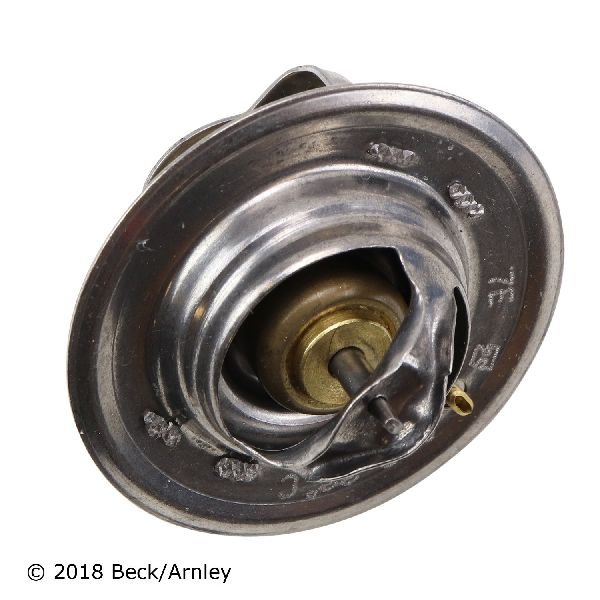
- Tier 1 (Good): Beck Arnley
Beck Arnley specializes in parts for import vehicles and often re-packages OEM parts. There's a chance a Beck Arnley thermostat for your XT is a re-boxed OEM unit. This is often your best bet if you can't source a part directly from Subaru. - Tier 2 (Standard): Gates, Stant, Calorstat
These are well-known brands that produce reliable parts. However, for this specific application on an old Subaru, users have reported mixed results compared to the stability of an OEM unit. They are a functional replacement but may not perform identically to the original. - Tier 3 (Economy): Motorad
Motorad is often considered a budget-friendly option. While functional, some users have reported higher failure rates or less precise operation compared to other brands. It will work in a pinch but is not the top recommendation for long-term reliability.
Pro Tip: Get the Right Temperature
The factory-spec thermostat for the Subaru XT is designed to open at a high temperature, typically 190°F or 192°F. Avoid the temptation to use a lower-temperature (e.g., 170°F) thermostat. While it seems like this would help the engine run cooler, it actually forces it to operate below its ideal temperature, which can reduce fuel efficiency and lead to poor heater performance in the winter. Always use a thermostat with the OEM-specified temperature rating.
Aftermarket Engine Coolant Thermostat Cost (1985-1991 Subaru XT)
| Part Type | Price Range |
|---|---|
| New Aftermarket Thermostat | $8.64 - $25.05 |
| New OEM Subaru Thermostat | $20.00 - $35.00 |
| Shop Labor for Replacement | $75 - $150 |
Frequently Asked Questions (FAQ)
Where is the thermostat located on a Subaru XT?
On the EA82 1.8L engine, the thermostat is located inside a housing where the upper radiator hose connects to the engine's intake manifold. It is held in place by two bolts. The location is similar on the ER27 2.7L engine.
Can I replace the thermostat myself?
Yes, this is a very DIY-friendly job for a home mechanic with basic tools. The process involves partially draining the coolant, removing two bolts, swapping the thermostat and its gasket, and then refilling and bleeding the air from the cooling system. The entire job should take less than an hour.
Do I need to replace the gasket too?
Yes, absolutely. Never reuse an old thermostat gasket. A new gasket is required to ensure a leak-proof seal. Most new thermostats come with a new gasket included in the box.
Are there any recalls for the Subaru XT thermostat?
No. There are no recalls or common Technical Service Bulletins (TSBs) from Subaru or the NHTSA related to the engine coolant thermostat for the 1985-1991 Subaru XT.
Technical Specifications
OEM Part Numbers: 21200AA080
Location: Upper radiator hose inlet on the engine. Gasket: Always replace. Temperature Rating: ~192°F / 89°C recommended.
We Have This Part in Stock


The information in this article is provided for general reference and educational purposes only. Vehicle specifications, procedures, and part compatibility can vary by production date, trim level, and region. Always consult your vehicle's factory service manual and verify part numbers before purchasing or performing repairs. Safety-critical components such as airbags, seat belts, and braking systems should be installed by a qualified professional.
- Subaru XT: