

Ford F-150 Ignition Switch Replacement Guide for 1975-1992
Solving common no-start, stalling, and electrical issues in your classic Ford F-150 by targeting the right part.
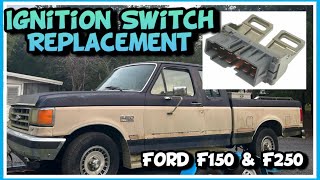
- The ignition switch is an electronic part on the steering column, separate from the key cylinder.
- For 1988-1992 models, be aware of the historical fire risk recall; a new switch resolves this.
- Symptoms often include no-start, immediate stalling, or intermittent electrical problems.
- Always inspect the actuator rod that connects the cylinder and switch, as it is a common failure point.
Is It Your Ignition Switch or the Lock Cylinder?

Many F-150 owners replace the ignition lock cylinder (where the key goes in) when the real problem is the ignition switch itself. The lock cylinder is purely mechanical; it moves an actuator rod inside the steering column. This rod then moves the electronic ignition switch, which is located further down the column under the dash. If your key turns but nothing happens, or the engine stalls, the switch is a more likely culprit than the cylinder. However, a broken actuator rod connecting the two is also a very common failure point on these trucks.
Symptoms of a Failing 1975-1992 F-150 Ignition Switch

- No Crank, No Start: You turn the key to the 'Start' position and nothing happens at all—no clicking, no cranking. This means the switch isn't sending power to the starter circuit.
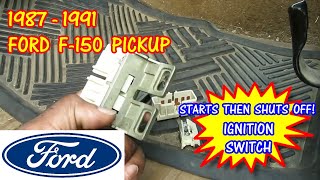
- Starts and Immediately Stalls: The engine fires up but dies as soon as you release the key from 'Start' to the 'On' position. 🎬 Watch this video to see how a faulty switch causes stalling. This indicates the switch is failing to keep the ignition system powered.
- Stalling While Driving: The engine may suddenly shut off on the road. This is a serious safety issue caused by the switch losing internal contact and cutting power to the fuel and ignition systems.
- Flickering or Dead Accessories: Your dashboard lights, gauges, radio, or blower motor may work intermittently or not at all. Wiggling the key might cause them to cut in and out.
- Key Feels 'Mushy' or Gets Stuck: While often a lock cylinder or actuator issue, a binding or broken ignition switch can make the key hard to turn or prevent it from springing back from the 'Start' position.
Important Safety Recall Information (1988-1992 Models)
In 1996, Ford issued a massive recall for 8.7 million vehicles, including 1988-1993 F-Series trucks, due to a faulty ignition switch. The switch could develop an internal short circuit, creating a risk of overheating, smoke, and fire in the steering column—even with the vehicle parked and turned off. While this recall was issued decades ago, it's crucial to be aware of this history. A new aftermarket switch is built to modern standards and replaces the problematic original design.
Choosing the Right Aftermarket Ignition Switch

For a vehicle of this age, aftermarket parts are the most practical and available option. OEM parts are likely discontinued or only available as expensive New Old Stock (NOS). Aftermarket brands offer reliable, newly manufactured parts that meet or exceed the original specifications.
- Standard Ignition (SMP): A well-respected brand in the aftermarket with a long history. Mechanics and DIYers often trust Standard for electrical components due to their reputation for quality control. They are known to sometimes use OEM suppliers for their parts, ensuring a good fit and function. For this part, Standard is a solid, reliable choice.
- Rostra Powertrain: Rostra positions itself as a manufacturer for both original equipment and the aftermarket, claiming to use high-grade materials and 100% performance testing. While less discussed in forums by owners, their stated quality standards make them a dependable alternative.
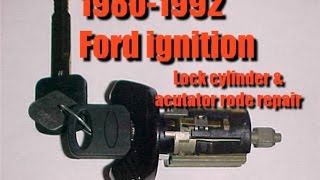
Pro Tip: While you are replacing the ignition switch, carefully inspect the actuator rod that connects it to the lock cylinder. These rods, especially the lower actuator, are known to crack or break from age and stress, causing the same symptoms as a bad switch. It's an inexpensive part and worth replacing at the same time if it shows any signs of wear.
🎬 See how to repair the actuator rod, rack, and pinion.| Part/Service | Estimated Cost |
|---|---|
| New Aftermarket Ignition Switch | $21 - $58 |
| Shop Labor | $100 - $200 |
| Total Professional Replacement | $121 - $258 |
Frequently Asked Questions (FAQ)

Is the ignition switch the same as the ignition lock cylinder?
No. The lock cylinder is the mechanical tumbler you put your key into. The ignition switch is the electronic part it controls, which is located further down the steering column. A rod connects the two parts.
How difficult is it to replace the ignition switch on a 1975-1992 F-150?
It is a fairly simple job for a DIYer. It does not require removing the steering wheel. The main steps are removing the lower dash/column cover, unplugging the old switch, unbolting it (usually two 11mm nuts), and carefully installing the new one, making sure the actuator rod is properly seated. The most common challenge is working in a tight space under the dashboard.
🎬 Follow this step-by-step walkthrough for replacing the switch on older models.My key is stuck or won't turn. Is that the switch?
It could be, but it's more likely the lock cylinder itself or the actuator rod that has failed. Sometimes, wiggling the steering wheel while turning the key can free it if the steering lock is bound up. If the key spins freely with no effect, the actuator rod is almost certainly broken.
What was the 1988-1992 ignition switch fire recall about?
Ford recalled millions of vehicles, including F-150s, because the original ignition switch could short circuit internally. This could cause a fire in the steering column. The problem was traced to the switch design, which was updated in late 1992. All new aftermarket replacement switches are based on the improved, safer design.
Helpful Videos
Technical Specifications
The ignition switch is a multi-position electrical switch activated by a mechanical actuator rod. It is typically mounted with two 11mm nuts on slotted holes for adjustment. Related parts to inspect include the upper actuator rack (OEM p/n D1AZ-3E723-C) and the lower actuator (Dorman 83280), which are common failure points.
We Have This Part in Stock


The information in this article is provided for general reference and educational purposes only. Vehicle specifications, procedures, and part compatibility can vary by production date, trim level, and region. Always consult your vehicle's factory service manual and verify part numbers before purchasing or performing repairs. Safety-critical components such as airbags, seat belts, and braking systems should be installed by a qualified professional.