

Distributor Cap Replacement for 1968-1972 Chevrolet Suburban
Keep your classic Suburban's ignition system reliable by understanding when and how to replace your distributor cap.
- This is a common maintenance item; expect to replace it with the rotor every 25,000-30,000 miles.
- Choose an aftermarket cap with brass terminals (like ACDelco or Standard Motor Products) for better performance and longevity.
- The job is very DIY-friendly; the key is to swap spark plug wires one-by-one to maintain the correct firing order.
- Ensure you buy the correct cap for your specific engine (I6 or V8), as they are not interchangeable.
Symptoms of a Failing Distributor Cap
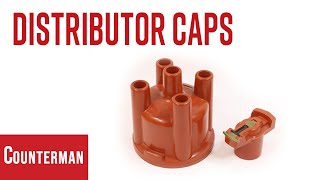
A distributor cap is a wear-and-tear item. Over time, the high voltage passing through it can cause the plastic to crack and the metal terminals inside to corrode or wear down. When this happens, your Suburban will give you clear signs that it's time for a replacement.
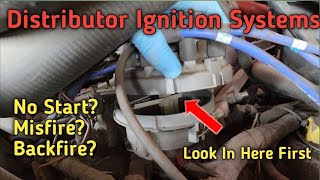
- Engine Misfires and Rough Idle: This is the most common symptom. Worn terminals or cracks in the cap can cause a weak or inconsistent spark, leading to the engine running unevenly, shaking, or idling poorly.
- Hard Starting or No Start: A bad cap can prevent a strong enough spark from reaching the spark plugs, making the engine difficult to start, especially in cold or damp weather. In some cases, the engine will crank but won't start at all.
- Stalling or Backfiring: If the cap is severely damaged, it can interrupt the flow of electricity, causing the engine to stall unexpectedly. Incorrect spark timing from a faulty cap can also lead to backfiring.
- Unusual Engine Noises: You might hear tapping or clicking sounds from the engine bay as the spark struggles to jump across worn terminals inside the cap.
Is there a Check Engine Light?
Your 1968-1972 Suburban does not have a modern computer system or a Check Engine Light. You must rely on listening to the engine and feeling how the truck drives to diagnose problems like a bad distributor cap.
Choosing the Right Aftermarket Distributor Cap
For a classic vehicle like the 1968-1972 Suburban, new original equipment manufacturer (OEM) parts are generally not available. You will be choosing from various aftermarket brands. The key difference in quality often comes down to the material used for the electrical contacts (terminals) inside the cap.
Aftermarket Brand Tiers
| Tier | Brands | Key Features |
|---|---|---|
| Premium Aftermarket | ACDelco, Standard Motor Products (Blue Streak) | Often feature brass terminals for superior conductivity and corrosion resistance. Considered the benchmark for quality and fit, with ACDelco being the original supplier for GM. |
| Quality Aftermarket | Duralast Gold, MSD, ACCEL, PerTronix | Good quality replacements that often use brass terminals. Brands like MSD and ACCEL are popular in the performance market. |
| Standard/Economy | Store brands, various online sellers | These are the most affordable options. They often use aluminum terminals, which are less conductive and may wear out faster than brass. They are suitable for a budget repair but may not last as long. |
Brass vs. Aluminum Terminals
Always choose a distributor cap with brass terminals if your budget allows. Brass is a better conductor of electricity and is more resistant to corrosion than aluminum. This leads to a stronger, more reliable spark and a longer service life for the cap and rotor.
Known Issues, Recalls, or TSBs
There are no specific recalls or Technical Service Bulletins (TSBs) from the NHTSA for the distributor cap on the 1968-1972 Chevrolet Suburban. This is a standard maintenance part that is expected to be replaced periodically. Later model GM trucks did have service bulletins related to moisture buildup causing corrosion inside the cap, highlighting the importance of keeping the distributor assembly clean and dry.
🎬 Learn how to inspect your distributor cap for common problems.Frequently Asked Questions (FAQ)
How often should I replace the distributor cap?
As a general rule, the distributor cap and rotor should be inspected during every major tune-up and replaced as a set. For a classic vehicle, a good interval is every 25,000 to 30,000 miles or every few years, especially if you notice any of the common failure symptoms.
Should I replace the rotor at the same time?
Yes. The rotor is the part that spins inside the cap to distribute the spark. It wears out at the same rate as the cap. Aftermarket kits almost always include both the cap and rotor, and they should always be replaced together.
Does it matter which engine I have?
Yes, it is critical. The 1968-1972 Suburban was available with several different engines, including Inline-6 and V8 (Small Block and Big Block) options. The distributor cap is specific to the engine type (6-cylinder vs. 8-cylinder). Always verify the part fits your specific engine before purchasing.
Is replacing a distributor cap a difficult job?
No, this is a very DIY-friendly job. The most important step is to transfer the spark plug wires from the old cap to the new cap one at a time to ensure the firing order remains correct. The cap is typically held on by two clips or screws and is easily accessible at the top of the engine.
🎬 See how easy it is to remove a distributor cap.Helpful Videos

Technical Specifications
The primary specifications are the engine type (e.g., V8 or I6) and the terminal type (e.g., points-style or HEI-style). Most 1968-1972 models use a points-style ignition with female/socket cap terminals. The cap is typically secured with clips or bolts.

The information in this article is provided for general reference and educational purposes only. Vehicle specifications, procedures, and part compatibility can vary by production date, trim level, and region. Always consult your vehicle's factory service manual and verify part numbers before purchasing or performing repairs. Safety-critical components such as airbags, seat belts, and braking systems should be installed by a qualified professional.