

1966-1973 Chevrolet Chevelle Ignition Switch: A Complete Guide
Don't let a faulty ignition switch sideline your classic Chevelle; understand the symptoms and find the right replacement part.
- A bad ignition switch can cause a no-start, sudden stalling, or flickering lights.
- Always diagnose the battery and starter first, but don't overlook the switch.
- The switch is in the dash for 1966-68 models and on the steering column for 1969-73 models; verify before buying.
- ACDelco and Standard Motor Products are highly recommended aftermarket brands for this part.
Is Your Chevelle's Ignition Switch Failing?

A bad ignition switch can mimic other problems, like a dead battery or a faulty starter. Before you replace other parts, check for these common symptoms. The most obvious sign is a car that won't start or starts and then immediately stalls. You might turn the key and hear nothing, not even a click from the starter. Another key symptom is flickering dashboard lights or accessories that lose power intermittently, especially when you jiggle the key or drive over a bump. In some cases, the key may become difficult to turn or even get stuck in the ignition.
Critical Failure Warning
A failing ignition switch is not just an inconvenience; it can be dangerous. If the switch loses connection while you are driving, it can cause the engine to stall suddenly, leading to a loss of power steering and brakes. This is a serious safety risk. Do not ignore intermittent stalling or power loss.
Choosing the Right Aftermarket Ignition Switch

For a classic car like the 1966-1973 Chevelle, you have several good aftermarket options. Original Equipment (OE) parts from GM are rare, so quality aftermarket brands are the go-to choice.
- ACDelco: As GM's official parts brand, ACDelco is a trusted choice. Their parts are made to meet or exceed original specifications, offering a reliable fit and function. They often have different quality tiers, with their 'Professional' or 'Gold' lines representing higher quality.
- Standard Motor Products (Standard/SMP): Standard is a highly respected aftermarket manufacturer with over a century of experience. They are known for producing durable, high-precision electronic parts that are a favorite among professional mechanics.
- Rostra Powertrain: Rostra is known for a variety of automotive electronic components. While they may be a viable option, they are not as commonly cited by classic car enthusiasts for ignition parts as ACDelco or Standard.
- Replacement: This is often a house brand or a generic equivalent. While it can be the most budget-friendly option, quality can be inconsistent. For a critical part like an ignition switch, choosing a more established brand is often worth the small extra cost.
Pro Tip: Check the Location
Be aware that the ignition switch location changed during this period. Earlier models (typically 1966-1968) have the ignition switch located directly in the dashboard. Later models (starting around 1969) moved the switch to the top of the steering column, actuated by a rod connected to the key cylinder. Always verify the location on your specific year and model before ordering a part.
Cost of Replacing a Chevelle Ignition Switch
| Part Category | Estimated Cost |
|---|---|
| New Aftermarket Ignition Switch | $20.77 - $55.59 |
| Shop Labor | $100 - $200 |
Frequently Asked Questions

Do I need special tools to replace the ignition switch?
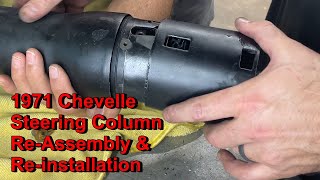
For a dash-mounted switch (1966-1968), you may need a paperclip to depress a release pin to remove the lock cylinder. 🎬 Watch this guide on removing a dash-mounted ignition switch. For a column-mounted switch (1969-1973), you will need basic hand tools to lower the steering column for access. 🎬 See how to replace the ignition switch on later models. Disconnecting the battery is a critical first step for safety in either case.
Can a bad ignition switch drain my battery?
Yes. If the switch fails to completely cut the connection to an accessory circuit when the car is off, it can cause a slow parasitic drain that will leave you with a dead battery.
My car starts but dies when I let go of the key. Is that the ignition switch?
This is a classic symptom of a bad ignition switch. The 'START' position on the switch provides power, but the internal contacts for the 'RUN' position are worn out and fail to keep the ignition system powered once the key returns to 'RUN'.
Should I replace the lock cylinder at the same time?
If your key is worn or you have trouble turning it smoothly, it's a good idea to replace the ignition lock cylinder along with the switch. They are often sold together as a set. For dash-mounted switches, you will need to remove the cylinder to access the switch anyway.
Helpful Videos

Technical Specifications
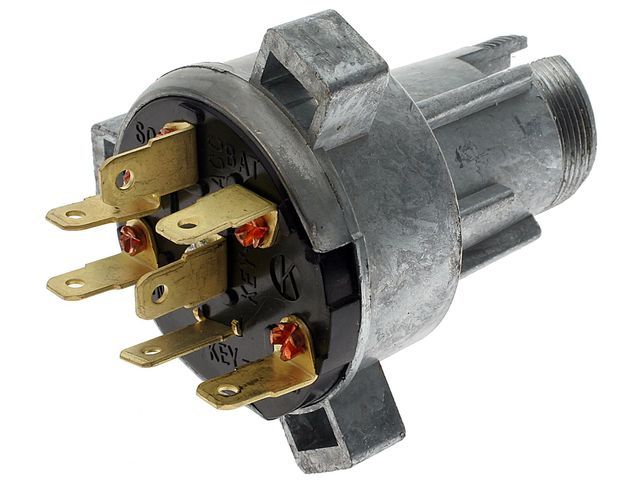
The ignition switch for this era is a mechanical, multi-position switch that directs 12V power to various circuits. It connects via a round, multi-pin connector. Dash-mounted versions are secured by a bezel nut, while column-mounted versions are bolted to the steering column.
We Have This Part in Stock


The information in this article is provided for general reference and educational purposes only. Vehicle specifications, procedures, and part compatibility can vary by production date, trim level, and region. Always consult your vehicle's factory service manual and verify part numbers before purchasing or performing repairs. Safety-critical components such as airbags, seat belts, and braking systems should be installed by a qualified professional.