

A Guide to the Voltage Regulator on Your 1964 Studebaker 8E7 Truck
Keep your classic Studebaker's electrical system reliable by understanding its voltage regulator.
- A failing voltage regulator causes symptoms like flickering lights, a dead battery, or poor engine performance.
- Driving with a bad regulator is not recommended as it can leave you stranded or damage other electrical parts.
- New aftermarket regulators from brands like Standard Ignition are a reliable and modern upgrade over hard-to-find original parts.
- If your truck has a generator, you must polarize the new regulator before starting the engine to prevent damage.
Understanding Your Studebaker's Electrical Heart
The voltage regulator in your 1964 Studebaker 8E7 is the guardian of your truck's electrical system. In this era, vehicles used an external, mechanical regulator. This device uses a set of internal contact points and coils to manage the power coming from your generator or alternator. Its job is to feed the battery the right amount of charge and protect sensitive electrical parts from power surges. When it works correctly, you never notice it. When it fails, it can cause a range of frustrating problems.
Is Your Voltage Regulator Failing?
A bad voltage regulator can make your truck unreliable. Watch for these common signs. An old Studebaker owner's guide suggests watching the ammeter gauge; if it jiggles a lot, stays fully charged, or shows a discharge when the engine is running with lights on, the regulator may need replacement.
- Dimming or Flickering Lights: Headlights and dash lights may pulse, flicker, or dim at idle and brighten as you rev the engine. This is a classic sign of unstable voltage.
- Battery Problems: A failing regulator can either undercharge or overcharge your battery. A battery that repeatedly dies even after being recharged points to an undercharging issue. Conversely, if you smell sulfur (like rotten eggs) or see the battery case swelling, the regulator may be overcharging and boiling the battery acid, a dangerous condition that requires immediate attention.
- Engine and Performance Issues: Your engine might sputter, stall, or have trouble accelerating. Unstable voltage can disrupt the ignition system, leading to poor performance.
- Instrument Cluster Acting Up: Gauges might behave erratically or stop working altogether.
Can I Still Drive?
It is not recommended. Driving with a bad voltage regulator can leave you stranded with a dead battery. More seriously, an overcharging situation can permanently damage your battery and other, more expensive electrical components. It is best to address the issue as soon as symptoms appear.
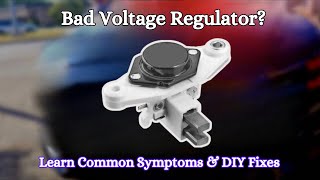
🎬 Learn more about identifying and fixing a bad voltage regulator.Choosing a New Aftermarket Voltage Regulator
For a 1964 vehicle, finding a New Old Stock (NOS) OEM part is nearly impossible and often very expensive. Aftermarket parts are the most practical and common solution. Modern aftermarket regulators often benefit from better technology than the original 1960s parts. For instance, many modern replacements from brands like Standard Ignition use electronic boards encapsulated in epoxy, which improves durability and resistance to vibration and corrosion.
Brand Spotlight: Standard Ignition
Standard Ignition (also known as Standard Motor Products or SMP) is a well-established brand that has been making quality ignition and electrical parts for over 100 years. They are a trusted choice for professional technicians and DIYers. Reviews for their regulators are generally positive, often noting high quality and reliable performance that meets or exceeds original specifications. For your Studebaker 8E7, Standard Ignition offers compatible parts that provide a reliable, modern solution to a common old-truck problem.
1964 Studebaker 8E7 Voltage Regulator Cost
| Part Type | Estimated Cost |
|---|---|
| New Aftermarket (e.g., Standard Ignition) | $80.97 - $117.75 |
| New OEM (NOS) | Not commonly available |
| Used OEM | Varies widely, condition is a risk |
| Shop Labor for Installation | $60 - $120 |
Pro Tip: Polarize Your New Regulator
If your Studebaker is equipped with a generator (not an alternator), you must polarize the new voltage regulator before starting the engine. This simple step ensures the generator builds a magnetic field with the correct polarity. Failure to do so can damage the new regulator or the generator. Instructions are typically included with the new part.
Frequently Asked Questions
Are there any recalls for the 1964 Studebaker 8E7 voltage regulator?
No. There are no active recalls on file with the National Highway Traffic Safety Administration (NHTSA) for the 1964 Studebaker 8E7 or its charging system components. Given the vehicle's age, recalls are highly unlikely.
Is this a difficult part to replace myself?
For a mechanically inclined owner, this is a relatively simple job. The voltage regulator is usually mounted on the firewall or inner fender and is secured with a few bolts and electrical connections. The replacement should take less than an hour. Just be sure to disconnect the battery before you begin.
Do I need a regulator for a generator or an alternator?
It's important to know which charging system your truck has. Studebaker began switching from generators to alternators around 1963-1964. While both need a voltage regulator, the specific part may differ. Check your vehicle and order the part that is specified for use with either a generator or an alternator.
Why choose a new aftermarket part over a used original?
While a used original part maintains a factory look, it's still a 60-year-old piece of mechanical equipment. A new aftermarket regulator from a brand like Standard Ignition uses modern, solid-state electronics in many cases, offering greater reliability and a longer service life. For a vehicle you intend to drive, the reliability of a new part is a significant advantage.
Helpful Videos
Technical Specifications
External, mechanical or electronic replacement type. 12 Volt system. Typically 3-terminal connection. Must be compatible with either a generator or alternator charging system.
We Have This Part in Stock


The information in this article is provided for general reference and educational purposes only. Vehicle specifications, procedures, and part compatibility can vary by production date, trim level, and region. Always consult your vehicle's factory service manual and verify part numbers before purchasing or performing repairs. Safety-critical components such as airbags, seat belts, and braking systems should be installed by a qualified professional.