

Ignition Contact Set Guide for 1963-1965 International CM80 Trucks
Keep your classic International CM80 running strong by understanding its ignition points.
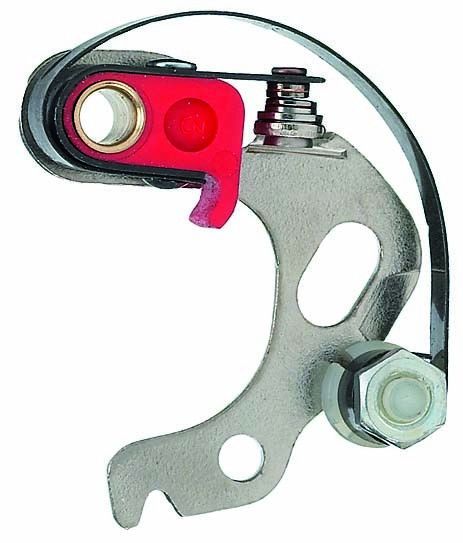
- The ignition contact set (points) is a normal wear item on your CM80 and requires periodic replacement, typically every 10,000-20,000 miles.
- Symptoms of failure include rough running, misfiring, stalling, and difficulty starting.
- Always replace the condenser at the same time as the points; they are usually sold together in a kit.
- Aftermarket brands like Standard Ignition and Facet are reliable choices for these parts, as OEM parts are no longer made.
Understanding Your CM80's Ignition System
The ignition system in your 1963-1965 International CM80 is a straightforward, electro-mechanical design. Unlike modern cars with computers, your truck relies on this set of breaker points to time the spark. When the points are closed, the ignition coil charges with electricity. When they open, the coil's magnetic field collapses, sending a powerful spark to the correct cylinder. This system is simple and effective, but the points are a wear item that require periodic service and replacement to keep your truck reliable.
Signs Your Ignition Points Are Failing
Worn or failing ignition points can cause a variety of engine performance problems. Because these parts wear down over time, the symptoms may start small and get worse. If you notice any of these issues, it's a good idea to inspect your distributor points.
- Difficulty Starting: If the points are burned, pitted, or misaligned, they can't create the clean electrical signal needed for a strong spark, making the engine hard to start.
- Engine Misfires and Rough Idle: Dirty or worn points can cause an inconsistent spark, leading to misfires. This will feel like a shaky or lumpy idle and hesitation when you accelerate.
- Stalling: An engine that stalls, especially at idle or when coming to a stop, can be a sign of bad points that are failing to deliver a consistent spark at low RPMs.
- Reduced Power: If the spark timing is off due to worn points, combustion becomes inefficient, resulting in poor acceleration and a general lack of power.
A Note on the Condenser
The ignition condenser is a small capacitor that works with the points. Its job is to prevent a large arc of electricity from jumping across the points as they open, which would burn them out quickly. It's standard practice to replace the condenser whenever you replace the ignition contact set. Most sets come with a new condenser for this reason.
Choosing the Right Aftermarket Ignition Contact Set
For a vehicle from the mid-1960s, new original equipment (OEM) parts from International Harvester are no longer available. The market is served entirely by aftermarket manufacturers. This is not a cause for concern, as reputable brands have been making quality ignition parts for decades.
Brand Quality Tiers:
- Standard Ignition (Standard Motor Products): Often considered a top-tier aftermarket brand, Standard has a long history of making reliable ignition components for American vehicles. Their standard line (often in a red box) is a dependable choice for a stock CM80. They have a reputation for quality that is often as good as, or even better than, original parts.
- Facet: An established European brand that started making ignition parts in 1946. Facet positions itself as a high-quality alternative to lower-cost Asian products and is known for producing durable components. Owner reviews are generally positive, citing good quality and fit.
Pro Tip: For a significant reliability upgrade, some owners of classic International trucks choose to replace the entire points-and-condenser system with an electronic ignition conversion kit. Kits from brands like Pertronix fit inside the original distributor, maintaining a stock appearance while providing a maintenance-free, stronger spark. This is a popular upgrade for trucks that are driven regularly.
Typical Costs for a New Ignition Contact Set
Replacing the ignition contact set is one of the more affordable maintenance jobs on a classic truck.
| Part Type | Estimated Cost |
|---|---|
| New Aftermarket Ignition Contact Set | $18 - $38 |
| New OEM | Not Available |
| Shop Labor for Installation | $75 - $150 |
Frequently Asked Questions (FAQ)
How often do I need to replace my ignition points?
For a regularly driven vehicle, ignition points should be inspected during every major tune-up and typically replaced every 10,000 to 20,000 miles. Since the condenser prevents the points from burning out, it is highly recommended to replace both at the same time.
What tools are needed to replace ignition points?
You will need basic hand tools like screwdrivers and wrenches to remove the distributor cap. The most important special tools are a feeler gauge to set the point gap and a dwell meter to fine-tune the adjustment. Incorrect gap or dwell will lead to poor engine performance.
What is "setting the gap" or "setting the dwell"?
"Setting the gap" refers to adjusting the maximum distance the points open, measured with a feeler gauge. "Dwell" is the amount of time (measured in degrees of distributor rotation) that the points remain closed. A dwell meter provides a more accurate way to set the points than a feeler gauge alone and is the preferred method for ensuring optimal ignition performance.
Can I install an ignition contact set myself?
Yes, this is a very feasible DIY job for someone with basic mechanical skills and the correct tools (feeler gauge, dwell meter). There are many guides and videos online for replacing points on classic American engines, and the process is very similar across different makes. However, if you are not comfortable working on ignition systems, a qualified mechanic can perform the job quickly.
Technical Specifications
Mechanical breaker points for distributor-based ignition systems. Typically includes ignition contact set and condenser.
We Have This Part in Stock


The information in this article is provided for general reference and educational purposes only. Vehicle specifications, procedures, and part compatibility can vary by production date, trim level, and region. Always consult your vehicle's factory service manual and verify part numbers before purchasing or performing repairs. Safety-critical components such as airbags, seat belts, and braking systems should be installed by a qualified professional.