

Ignition Contact Set Guide for 1961-1967 Jeep Universal
Keep your classic Jeep's engine firing reliably with the right set of points.
- The ignition contact set (points) is a regular maintenance item that should be replaced every 10,000-12,000 miles on a 1961-1967 Jeep Universal.
- Always replace the condenser at the same time as the points to prevent premature failure from arcing.
- Setting the correct point gap with a feeler gauge (e.g., 0.020") is critical for proper engine timing and performance.
- Both Standard Ignition and Accel are reputable aftermarket brands, with Standard being a stock replacement and Accel offering a potential performance edge.
Understanding Your Jeep's Ignition Points
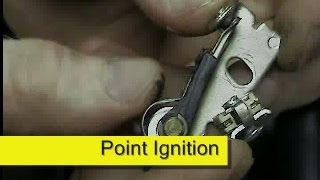
The ignition contact set, or points, is a fundamental tune-up part in your 1961-1967 Jeep Universal (including models like the CJ-3B, CJ-5, and CJ-6). Unlike modern vehicles, your classic Jeep relies on this mechanical system to time its spark. Because the points have a small rubbing block that wears down and electrical contacts that can burn or pit over time, they are a regular maintenance item. Ignoring them can lead to a range of engine performance issues, from a rough idle to a complete no-start situation that can leave you stranded.
Symptoms of Failing Ignition Points
When your ignition points start to fail, your Jeep will give you clear signs. Since the points control the spark, the symptoms are directly related to poor engine performance and reliability.
- Hard Starting or No Start: This is the most serious symptom. If the points are completely worn out, stuck, or badly misaligned, they can't trigger the ignition coil properly. This results in a very weak spark, or no spark at all, making the engine turn over but refuse to fire up.
- Rough Running and Misfiring: As the contact surfaces of the points wear down or become pitted, the electrical connection becomes inconsistent. This causes the timing of the spark to vary, leading to a rough idle, engine misfires, and an overall poor running condition.
- Engine Stalling: Failing points can cause the engine to stall, sometimes intermittently. This can happen when the engine warms up, as heat can affect the point gap and the performance of the connected condenser.
- Backfiring: If the condenser connected to the points fails, it can no longer absorb the electrical energy when the points open. This can cause the current to jump across the points erratically, leading to incorrect ignition timing and backfiring.
Choosing the Right Aftermarket Ignition Contact Set
For a vehicle from the 1960s, aftermarket parts are the standard. The original equipment manufacturers may no longer produce these parts. Fortunately, reputable aftermarket companies have been making quality ignition components for decades.
Brand Comparison
| Brand | Typical Use | Our Price Range |
|---|---|---|
| Standard Ignition (Standard Motor Products) | A trusted name for OEM-quality replacement parts. Ideal for stock restorations and reliable daily driving. Known for consistent manufacturing and durability. | $21.11 - $21.57 |
| Accel | Often marketed as a performance upgrade. Accel points and coils are designed to deliver a hotter spark, which can offer a slight performance improvement, especially on modified engines. | 🎬 See how performance coils can improve your engine's spark.$21.11 - $21.57 |
Pro Tip: Always Replace the Condenser
The condenser is a small capacitor that works with the points. Its job is to prevent a large electrical arc from forming as the points open, which quickly burns and destroys the contacts. A failing condenser is a primary cause of premature point failure. Always replace the condenser when you replace the points; most quality kits include both parts.
Frequently Asked Questions (FAQ)
How often should I replace my ignition points?
As a general rule, ignition points should be inspected at every major service and replaced every 10,000 to 12,000 miles. If you notice signs of pitting, burning, or if the rubbing block is significantly worn, they should be replaced.
What does "setting the gap" mean?
Setting the gap is the most critical part of the installation. It refers to adjusting the maximum distance the points open using a feeler gauge. For many classic Jeep engines, a common point gap is around 0.020 inches, but you must verify the specification for your specific engine 🎬 Watch a step-by-step guide to tuning up Jeep ignition points. and distributor. An incorrect gap will cause poor timing, misfires, and reduced engine power.
Do I need special tools to replace ignition points?
The job requires basic hand tools, primarily a screwdriver and a set of feeler gauges. A magnetized screwdriver can be very helpful to avoid dropping the small mounting screws into the distributor.
Can I upgrade to electronic ignition instead?
Yes, converting to an electronic ignition is a very popular and highly recommended upgrade for classic Jeeps. These kits eliminate the points and condenser entirely, providing a more reliable, powerful, and maintenance-free spark. While the upfront cost is higher, it removes the need for regular adjustment and replacement.
Helpful Videos
![THIS is Why i Use ACCEL SUPER COILS on My Crown Victoria P71 [ MORE HORSEPOWER??]](https://img.youtube.com/vi/WNAXXkSwLHM/mqdefault.jpg)
Technical Specifications
Mechanical breaker points. Requires gap setting with a feeler gauge, typically 0.020 inches. Must be used with a matching condenser.
We Have This Part in Stock


The information in this article is provided for general reference and educational purposes only. Vehicle specifications, procedures, and part compatibility can vary by production date, trim level, and region. Always consult your vehicle's factory service manual and verify part numbers before purchasing or performing repairs. Safety-critical components such as airbags, seat belts, and braking systems should be installed by a qualified professional.