

Ignition Contact Set Guide for the 1956-1959 GMC 370
Keep your classic GMC 370 running smoothly by understanding its ignition contact set.
- The ignition contact set (points) is a normal wear item in the 1956-1959 GMC 370's mechanical ignition system.
- Symptoms of failure include hard starting, rough idle, misfiring, and eventual no-start conditions.
- When replacing the points, it is highly recommended to also replace the condenser.
- Standard Ignition is a reliable aftermarket brand for this component.
Understanding Your GMC 370's Ignition
The ignition system in your 1956-1959 GMC 370 is a classic contact-point system. Unlike modern cars with electronic ignition, your truck relies on a mechanical switch called the ignition contact set, or points, to create the spark that starts and runs the engine. This set of points is located inside the distributor and opens and closes rapidly as the engine runs. Over time, the constant friction and electrical arcing cause the contact surfaces to wear, burn, or become misaligned, leading to performance issues. Because these parts wear out, they are considered a regular maintenance item.
Symptoms of a Failing Ignition Contact Set
When the ignition points in your GMC 370 start to fail, you'll notice some clear signs. These symptoms often get worse over time. 🎬 Watch this video to see common symptoms of bad ignition points. Ignoring them can leave you stranded.
- Difficulty Starting: This is often the first sign. Worn or dirty points struggle to create the strong spark needed to start the engine.
- Engine Misfires and Rough Running: If the points are pitted or misaligned, they can't deliver a consistent spark. This causes the engine to misfire, run unevenly, and feel shaky, especially at idle.
- Stalling: The engine might stall at low speeds, like when you're stopping at a light. This happens because the weak spark can't keep the engine running at low RPMs.
- Reduced Power: You might feel like the truck is sluggish or hesitates when you accelerate. Inefficient sparking means less power from the engine.
- Engine Won't Start: In the final stages of failure, the points may be so worn or damaged that they can't generate any spark at all, preventing the engine from starting.
Choosing an Aftermarket Ignition Contact Set
For a classic truck like the 1956-1959 GMC 370, finding original equipment (OEM) parts is nearly impossible. New aftermarket parts are the standard for repairs. Fortunately, the ignition contact set is a common part that was used on many vehicles, and quality aftermarket replacements are available.
Aftermarket Brand Assessment
| Brand Tier | Brand(s) | Quality & Fitment Notes |
|---|---|---|
| Standard Replacement | Standard Ignition (Standard Motor Products) | Standard Motor Products is a long-standing, well-regarded manufacturer of ignition components for American vehicles. Their parts are known to be a reliable choice when OEM is not available and are often considered a go-to for quality and fit. For a vintage application like the GMC 370, their standard line provides a dependable, cost-effective solution that meets original specifications. |
A Note on OEM Parts
New OEM ignition contact sets for a 1950s GMC truck are no longer produced. While you might find a "New Old Stock" (NOS) part online, these can be very expensive and may have degraded over decades of storage. A new, quality aftermarket part from a reputable brand is often a more practical and reliable choice.
Estimated Replacement Costs
Replacing the ignition contact set is a relatively inexpensive job. The part itself is affordable, and the labor involved is minimal for a mechanic familiar with older ignition systems.
| Part/Service | Estimated Cost |
|---|---|
| New Aftermarket Ignition Contact Set | $21 - $22 |
| Shop Labor | $60 - $120 |
| Total Estimated Cost | $81 - $142 |
Pro Tip: Replace the Condenser Too
The condenser is another small, inexpensive part located next to the points in the distributor. Its job is to prevent the points from arcing and burning out too quickly. It is standard practice to replace the condenser at the same time as the ignition contact set. They are often sold together in a kit.
Frequently Asked Questions (FAQ)
Can I replace the ignition contact set myself?
Yes, if you have basic mechanical skills and the right tools. The job involves removing the distributor cap and rotor, unscrewing the old points and condenser, and installing the new ones. The most critical step is setting the correct "point gap" using a feeler gauge. An incorrect gap will cause poor engine performance. The difficulty is low, and it typically takes less than an hour.
What is a "point gap" and why is it important?
The point gap is the maximum distance the contacts open. This small gap is critical for proper ignition timing. Setting it correctly ensures the coil has enough time to build a strong magnetic field to produce a powerful spark at the right moment. The correct specification for your GMC 370 should be followed precisely.
Are there any recalls on the ignition system for my truck?
There are no active recalls or Technical Service Bulletins (TSBs) from the National Highway Traffic Safety Administration (NHTSA) for the ignition contact set on the 1956-1959 GMC 370. Recalls for vehicles of this age are extremely rare.
Should I upgrade to an electronic ignition?
Many owners of classic vehicles choose to replace their points-based system with a modern electronic ignition conversion kit. These kits eliminate the points and condenser, providing a more reliable, maintenance-free spark. While this improves reliability and performance, it moves the truck away from its original factory configuration. For daily drivers, an electronic conversion is a popular upgrade; for show cars, keeping the original points system may be preferred.
Helpful Videos
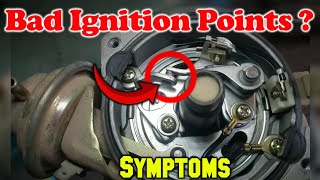
Technical Specifications
This is a mechanical switch located inside the distributor. It operates via a cam on the distributor shaft to open and close the primary ignition circuit.
We Have This Part in Stock


The information in this article is provided for general reference and educational purposes only. Vehicle specifications, procedures, and part compatibility can vary by production date, trim level, and region. Always consult your vehicle's factory service manual and verify part numbers before purchasing or performing repairs. Safety-critical components such as airbags, seat belts, and braking systems should be installed by a qualified professional.