

Guide to Universal Joints for the 1952-1961 Checker Taxicab
Keep your classic Checker running smoothly by addressing driveshaft noises and vibrations.
- Listen for clunking when shifting or vibrations at speed, as these are the most common signs of a failing U-joint.
- For a durable repair, choose a high-quality aftermarket brand like Dana Spicer, which has a long history as an OE supplier.
- If one U-joint has failed, it is highly recommended to replace both at the same time to save on future labor costs.
- Replacement requires special tools like a press or a large vise; if you don't have these, professional installation is the safest option.
Is Your 1952-1961 Checker Taxicab's U-Joint Failing?
The U-joints on your classic Checker are simple, tough parts, but they eventually wear out. Since these vehicles were often built with heavy-duty components, these parts can last a long time, but it's important to recognize the signs of failure. Lack of lubrication is the most common reason a U-joint fails. Catching a bad U-joint early is important, as a complete failure can cause the driveshaft to disconnect from the vehicle, leading to serious damage and leaving you stranded.
Symptoms of a Bad Universal Joint
A failing U-joint will give you clear warning signs. Listen and feel for these common symptoms:
- Clunking or Pinging Noise: A sharp metallic clunk when you shift from drive to reverse is a classic sign. This is the sound of a worn U-joint taking up extra slack.
- Vibration While Driving: A vibration that gets worse as you speed up is a major symptom. You might feel it in the floor or the seats. This is caused by the driveshaft becoming unbalanced from the worn joint.
- Squeaking Sound: A repeating, bird-chirp-like squeak that changes with your speed can indicate a dry, failing U-joint bearing that needs lubrication.
Choosing the Right Aftermarket U-Joint
Original Checker parts are no longer manufactured. Fortunately, Checkers often used common, robust parts from suppliers like Dana Spicer, which are still available in the aftermarket. When replacing a wear item like a U-joint, quality is key.
| Brand Tier | Our Available Brands | Quality & Performance |
|---|---|---|
| Premium Aftermarket | Dana Spicer Chassis | Dana is a well-respected Original Equipment (OE) manufacturer that has been making U-joints since 1904. Spicer parts are known for their high performance, durability, and are often considered an OE-equivalent replacement, making them an excellent choice for a reliable, long-lasting repair. |
Greasable vs. Non-Greasable U-Joints
You may find both greasable and non-greasable (sealed) U-joints. Non-greasable joints are sealed from contaminants and require no maintenance. Because their internal cross is solid, they are technically stronger. Greasable joints have a fitting that allows you to add fresh grease, which can extend their life if done regularly. For most owners seeking a fit-and-forget solution, a high-quality sealed U-joint is the preferred choice.
Estimated Costs for Universal Joint Replacement
The cost to replace a U-joint depends on the parts you choose and whether you do the work yourself. Original OEM parts for a vehicle of this age are generally not available.
| Part/Service | Estimated Cost |
|---|---|
| New Aftermarket U-Joint | $19.89 - $50.04 |
| Shop Labor | $120 - $250 |
A Note on Installation
Replacing a U-joint requires removing the driveshaft. Special tools, such as a bench vise and large sockets or a hydraulic press, are needed to press the old joint out of the driveshaft yoke and press the new one in without causing damage. If you don't have this equipment, it's best to have a professional mechanic perform the installation.
Frequently Asked Questions
How many U-joints does my Checker have?
A standard 1952-1961 Checker Taxicab with a one-piece driveshaft has two universal joints: one at the transmission end (front) and one at the rear axle end (rear). Some long-wheelbase or limousine models may have a two-piece driveshaft, which would have three U-joints and a center support bearing.
Can I replace just one bad U-joint?
Yes, but it's not recommended. If one U-joint has worn out, the other is likely not far behind. Since the driveshaft must be removed to replace either one, it is best practice and more cost-effective to replace both U-joints at the same time.
Can I replace a U-joint myself?
This job is possible for an experienced DIY mechanic. It requires safely raising and supporting the vehicle, removing the driveshaft, and using a press or a large vise to change the joints. Due to the need for special tools and the risk of damaging the driveshaft, many owners choose to have a professional shop handle the replacement.
Were there any recalls for Checker Taxicab U-joints?
No specific recalls or Technical Service Bulletins (TSBs) related to universal joint failure on the 1952-1961 Checker Taxicab were found in public databases. Failures are typically the result of normal wear and tear over many decades of service.
Technical Specifications
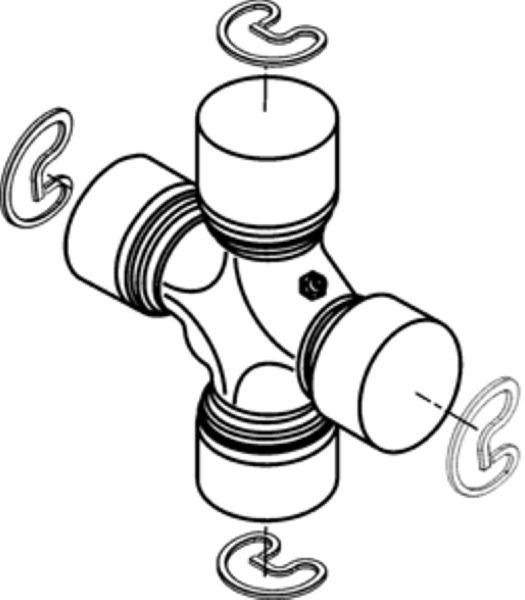
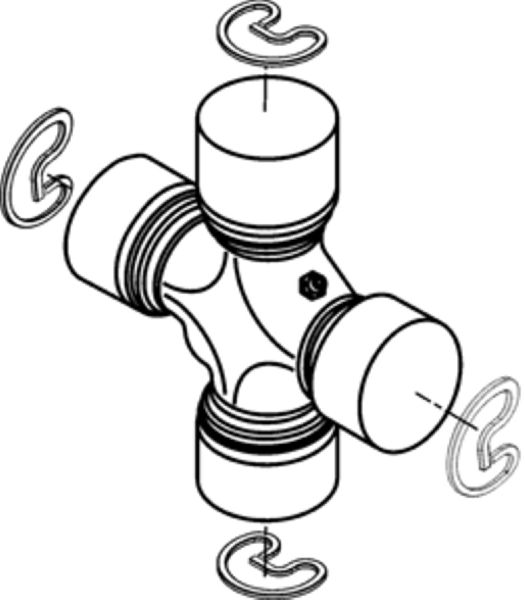
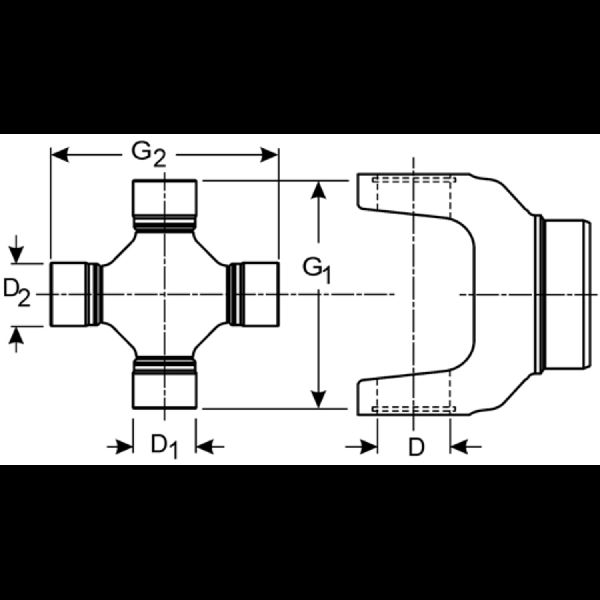
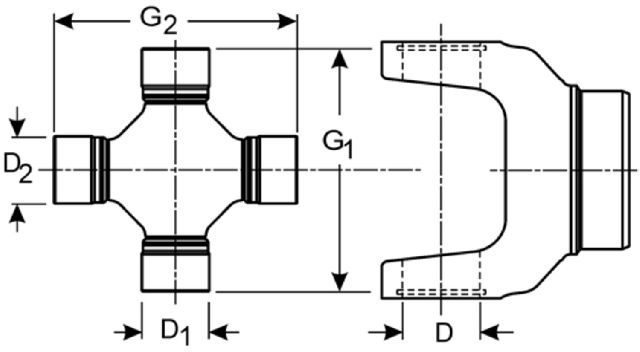
Vehicle is equipped with a one-piece driveshaft with two universal joints (front and rear). Some limousine/wagon models may have a two-piece shaft with three joints. Joints are of an outside snap ring design. Specific part numbers (e.g., Spicer 1310 series) may vary based on the exact year and drivetrain combination.
We Have This Part in Stock

The information in this article is provided for general reference and educational purposes only. Vehicle specifications, procedures, and part compatibility can vary by production date, trim level, and region. Always consult your vehicle's factory service manual and verify part numbers before purchasing or performing repairs. Safety-critical components such as airbags, seat belts, and braking systems should be installed by a qualified professional.