

Ford F-2 Ignition Coil Guide: Choosing the Right Part for 1948-1952
Keep your classic Ford running strong by understanding its simple but specific ignition coil needs.
- Verify if your truck has its original 6-volt system or has been converted to 12-volt before buying.
- A new aftermarket coil from a reputable brand like Standard or NGK is often more reliable than a 70-year-old original.
- Check if your new coil requires an external ballast resistor to avoid damaging your ignition system.
- Symptoms like no-start, rough idle, and backfiring strongly point to a failing ignition coil.
Is Your Ignition Coil Failing?
An ignition coil on a classic truck like the F-2 can fail from age, heat, and vibration. The internal windings can break down, or the oil inside can leak out. When this happens, you'll notice clear signs that your engine isn't happy.
Common symptoms include:
- No-Start or Hard Starting: The engine cranks but won't fire up, or takes a long time to start.
- Rough Idle and Stalling: The engine shakes, sputters, or stalls when you're stopped.
- Engine Misfires: You may feel a stumble or hesitation as you drive, as one or more cylinders fail to fire properly.
- Poor Acceleration: The truck feels sluggish and lacks power because the engine isn't running efficiently.
- Backfiring: Loud pops from the exhaust can occur when unburned fuel ignites in the hot exhaust pipes.
- Weak Spark: If you test for spark, you might see a weak, yellow or orange spark instead of a strong, blue one.
A Note on Leaks
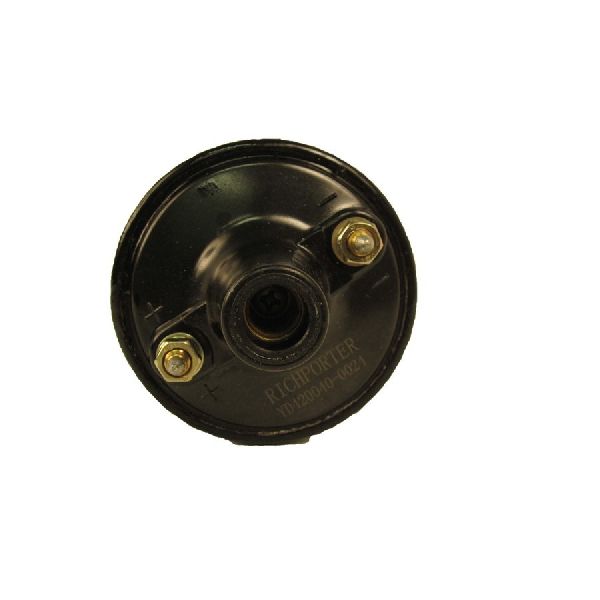
If you see a dark, oily, or waxy substance leaking from your canister-style ignition coil, it's a sure sign that it has failed internally and needs immediate replacement.
Choosing the Right Aftermarket Coil
For a 1948-1952 F-2, a new aftermarket coil is often a more reliable choice than a 70-year-old original or New Old Stock (NOS) part, which may have degraded over time. The key is selecting a quality brand and, most importantly, the correct coil for your truck's electrical system.
6-Volt or 12-Volt? Know Your System!
Your F-2 originally came with a 6-volt electrical system. Many have been converted to 12-volts over the years. You MUST buy a coil that matches your truck's voltage. Installing a 6-volt coil on a 12-volt system (without the correct resistor) will quickly burn it out.
Aftermarket Brand Tiers
- Premium Brands (Standard Ignition, NGK): Standard Ignition (Standard Motor Products) is a long-standing, highly regarded brand for American vehicle ignition parts. Their 'Blue Streak' line is often considered a premium option designed to exceed original specifications. NGK is another top-tier brand known for excellent quality in ignition components, and they offer compatible coils for this era.
- Standard/Value Brands (Spectra): Spectra Premium offers parts that generally meet OEM specifications and are a solid, affordable choice for many owners. They provide a good balance of price and reliability.
- Economy Brands (Global Parts): Brands like Global Parts (GPD) are typically the most budget-friendly option. While functional, they may not offer the same long-term durability or performance consistency as premium brands.
Estimated Replacement Costs
Replacing the ignition coil on an F-2 is a straightforward job. The part itself is affordable, and labor costs are low if you take it to a shop.
| Part/Service | Estimated Cost |
|---|---|
| New Aftermarket Ignition Coil | $23 - $40 |
| Shop Labor | $50 - $100 |
| Total Estimated Cost | $73 - $140 |
Frequently Asked Questions
Do I need an external ballast resistor?
It depends on your coil and original setup. Generally, pre-1949 Fords used an external ballast resistor to protect the ignition points. Many modern replacement coils have an internal resistor. Always check the specifications for the new coil you are buying. If it says "external resistor required" and you don't use one, you will quickly burn out your coil or points.
How do I test my old ignition coil?
A simple way to check for a very weak or dead coil is to safely pull a spark plug wire, insert a spare spark plug, and ground the plug's threads against the engine block. Have someone crank the engine and look for a strong, blue spark. A weak, yellow spark or no spark points to a problem in the ignition system, often the coil. For a more precise test, you can use a multimeter to measure the resistance of the primary and secondary windings, but you must find the correct specs for your specific coil.
Is replacing the ignition coil a good DIY job?
Yes, this is a very easy job for a DIY mechanic. The coil is typically mounted to the engine with a simple bracket and held by one or two bolts. It involves disconnecting the battery, removing a few low-voltage wires and the main high-tension wire to the distributor, unbolting the old coil, and installing the new one. The entire process usually takes less than 30 minutes.
Should I replace my points and condenser at the same time?
It's a very good idea. The ignition coil, points, and condenser all work together in a points-style ignition system. They are all wear items and are inexpensive to replace. Changing them all at once ensures the entire primary ignition circuit is fresh and reliable.
Technical Specifications
OEM Part Numbers: 1GA-12024
Voltage: 6-Volt (for original systems) Style: Canister Ignition Type: Points & Condenser
We Have This Part in Stock


The information in this article is provided for general reference and educational purposes only. Vehicle specifications, procedures, and part compatibility can vary by production date, trim level, and region. Always consult your vehicle's factory service manual and verify part numbers before purchasing or performing repairs. Safety-critical components such as airbags, seat belts, and braking systems should be installed by a qualified professional.