

1931 Gardner Model 158 Ignition Contact Set Guide
Understanding and replacing the ignition points in your classic 1931 Gardner Model 158.
- Original Gardner parts are not available; only new aftermarket reproductions like those from Standard Ignition can be used.
- The ignition contact set (points) is a routine maintenance item that wears out and requires periodic replacement, typically along with the condenser.
- Symptoms of failure include difficulty starting, rough running, stalling, and reduced engine power.
- Proper installation, including setting the correct point gap and checking ignition timing, is critical for engine performance.
Understanding Your Gardner's Ignition System
The 1931 Gardner Model 158 uses a classic distributor and coil ignition system, which was common for its time. The heart of this system is the ignition contact set, or points. These are mechanical parts that wear out over time and are considered a regular maintenance item. Unlike modern electronic ignitions, this system requires periodic checks and adjustments to keep the engine running properly. Due to the age of the vehicle, original equipment manufacturer (OEM) parts from Gardner, which ceased production in 1931, are not available. All replacement parts are new aftermarket reproductions.
Symptoms of Failing Ignition Points
Failing points will give you clues that they need attention. A points-operated system will often run poorly before it fails completely, unlike modern electronics that can fail without warning. Look out for these signs:
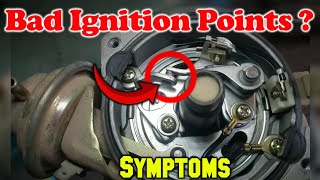
🎬 Watch this video to see common symptoms of bad points.- Difficulty Starting: The most common first symptom is an engine that cranks but refuses to start or fires up only after many attempts. This happens because worn or dirty points can't create the strong, consistent spark needed for ignition.
- Rough Running and Misfiring: If the points are pitted or misaligned, they can cause inconsistent spark, leading to engine misfires. This can feel like a shaky or lumpy idle and hesitation when you accelerate.
- Engine Stalling: Worn points can cause the engine to stall, especially at low speeds or when coming to a stop. This occurs because the weak spark can't keep the engine running at lower RPMs.
- Reduced Power: A weak or intermittent spark leads to inefficient combustion, which robs the engine of power. You might notice the car feels sluggish or doesn't accelerate as it should.
Aftermarket Brand Quality: Standard Ignition
For a vintage vehicle like the Gardner Model 158, your only option is aftermarket parts. Standard Ignition (also known as Standard Motor Products or SMP) has been a premier aftermarket manufacturer since 1919. For classic cars, their quality is generally considered good. Some classic car enthusiasts note that while the quality of many modern reproduction parts has declined, brands like Standard and NAPA's Echlin line (now owned by Standard) have historically been reliable choices. The key to longevity for any set of points is proper installation, including smoothing and lubricating the distributor cam to prevent premature wear of the rubbing block.
Replacement Cost
The cost to replace the ignition contact set on a 1931 Gardner is primarily the cost of the part itself and labor. Since this is a specialized vintage vehicle, labor costs can vary significantly based on the mechanic's experience with pre-war automobiles.
| Part/Service | Estimated Cost |
|---|---|
| New Aftermarket Ignition Contact Set | $21 - $30 |
| Shop Labor | $100 - $250 |
| Total Estimated Cost | $121 - $280 |
Note: Costs are estimates and can vary based on your location and the specific repair shop. OEM parts are not available for this vehicle.
Pro Tip: Replace the Condenser Too
The condenser is a small capacitor that works with the points to prevent them from arcing and burning out prematurely. It is highly recommended to replace the condenser at the same time as the points. They are inexpensive and often sold together. A failing condenser is a common cause of burnt points.
Frequently Asked Questions
What exactly are ignition points?
Ignition points are a set of mechanical contacts that act as a switch inside the distributor. A rotating cam in the distributor pushes the points open and closed, which triggers the ignition coil to fire a spark. This system was used in most cars until the mid-1970s.
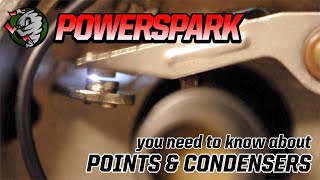
🎬 Learn more about how classic ignition points and condensers work.Why do ignition points need to be replaced?
Points are a wear item. The constant opening and closing, along with the electrical current, causes the contacts to pit and burn over time. Additionally, the small rubbing block that rides on the distributor cam wears down, which changes the adjustment. This wear leads to poor engine performance and eventual failure to start.
How often should I check my ignition points?
For a classic car, it's good practice to check the points as part of a regular tune-up. Some sources recommend checking the point gap every few hundred miles, while a full replacement is typically needed every 6,000 to 10,000 miles depending on use. For a car that is driven infrequently, an annual check-up is a good idea.
Is this a difficult job to do myself?
For someone with experience working on vintage cars, replacing points is a straightforward task. However, it requires specific tools like a feeler gauge and a good understanding of how to set the point gap and ignition timing. For a novice, it can be challenging. Incorrectly set points or timing can prevent the car from running or cause engine damage.
Helpful Videos
Technical Specifications
The 1931 Gardner Model 158 uses a distributor and coil ignition system. It is powered by a 299 CID, 126 HP Lycoming MDG straight-eight engine.
We Have This Part in Stock


The information in this article is provided for general reference and educational purposes only. Vehicle specifications, procedures, and part compatibility can vary by production date, trim level, and region. Always consult your vehicle's factory service manual and verify part numbers before purchasing or performing repairs. Safety-critical components such as airbags, seat belts, and braking systems should be installed by a qualified professional.