

2004-2008 Subaru Forester Power Steering Pump: Whining, Leaks & Fixes
This guide covers the common causes of power steering failure in the 2004-2008 Subaru Forester, with a focus on diagnosing whining noises and choosing the right replacement part.
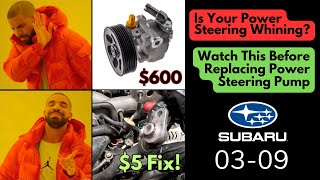
- A whining noise, especially when cold, is most often caused by a cheap, simple O-ring on the pump inlet, not the pump itself.
- This vehicle requires Automatic Transmission Fluid (ATF), not standard power steering fluid. Using the wrong fluid can cause damage.
- Properly bleeding all air from the system after installation is critical to prevent damage to the new pump.
- A quality used OEM pump is often a more reliable and cost-effective choice than a new, cheap aftermarket pump.
Symptoms of a Failing Power Steering Pump


A failing power steering pump on a 2004-2008 Subaru Forester will give you several distinct warnings. Paying attention to these signs can help you diagnose the problem before it leads to a complete loss of steering assist.
Common Failure Symptoms
- Whining Noise That Changes with Engine RPM: This is the most common symptom. The noise will get higher in pitch as you rev the engine. It's often caused by air getting into the system or low fluid levels.
- Groaning or Moaning When Turning: If you hear a loud groan when you turn the steering wheel, especially at or near full lock (turning the wheel all the way to one side), it's a sign the pump is straining.
- Stiff or Heavy Steering: A lack of power assist makes the steering wheel very difficult to turn, particularly at parking lot speeds. This indicates the pump is no longer generating enough pressure.
- Foamy or Bubbly Power Steering Fluid: If you check the fluid reservoir and the fluid looks frothy or has bubbles, it's a clear sign that air is being sucked into the system. This is a major clue in diagnosing the root cause.
- Fluid Leaks: Puddles of red or brownish fluid under the front of your car are a tell-tale sign of a leak in the power steering system. While the leak could be from a hose or the steering rack, the pump itself can also develop leaks from its seals.
Pro Tip: Before you condemn the pump, check the fluid level and condition. Subarus of this era are famous for a specific issue that mimics a failing pump.
Known Issues: The Famous Whining O-Ring

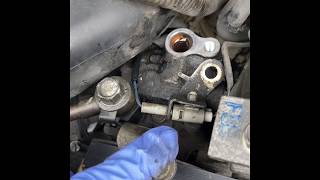
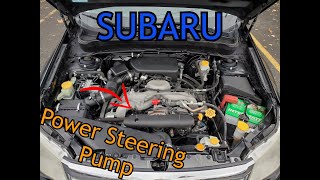
For the 2004-2008 Forester, the most frequent cause of power steering whine, especially when the engine is cold, is not the pump itself but a small, inexpensive O-ring. This O-ring seals the connection where the suction hose enters the top of the power steering pump.
Over time and with repeated heat cycles, this rubber O-ring becomes hard and brittle. When it's cold, the rubber contracts just enough to allow a small amount of air to be sucked into the pump along with the fluid. This aeration of the fluid is what causes the classic whining noise. As the engine warms up, the O-ring expands and often seals again, causing the noise to go away. If your power steering only whines for the first few minutes of a drive on a cold day, this O-ring is the most likely culprit. Replacing this O-ring (part number 34439FG000) is a cheap and easy fix that should be attempted before replacing the entire pump.
🎬 Watch: How to fix the common $5 O-ring whine.Diagnosing the Problem

- Check the Fluid: Open the hood and locate the power steering fluid reservoir. Check the fluid level against the 'COLD' and 'HOT' marks. Is it low?
- Inspect the Fluid Condition: Look at the fluid on the dipstick. It should be a clear red color. If it's dark brown or black, it's old and needs to be changed. If it looks foamy or milky, air is getting into the system.
- Listen Carefully: With the engine running, listen to the pump. Does the whining change with engine speed? Does it get louder when you turn the wheel? This points to a pump or fluid issue.
- Check for Leaks: Use a flashlight to inspect the pump, hoses, and steering rack for any signs of wetness or fresh fluid leaks.
Warning: The correct fluid for this system is crucial. 2004-2008 Subaru Foresters do NOT use generic "power steering fluid." They require Automatic Transmission Fluid (ATF), specifically Dexron III or Subaru's own ATF-HP. Using the wrong fluid can damage seals and the pump itself.
Buying a Used Power Steering Pump
A quality used OEM power steering pump can be an excellent value, often outlasting new aftermarket alternatives. Since the pump itself is fairly robust, failures are more often related to seals and bearings. Here’s what to look for when buying a recycled part.
- Verify Compatibility: Match the part number exactly. The primary OEM part numbers for this generation are 34430SA000, 34430SA001, 34430SA0019L, and 34430SA010. Note that pumps for turbo (XT) and non-turbo models may be different.
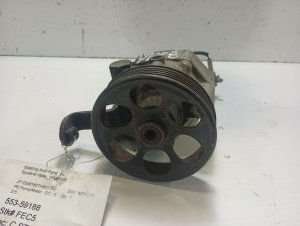
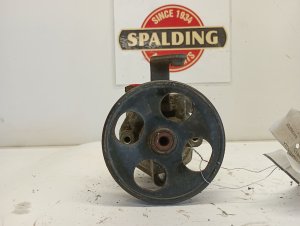
- Physical Inspection: Check the pump housing for any cracks or significant corrosion. Ensure the pulley is not bent and spins smoothly by hand without gritty or grinding feelings. Check the threaded ports for the fluid lines to make sure they aren't stripped or damaged.
- Mileage Considerations: While there's no exact failure mileage, pumps in vehicles with over 150,000 miles are more likely to have wear. However, a well-maintained, lower-mileage used OEM pump is often a more reliable choice than a cheaply made new aftermarket unit. Ask the seller for the mileage of the donor vehicle if possible.
- Red Flags: Avoid pumps that show obvious signs of leaking from the main shaft seal (behind the pulley) or the housing seams. Heavy grime and caked-on oil can indicate a long-term leak. A pulley that is difficult to turn or makes noise when spun by hand is a definite deal-breaker.
Replacement and Installation
Replacing the power steering pump is a manageable DIY job for someone with moderate 🎬 See this step-by-step Forester pump replacement walkthrough. mechanical experience. The key to a successful replacement is properly bleeding the system afterward.
Related Parts to Replace
- Inlet O-Ring: Even if you are replacing the whole pump, install a new O-ring (Part #34439FG000) on the suction inlet. It's a cheap part that prevents the most common issue.
- Accessory Belt: Since you have to remove the belt to access the pump, it's the perfect time to inspect and replace it if it shows signs of cracking or wear.
- Fluid Hoses: Carefully inspect the high-pressure and return hoses. If they are hard, brittle, or swollen, replace them now to prevent future leaks.
Bleeding the System: The Critical Final Step
Failure to properly bleed the air out of the system will cause the new pump to whine and can lead to premature failure. NEVER start the engine until the system is mostly bled.
- With the engine OFF, fill the reservoir to the 'COLD' line.
- Raise the front wheels off the ground so they can be turned easily.
- Slowly turn the steering wheel from full lock to full lock, about 20 times. You will see bubbles come up in the reservoir and the fluid level will drop.
- Keep topping off the fluid, repeating the lock-to-lock turning until the fluid level stabilizes and you no longer see major bubbles.
- Once the major bubbles are gone, you can start the engine for a few seconds and then shut it off. Re-check the fluid.
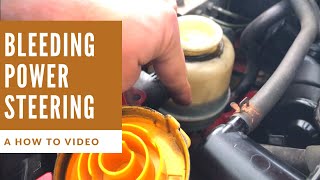
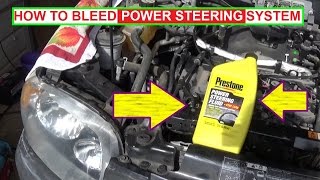
- Start the engine and let it idle. Turn the wheel lock-to-lock again a few more times. Any remaining noise should disappear. 🎬 Watch: The right way to bleed your power steering system. Check for leaks one last time.
Cost Comparison
| Part Type | Estimated Cost |
|---|---|
| New OEM | $465 - $550 |
| New Aftermarket | $98 - $250 |
| Remanufactured | $160 - $430 |
| Used OEM | $50 - $150 |
| Shop Labor | $150 - $250 |
Frequently Asked Questions (FAQ)
Why is my power steering only noisy when it's cold?
This is the classic symptom of a hardened O-ring on the power steering pump's suction inlet. The cold temperature causes the old rubber to shrink, letting air into the system and causing the pump to whine. As the engine bay warms up, the O-ring expands and re-seals, and the noise goes away. It's a very common issue on this generation of Forester.
Can I use regular power steering fluid in my 2006 Forester?
No. You must use Automatic Transmission Fluid (ATF). The system is designed for the viscosity and properties of ATF, specifically Dexron III or a compatible fluid like Subaru ATF-HP. Using standard power steering fluid can cause damage to the seals and pump.
Is it hard to replace the power steering pump myself?
For a DIY mechanic with a good set of tools, it is a moderately difficult job that can be done in a few hours. Access is relatively good. The most critical part of the job is properly bleeding all the air out of the system after the new pump is installed to avoid damaging it.
Do I need to replace the whole pump if it's just whining?
Not necessarily. If the whining is the only symptom, especially if it's worse when cold, the first step should always be to replace the inexpensive O-ring on the fluid inlet. You should also check for low fluid levels and old, contaminated fluid. A simple fluid flush and O-ring replacement often solves the problem without needing a new pump.
Are there any recalls for the power steering pump on these Foresters?
No, there are no specific NHTSA recalls for the power steering pump on the 2004-2008 Subaru Forester. There was a recall for potential corrosion on the front lower control arms (NHTSA Campaign ID: 11V464000) which affects steering and safety, but it is not directly related to the pump itself.
Helpful Videos
Technical Specifications
OEM Part Numbers: 34430SA000 34430SA001 34430SA0019L 34430SA010
Fluid Type: Automatic Transmission Fluid (ATF) - Dexron III or equivalent (e.g., Subaru ATF-HP)
We Have This Part in Stock


The information in this article is provided for general reference and educational purposes only. Vehicle specifications, procedures, and part compatibility can vary by production date, trim level, and region. Always consult your vehicle's factory service manual and verify part numbers before purchasing or performing repairs. Safety-critical components such as airbags, seat belts, and braking systems should be installed by a qualified professional.
- Subaru Forester:
- 🎬 Helpful Videos
- 🛍️ Shop This Part
- Symptoms of a Failing Power Steering Pump
- Common Failure Symptoms
- Known Issues: The Famous Whining O-Ring
- Diagnosing the Problem
- Buying a Used Power Steering Pump
- Replacement and Installation
- Related Parts to Replace
- Bleeding the System: The Critical Final Step
- Cost Comparison
- Frequently Asked Questions (FAQ)
- 🎟️ Get 5% Off