

2016-2021 Honda Civic Steering Problems: Fixing the 'Sticky' Feeling in Your EPS
This guide explains the common causes of Electric Power Steering (EPS) failure, from the infamous 'sticky steering' issue to warning lights and total loss of assist.
- The most common issue is a 'sticky' or 'notchy' steering feel at highway speeds, which is a known mechanical defect in the steering gearbox.
- Compatibility is extremely complex. You MUST match the part number to your car's Year, Body Style, Trim, and whether it has the Honda Sensing safety system.
- Replacement is a difficult job that often requires lowering the front subframe.
- After replacement, the steering angle sensor MUST be calibrated with a professional scan tool for the system to work. This is not an optional step.
Understanding the 2016-2021 Civic's Electric Power Steering (EPS)

If you're looking for a power steering pump or fluid reservoir on your 10th generation Civic, you won't find one. This vehicle is equipped with an Electric Power Steering (EPS) system. The key component is a powerful electric motor attached to the steering rack and pinion gearset, located low in the front of the car. This motor, along with its electronic control unit, is what can fail, leading to steering problems. Unlike older hydraulic systems that can fail gradually with leaks, EPS failures are often sudden and electronic in nature.
Symptoms of a Failing EPS System

Diagnosing an EPS problem can be tricky because other issues, like a weak battery, can cause similar symptoms. Always check your battery and charging system first before assuming the steering rack is bad.
1. 'Sticky' or 'Notchy' Steering at Highway Speeds
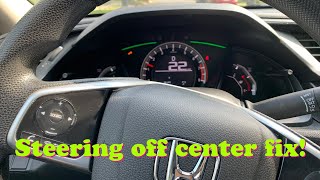
This is the most widely reported issue for this Civic generation. Drivers describe a sensation where the steering wheel 'sticks' in the center position while driving at highway speeds. It requires a small but noticeable amount of extra force to 'break free' and make a minor correction, which can lead to overcorrecting and a feeling of instability. This issue does not always trigger a warning light but is a significant safety concern. An NHTSA investigation into this problem on later models found it was caused by improper manufacturing of the steering gearbox's worm wheel, which prevents grease from properly lubricating the gears.
2. Power Steering Warning Light (EPS Light)
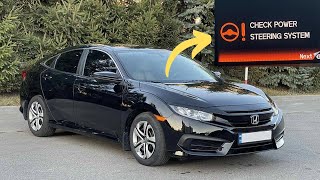
A yellow warning light on your dashboard showing a steering wheel with an exclamation mark indicates a fault in the EPS system. When this light is on, the system has detected a problem and will likely disable power assist, making the steering very heavy and difficult to turn, especially at low speeds. The light can be triggered 🎬 Watch how to diagnose a check power steering system warning. by a fault in the motor, the control module, a sensor, or even a wiring issue.
3. Sudden Loss of Power Assist / Heavy Steering
In some cases, the power steering assist may fail without warning, making the steering wheel extremely difficult to turn. This can happen intermittently or permanently. This is often caused by an internal failure in the EPS motor or its control unit, but can also be triggered by low voltage from a failing battery or alternator.
4. Clicking or Grinding Noises
While less common than the 'sticky' feeling, some drivers report clicking or grinding sounds when turning the wheel. A clicking noise could be related to a small internal coupler inside the motor assembly failing. A grinding noise could indicate a mechanical problem within the rack and pinion gears themselves.
Known Issues, Recalls, and Technical Service Bulletins (TSBs)

Important: Many online discussions mention TSBs like 23-039 or 16-067 in relation to 10th-gen Civics. These are NOT for the steering system. TSB 23-039 is a warranty extension for the A/C compressor shaft seal, and TSB 16-067 applies to an older model Accord.
- NHTSA Recall 18V-395 (Campaign Number): Honda recalled certain 2017-2018 Civic and CR-V models because a magnet controlling the steering torque sensor could become dislodged. This could cause the steering to pull to one side or lead to a loss of power assist.
- 'Sticky Steering' Investigation: The National Highway Traffic Safety Administration (NHTSA) opened an investigation into 'sticky steering' complaints. While the investigation and subsequent recalls primarily focused on 2022-2023 models, owners of 2021 models have reported identical symptoms. The cause was identified as a manufacturing defect in the steering gearbox.
- Potential Software Glitch (TSB 24-119): Some sources indicate Honda may have issued a technical service bulletin related to a software glitch in the EPS control module for 2016-2021 models that could cause a sudden loss of power steering assistance. A software update at a dealership may resolve some intermittent issues.
- Rodent Damage: The wiring harnesses in many modern cars, including the Civic, use a soy-based insulation that can attract rodents. Chewed wires leading to the EPS rack are a known cause of sudden power steering failure and warning lights.
Buying a Used 2016-2021 Civic EPS Rack Assembly
Buying a used EPS rack can save you over a thousand dollars, but compatibility is extremely complex. Getting the wrong part will result in it not working at all. It is highly recommended to purchase the complete steering rack assembly, which includes the motor, control unit, and inner tie rods, rather than just the motor itself.
CRITICAL: Verifying Compatibility
You cannot identify the correct rack by sight alone. The internal programming is specific to the vehicle's features. Follow these steps:
- Identify Your Vehicle's Exact Specs: You must know the Year, Body Style (Sedan, Coupe, or Hatchback), Trim (LX, EX, Sport, EX-L, etc.), and Engine (2.0L or 1.5L Turbo).
- Check for Honda Sensing: Determine if your car has the 'Honda Sensing' package (also called the pre-crash safety system). The easiest way to check is to look at the front windshield near the rearview mirror. If you see a large black plastic module with a camera lens pointing forward, you have Honda Sensing. You will also have buttons on the right side of your steering wheel for adaptive cruise control (ACC) and lane keeping assist (LKAS).
- Match OEM Part Numbers: This is the only guaranteed way to ensure compatibility. The part number on the used rack MUST match the original part number for your specific vehicle. Part number prefixes often indicate fitment; for example, 'TGG' parts are commonly for Hatchbacks, while 'TBA' parts are for Sedans.
What to Inspect on a Used Part
- Connectors and Wiring: Inspect the main electrical connectors for any bent pins, corrosion, or cracks. Check the wiring harness pigtail for any signs of cuts, fraying, or rodent damage.
- Physical Damage: Look for cracks, dents, or heavy corrosion on the aluminum housing of the motor and rack.
- Boots and Seals: If buying the full assembly, ensure the rubber boots covering the inner tie rods are not torn or leaking grease. Damaged boots allow dirt and water to enter the rack, causing rapid failure.
Replacement Overview & Mandatory Calibration

Replacing the EPS rack is a difficult job rated 4 out of 5 for difficulty. It typically requires lowering the front subframe to gain access, making it a challenging task for most DIY mechanics.
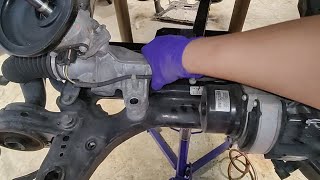
🎬 See this step-by-step steering rack replacement walkthrough.Warning: Calibration Is Not Optional. After the new rack is installed or if the battery has been disconnected for an extended period, the system MUST be calibrated. A procedure called 'VSA Sensor Neutral Position Memorization' must be performed with a compatible diagnostic scan tool (like the Honda HDS, Autel, or Launch scanners). Without this step, the EPS, ABS, and Vehicle Stability Assist (VSA) lights will stay on, and the power steering will not work correctly.
Cost to Replace a 2016-2021 Civic Power Steering Rack
Prices can vary significantly based on the part source and local labor rates.
| Part/Service | Estimated Cost |
|---|---|
| New OEM Steering Rack Assembly | $1,600 - $2,500 |
| New OEM EPS Motor Only | $1,100 - $1,800 |
| Used OEM Steering Rack Assembly | $250 - $600 |
| Remanufactured Aftermarket Rack | $500 - $900 |
| Shop Labor | $450 - $700 |
Frequently Asked Questions (FAQ)
Can I just replace the EPS motor instead of the whole steering rack?
While the motor is available as a separate part from Honda, it is generally not recommended. The repair is complex, and many failures originate in the mechanical parts of the rack or the integrated control unit. Replacing the entire assembly is a more reliable, long-term repair and is the standard procedure for most shops.
Why is my steering 'sticky' but there's no warning light?
The 'sticky' steering issue is often a mechanical problem within the gearbox, not an electrical fault that the system's diagnostics can detect. The sensors may still read correctly, so the control module doesn't know there's a problem and won't trigger the EPS light. However, it remains a serious issue that affects vehicle control.
Do I need to program or calibrate a replacement steering rack?
Yes, calibration is mandatory. After installation, a 'Steering Angle Sensor Neutral Position Memorization' procedure must be performed with a professional-grade scan tool. This teaches the car's safety systems (EPS, ABS, VSA) the new sensor's straight-ahead position. The car is not safe to drive and will have multiple warning lights until this is done.
Is it safe to drive with the EPS warning light on?
No. When the EPS light is on, power assistance is disabled, and the steering becomes extremely heavy. While the car is technically steerable, the amount of force required, especially in an emergency maneuver or at parking lot speeds, is dangerously high and significantly increases the risk of a crash.
Helpful Videos

Technical Specifications
OEM Part Numbers: 53620-TGG-A21 53620-TGG-A22 53620-TGG-A23 53620-TGG-A61 53620-TGG-A63 53620-TGG-A75 53651-TBA-A20 53651-TBA-A21 53651-TBA-A01 53660-TBJ-A10
System Type: Electric Power Steering (EPS), Rack-Mounted Motor. No hydraulic fluid is used.
We Have This Part in Stock



The information in this article is provided for general reference and educational purposes only. Vehicle specifications, procedures, and part compatibility can vary by production date, trim level, and region. Always consult your vehicle's factory service manual and verify part numbers before purchasing or performing repairs. Safety-critical components such as airbags, seat belts, and braking systems should be installed by a qualified professional.
- Honda Civic:
- 🎬 Helpful Videos
- 🛍️ Shop This Part
- Understanding the 2016-2021 Civic's Electric Power Steering (EPS)
- Symptoms of a Failing EPS System
- 1. 'Sticky' or 'Notchy' Steering at Highway Speeds
- 2. Power Steering Warning Light (EPS Light)
- 3. Sudden Loss of Power Assist / Heavy Steering
- 4. Clicking or Grinding Noises
- Known Issues, Recalls, and Technical Service Bulletins (TSBs)
- Buying a Used 2016-2021 Civic EPS Rack Assembly
- CRITICAL: Verifying Compatibility
- What to Inspect on a Used Part
- Replacement Overview & Mandatory Calibration
- Cost to Replace a 2016-2021 Civic Power Steering Rack
- Frequently Asked Questions (FAQ)
- 🎟️ Get 5% Off