

2012-2014 Honda CR-V Power Steering Module: Decoding Part Numbers & Programming
This guide covers the critical details of diagnosing, replacing, and programming the electronic power steering (EPS) control module for the 2012-2014 Honda CR-V.
- You MUST match the part number to your VIN's country of origin: '39980-T0A-xxx' for Japan-built (VIN starts with 'J') and '39980-T0G-xxx' for North American-built (VIN starts with '1', '2', '3', '4', or '5').
- These modules are for Front-Wheel Drive (FWD) models ONLY and will not work in All-Wheel Drive (AWD) vehicles.
- A replacement module is NOT plug-and-play; it must be electronically programmed/initialized to the vehicle by a dealer or a properly equipped shop to function.
- The most common symptom of failure is a sudden loss of power steering assist and an illuminated EPS warning light on the dash.
Symptoms of a Failing Power Steering Control Module
A bad power steering control module can make your CR-V difficult or unsafe to drive. Watch for these specific signs:
- Sudden Heavy Steering: The most common symptom is a complete loss of power steering assist. The steering wheel will become very difficult to turn, especially at low speeds or when parking.
- Intermittent Power Assist: The steering may work correctly sometimes and then suddenly become heavy, or vice-versa. This can be unpredictable and dangerous.
- EPS Warning Light: A yellow or orange warning light showing a steering wheel with an exclamation mark (!) will illuminate on your dashboard. This is the most direct indicator of a fault within the EPS system.
- Steering Pulls to One Side: The module may fail in a way that causes the electric motor to assist in one direction more than the other, causing the vehicle to pull.
- Associated OBD-II Codes: A professional scan tool can read specific Diagnostic Trouble Codes (DTCs) from the EPS system. Common codes point directly to an internal circuit failure in the control unit. Examples include codes like 35-02, 35-04, 35-05, and others indicating an "EPS Control Unit Internal Circuit" fault. A code like 52-01 may indicate a motor harness malfunction.
Known Issues, Recalls, and Technical Service Bulletins (TSBs)
While there are no specific recalls targeting the power steering control module for the 2012-2014 CR-V, later model years have had recalls for related steering components, highlighting the complexity of these systems. For the 2012-2014 generation, the most critical information comes from service bulletins and real-world mechanic reports.
- TSB #AER-12100-D: Honda investigated issues on 2012-2013 CR-Vs where steering wheel controls were not working and the SRS (airbag) light was on, which can sometimes be related to components in the steering column connected to the EPS system.
- TSB #A19050B: This bulletin notes that if the steering angle sensor or cable reel is improperly handled during a repair, it can trigger VSA (Vehicle Stability Assist) warning lights and DTCs. This is relevant because the EPS module relies on the steering angle sensor.
Important: Always check fuses first! A blown fuse can mimic a failed module. There is a 7.5-amp fuse in the interior fuse panel (often position 24) and a large 70-amp fuse for the main EPS motor power in the under-hood fuse box that should be checked before replacing any parts.
Buying a Used Power Steering Control Module: A Buyer's Guide
Purchasing a used OEM module can save you a significant amount of money, but there are critical details you must get right to avoid buying an incompatible part.
1. Country of Origin is CRITICAL: T0A vs. T0G
This is the most important compatibility check. Honda used different modules for CR-Vs built in different locations. You must match the module to your vehicle's country of origin.
- Part numbers starting with 39980-T0A-xxx are for CR-Vs built in Japan.
- Part numbers starting with 39980-T0G-xxx are for CR-Vs built in North America (USA, Canada, Mexico).
How to check your vehicle's country of origin: Look at the first character of your 17-digit Vehicle Identification Number (VIN), which is visible on the driver's side dashboard through the windshield or on the driver's door jamb sticker.
- J = Japan (You need a T0A module)
- 1, 4, or 5 = USA (You need a T0G module)
- 2 = Canada (You need a T0G module)
- 3 = Mexico (You need a T0G module)
Warning: A module from a Japan-built car will NOT work in a North American-built car, and vice-versa. You must verify your VIN before purchasing.
2. FWD vs. AWD/Touring Models
The specified power steering control modules are for Front-Wheel Drive (FWD) models ONLY. They will not function correctly in All-Wheel Drive (AWD) or Touring trim models, which may have different programming for vehicle weight and dynamics. Always confirm the donor vehicle was a FWD model.
3. Physical Inspection
When buying a used module, inspect it for any signs of physical damage. Check for corrosion on the connector pins, cracks in the casing, or any evidence of water intrusion. The module is located inside the vehicle, under the driver's side dashboard, so it is generally protected, but damage can still occur.
Programming and Initialization: The Critical Final Step
This part is NOT plug-and-play. A replacement Power Steering Control Module, whether new or used, must be programmed and initialized to your specific vehicle for the power steering to function.
- What is required: The module needs to learn the neutral position of the steering torque sensor. This procedure ensures the system knows when the steering wheel is centered and can apply assist correctly.
- Who can program it:
- Honda Dealership: They have the proprietary Honda Diagnostic System (HDS) and are guaranteed to perform the procedure correctly.
- Independent Repair Shop: A well-equipped independent shop with a high-end professional scan tool (like certain Autel or Snap-on models) that supports Honda-specific functions can perform the relearn procedure.
- DIY: It is extremely difficult for a DIY mechanic without access to the HDS or an equivalent professional tool. Some older Honda models had a manual relearn procedure using a jumper wire, but for this generation CR-V, a compatible scan tool is required.
Pro Tip: The "Torque Sensor Learn" procedure may fail if the ambient temperature is too low. One service tip notes that the engine bay temperature should be above 68°F (20°C) for the system to complete the cycle successfully.
Cost Breakdown
Prices can vary significantly based on the source of the part and labor rates in your area.
| Item | Estimated Cost |
|---|---|
| New OEM Module | $900 - $1,100 |
| New Aftermarket Module | Not commonly available due to programming complexity. |
| Used OEM Module | $90 - $250 |
| Remanufactured Module | $500 - $800 (Often sold as part of the entire steering rack assembly) |
| Shop Labor (Replacement & Programming) | $100 - $200 |
Frequently Asked Questions (FAQ)
Can I drive with a bad power steering module?
You can, but it is not recommended and can be dangerous. Without power assist, the steering will be extremely heavy, requiring significant physical effort to turn the wheel, especially at low speeds or in emergencies. This increases the risk of an accident.
What happens if I install a new module without programming it?
The power steering will not work, and the EPS warning light will remain illuminated on the dashboard. The system requires the electronic "handshake" and calibration procedure to activate the steering assist.
How do I know for sure if the module is bad and not the motor or sensor?
A proper diagnosis with a professional scan tool is required. The tool can read specific DTCs that often pinpoint the exact component that has failed. For example, codes indicating an "internal circuit" failure strongly suggest the module itself is faulty, whereas other codes might point to the torque sensor or the motor.
Will a module from a 2015 CR-V work in my 2013 CR-V?
It is not recommended. While the generation is similar, part numbers often change between model years. For electronic components that require programming, it is critical to match the part number exactly or use a verified compatible number for your specific year, model, and country of origin to ensure proper function.
Technical Specifications
OEM Part Numbers: 39980-T0A-A01 39980-T0A-A02 39980-T0A-A11 39980-T0A-A12 39980-T0G-A01 39980-T0G-A02 39980T0AA11 39980T0GA0 39980T0GA01 39980T0GA02
Location: Inside vehicle, mounted to the steering column area under the driver's side dashboard. Power: Requires a 70A fuse for the main motor circuit and a 7.5A fuse for the control circuit.
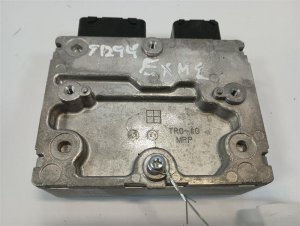
We Have This Part in Stock

The information in this article is provided for general reference and educational purposes only. Vehicle specifications, procedures, and part compatibility can vary by production date, trim level, and region. Always consult your vehicle's factory service manual and verify part numbers before purchasing or performing repairs. Safety-critical components such as airbags, seat belts, and braking systems should be installed by a qualified professional.
- Honda CR-V:
- 🛍️ Shop This Part
- Symptoms of a Failing Power Steering Control Module
- Known Issues, Recalls, and Technical Service Bulletins (TSBs)
- Buying a Used Power Steering Control Module: A Buyer's Guide
- 1. Country of Origin is CRITICAL: T0A vs. T0G
- 2. FWD vs. AWD/Touring Models
- 3. Physical Inspection
- Programming and Initialization: The Critical Final Step
- Cost Breakdown
- Frequently Asked Questions (FAQ)
- 🎟️ Get 5% Off