

2022-2024 Lucid Air High-Voltage Cables: Decoding Power Loss and DC-DC Converter Issues
This guide covers the critical high-voltage power cables in the 2022-2024 Lucid Air, focusing on the causes of power loss, related recalls, and what to inspect on a used part.
- The most critical symptom of a high-voltage system issue is a sudden loss of drive power, which has been the subject of multiple safety recalls.
- Replacement of this cable is NOT a DIY job. It requires a trained technician to safely de-energize the 900V+ system.
- When buying a used cable, meticulously inspect the orange sheathing and connectors for any damage, as recalls show the system is very sensitive to connection faults.
- A "12V Battery Charging System Fault" warning is a direct symptom of a problem with the DC-DC converter or its cabling and should be addressed immediately.
Function and Importance of the DC-DC Converter Cable
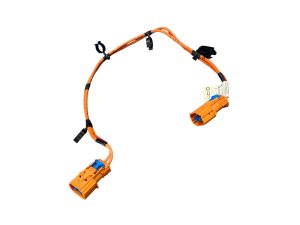
In the 2022-2024 Lucid Air, the high-voltage system is the heart of the vehicle, but the 12-volt system is its brain and nervous system. The part identified by OEM number P11-H91J00 is the high-voltage cable that feeds power to the DC-DC converter. Think of the DC-DC converter as the car's equivalent of a phone charger; it takes high-voltage power from the main battery pack and converts it to low-voltage power to run all the vehicle's accessories, control modules, and lights, while also keeping the 12V battery topped up. A failure in this part of the system can lead to serious and confusing electrical problems, including a vehicle that will not power on or that loses accessory functions while driving.
Symptoms of a Failing Power Converter Cable
A problem with a high-voltage cable can be difficult to diagnose, as it often mimics other system failures. The vehicle's onboard diagnostics are sensitive to any interruption in the high-voltage network. Based on owner reports and official recall documents, here are the most common symptoms.
- Sudden Loss of Drive Power: This is the most severe symptom. Multiple recalls on the Lucid Air are related to issues that cause an unexpected loss of power while driving. This can be caused by faulty inverters, but also by intermittent hardware connections in the high-voltage wiring. A damaged DC-DC converter cable could potentially create such a fault.
- "12V Battery Charging System Fault Detected" Warning: This message on the driver display is a direct indicator of a problem with the DC-DC converter or the cables supplying its power. If the converter isn't receiving high-voltage power, it cannot charge the 12V system.
- "Drive System Fault" or "Drive System Warning": These general warnings can appear in red or yellow on the instrument panel. They often indicate a critical problem with the battery or drive motors, but can also be triggered by faults in the high-voltage interlock loop (HVIL), a safety system that monitors all high-voltage connections.
- Vehicle Won't "Start" or Enable Drive: If the 12V battery is depleted due to a charging system fault, the entire vehicle may be unresponsive, as the contactors that engage the high-voltage battery rely on 12V power to function.
- Random Warning Lights and System Malfunctions: As the 12V system's voltage drops, various unrelated modules can begin to fail, leading to a cascade of error messages for systems like airbags, stability control, or collision protection.
Known Issues, Recalls, and Technical Service Bulletins (TSBs)
While there are no recalls specifically for the P11-H91J00 cable, several recalls for the 2022-2024 Lucid Air highlight the sensitivity of the high-voltage wiring and connection systems. These issues are critical context for anyone diagnosing problems or buying used parts.
NHTSA Recall 24V-497 (Lucid Campaign SR-24-03-0): High Voltage Interlock (HVIL) Failure
This crucial recall affects certain 2022-2023 Air models. The vehicle's safety systems were found to be too sensitive to intermittent hardware connection faults in the high-voltage wiring. This could cause the system to think a high-voltage connection was open, triggering it to cut all drive power without warning. The fix was a software update to prevent the power cut while driving and instead display a warning. This recall underscores how even a minor, momentary interruption in a high-voltage cable's connection can have severe consequences.
NHTSA Recall (Lucid Campaign SR-24-05-0): Rear Subframe Wiring Harness Too Short
Some 2024-2025 Air Pure RWD models were recalled because the rear subframe wiring harness was manufactured too short. This put strain on the electrical connector, which could lead to intermittent communication and a complete loss of power to the rear drive unit. This is a direct example of a cable's physical properties causing a critical failure, making inspection of any used cable extremely important.
Warning: The Lucid Air's high-voltage system operates at over 900 volts. There are no user-serviceable parts in the system. Do not attempt to inspect, remove, or replace any orange high-voltage components or cables yourself. This work must be performed by a qualified technician with specific training on Lucid vehicles.
Buying a Used Power Converter Cable
Purchasing a used high-voltage cable can be a cost-effective solution, but careful inspection is mandatory due to the safety-critical nature of the part. Given the recalls related to connection integrity, you must be diligent.
What to Inspect Before You Buy:
- Verify the Part Number: The only way to ensure compatibility is to match the OEM part number exactly. For this part, look for P11-H91J00. Be aware that suffixes (like -03) may indicate minor revisions.
- Inspect the Orange Sheathing: This is the most important check. Look for any signs of damage, no matter how small. Check for cuts, abrasions, scuffs, kinks, or areas that look stretched or pinched. Any breach in the orange sheathing makes the cable unsafe and unusable.
- Examine the Connectors: Check the plastic connector housings for cracks or damage. Ensure the locking tabs are present and not broken. Look inside the connector at the pins—they should be straight and free of any corrosion or signs of arcing (black marks, melted plastic).
- Check for Physical Strain: Look at the area where the cable enters the connector. There should be no sign that the cable has been pulled or strained, which could damage the internal wiring. The issues with short harnesses on other parts of the car make this a key inspection point.
- Ask About the Donor Vehicle: If possible, get the VIN and mileage of the vehicle the part came from. A low-mileage donor is always preferable. Avoid parts from vehicles with flood or fire damage, as this can compromise the integrity of high-voltage components in ways that aren't visible.
Pro Tip: For a component this critical, buying a used OEM part is often a better choice than a new aftermarket one (if one were available). The original Lucid engineering, materials, and quality control for high-voltage shielding and conductivity are designed specifically for the vehicle's 900V architecture. A cheap aftermarket cable could lack the proper shielding or durability, posing a significant safety risk.
Replacement Difficulty
- Installation Difficulty: 5 out of 5 (Expert-level, requires specialized training and equipment)
- DIY Feasible: No
Replacing any high-voltage component on a Lucid Air is not a do-it-yourself job. It requires a specific, multi-step procedure to de-energize the high-voltage system, which is extremely dangerous if done incorrectly. The owner's manual explicitly forbids owners from servicing any part of the high-voltage system. This repair must be handled by a Lucid Service Center or a certified EV repair facility with technicians trained on the Lucid platform.
Cost Comparison
Pricing for high-voltage components on a Lucid Air is high, and availability is limited to OEM channels and the recycled parts market.
| Part Type | Estimated Cost |
|---|---|
| New OEM | $400 - $700+ (Estimate, dealer-only part) |
| New Aftermarket | Not Available |
| Used OEM | $200 - $450 |
| Shop Labor | $400 - $800+ (Requires certified technician) |
Frequently Asked Questions (FAQ)
Can I drive my Lucid Air if it has a "12V Battery Charging System Fault"?
No. This warning means the high-voltage system is not recharging your 12V battery. You will have a very limited amount of time before the 12V battery dies, which will shut down all of the car's computers and controls, potentially even while driving. You should pull over safely as soon as possible and arrange for the vehicle to be towed to a service center.
Is a loss of power in a Lucid Air always related to a bad cable?
No. A sudden loss of power can be caused by many issues, including failures in the inverter power modules, battery management system, or software glitches. Several recalls have been issued to address these various causes. A faulty cable or connection is just one of several possibilities that a technician would need to investigate.
Why are the high-voltage cables orange?
This is a universal safety standard in the automotive industry for electric and hybrid vehicles. The bright orange color serves as a clear visual warning to technicians, owners, and first responders to never cut, touch, or attempt to service these components, as they carry lethally high voltage.
Can a software update fix a bad power cable?
No, a software update cannot fix a physically damaged or failing cable. However, software updates have been used by Lucid to change how the vehicle reacts to a fault. For example, recall 24V-497 used an OTA update to prevent the car from suddenly losing power if an intermittent connection was detected, instead providing a warning to the driver to seek service. The underlying hardware issue, if present, would still require physical repair.
Technical Specifications
OEM Part Numbers: P11-H91J00 P11-H91J00-03
High-voltage DC cable, orange safety sheathing, connects main power bus to DC-DC converter.
We Have This Part in Stock

The information in this article is provided for general reference and educational purposes only. Vehicle specifications, procedures, and part compatibility can vary by production date, trim level, and region. Always consult your vehicle's factory service manual and verify part numbers before purchasing or performing repairs. Safety-critical components such as airbags, seat belts, and braking systems should be installed by a qualified professional.
- Lucid Air:
- 🛍️ Shop This Part
- Function and Importance of the DC-DC Converter Cable
- Symptoms of a Failing Power Converter Cable
- Known Issues, Recalls, and Technical Service Bulletins (TSBs)
- NHTSA Recall 24V-497 (Lucid Campaign SR-24-03-0): High Voltage Interlock (HVIL) Failure
- NHTSA Recall (Lucid Campaign SR-24-05-0): Rear Subframe Wiring Harness Too Short
- Buying a Used Power Converter Cable
- What to Inspect Before You Buy:
- Replacement Difficulty
- Cost Comparison
- Frequently Asked Questions (FAQ)
- 🎟️ Get 5% Off