

2017-2026 Tesla Model 3 Brake Booster: Failure Warnings & Replacement Guide
This guide covers the common failure symptoms, replacement costs, and critical compatibility differences for the Tesla Model 3's electromechanical brake booster.
- A hard brake pedal with a 'Power Braking Assist Reduced' warning is a critical failure; do not drive the vehicle.
- There are two incompatible versions: one for 2017-2023 models (e.g., 1044671-99-F) and one for 2024+ 'Highland' models (1344671-00-A). Part numbers must match.
- Replacement is not a DIY job. It requires special software (Tesla Toolbox) to bleed the brakes and calibrate the system correctly.
- Before replacing the booster for a red 'Brake System' alert, always test the 12V/16V auxiliary battery and check chassis ground points, as these are common failure causes.
Key Failure Symptoms

Failure of the Model 3's brake booster is a serious safety issue. The most common indicator is a sudden change in brake pedal feel, often accompanied by warnings on the center display.
1. Hard or Stiff Brake Pedal
The most frequently reported symptom is a brake pedal that becomes extremely difficult to press. This happens when the electromechanical assist fails, forcing the driver to use pure hydraulic force to stop the car. This is a fail-safe mode, but it requires significantly more leg strength—sometimes four to five times the normal pressure—to slow the vehicle. This can be alarming and dramatically increases stopping distances.
2. 'Power Braking Assist Reduced' Warning
This alert on the touchscreen is a direct indicator of a problem with the iBooster system. It means the electric motor is no longer providing the expected level of assistance. While sometimes attributed to a temporary software glitch that a reset might fix, persistent warnings often point to a hardware failure requiring replacement.
3. Red 'Brake System' Alert
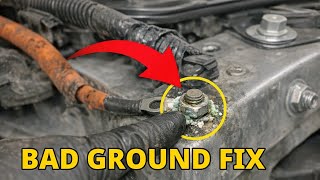
A red brake warning is the most critical alert and often appears alongside a hard pedal. While it can indicate a complete failure of the booster unit itself, it is frequently caused by underlying electrical issues. A failing 12V/16V auxiliary battery or a corroded chassis ground connection can cause voltage instability, which the brake controller interprets as a major fault, shutting down the power assist as a precaution. Before condemning the booster, the low-voltage system should always be inspected.
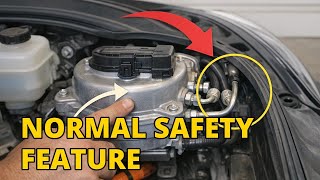
🎬 See how a bad ground or battery triggers brake alertsPro Tip: A hard brake pedal during very slow maneuvers, like creeping in traffic, might not be a failure. If the Autopilot cameras detect a potential collision, the system can pre-charge the brakes for an emergency stop, which makes the pedal feel firm. This is a normal function of the Automatic Emergency Braking (AEB) system.
🎬 Watch: Why your brake pedal feels firm during slow maneuversKnown Issues, Recalls, and Technical Service Bulletins (TSBs)

As of early 2026, there are no widespread official recalls specifically for the Tesla Model 3 power brake booster on the NHTSA database. However, a service bulletin (SB-14-33-003) was issued for some 2014 Model S vehicles for an iBooster issue, indicating a history of potential faults with this type of component. Most issues on the Model 3 are addressed on a case-by-case basis by Tesla Service. Forum discussions contain numerous owner reports of booster failures, particularly on earlier model years, often resulting in replacement under warranty or as a customer-pay repair.
Buying a Used Power Brake Booster

A used OEM brake booster can be a cost-effective solution, but careful verification is essential due to critical compatibility differences and the sensitive nature of the part.
Compatibility: First Generation vs. 'Highland'
There are two distinct generations of the brake booster for the Model 3, and they are not interchangeable.
- 2017-2023 Models: These first-generation vehicles use part numbers like 1044671-99-F and 1044671-00-G.
- 2024+ 'Highland' Models: The refreshed Model 3, known as 'Highland', uses a different booster, with part numbers like 1344671-00-A. These parts are for Left-Hand Drive (LHD) models only.
Warning: Always match the part number from your original booster to the used part you are buying. Installing the wrong generation part will not work. Sellers on platforms like eBay often specify the model years the part was removed from.
Inspection Checklist
- Check Connectors: Inspect all electrical connectors for corrosion, bent pins, or damage to the plastic housings.
- Look for Leaks: Check the area where the brake fluid reservoir mounts and where the master cylinder body meets the electronic unit for any signs of brake fluid leaks.
- Verify Part Number: Double-check that the part number sticker is present and matches what your vehicle requires.
- Mileage: While electronic components don't wear in the same way as mechanical ones, lower mileage is generally preferable. Failures have been reported on cars with relatively low mileage, so age and condition are just as important.
Replacement Procedure Overview

Replacing the Model 3 brake booster is a complex job that is not recommended for most DIY mechanics due to the special procedures and software required.
Warning: The brake system must be properly bled using specific software routines. Failure to do so can leave air in the system, resulting in poor or no braking performance.
The general steps include:
- Disconnecting 12V power.
- Removing the cowl screen and wiper assembly to access the booster.
- Draining the brake fluid reservoir and disconnecting the hydraulic brake lines.
- From inside the car, disconnecting the booster's pushrod from the brake pedal.
- Unbolting and removing the booster assembly from the firewall.
- Installation is the reverse of removal, using new nuts for the bulkhead mount.
Crucially, after installation, a specific brake bleeding procedure must be performed using Tesla's Toolbox software. This software activates the ABS/ESP pump to properly circulate fluid and remove all air. The process often involves running routines like 'PROC_ESP_FRONT-L-REAR-R-BRAKE-BLEED' and may require a firmware update or pedal calibration. This is why the job is best left to a qualified shop with the correct diagnostic tools.
🎬 Watch: Proper brake fluid service and bleeding for Model 3Torque Specifications
| Component | Torque (Pre-Highland) | Torque (Highland) | Notes |
|---|---|---|---|
| Booster to Bulkhead Nuts | 23 Nm | 16.5 Nm | Always use new nuts. |
| Brake Lines to Master Cylinder | 18 Nm | 16 Nm | |
| Wiper Motor Assembly Bolts | 6 Nm | N/A |
Cost to Replace a Model 3 Brake Booster
The cost can vary significantly based on the part source and labor rates.
| Item | Estimated Cost | Notes |
|---|---|---|
| New OEM | $600 - $900+ | Purchased from Tesla Service. Price can fluctuate. |
| New Aftermarket | $450 - $650 | Some manufacturers like HBS produce aftermarket iBoosters. |
| Used OEM | $175 - $350 | Common price range on used parts sites like eBay. |
| Shop Labor | $350 - $700 | Labor can be 2.5-4 hours. General estimates for booster replacement are $140-$170, but Tesla-specific procedures and bleeding add time and cost. |
Frequently Asked Questions (FAQ)
Can I drive my Model 3 if the brake booster has failed?
No. While the car is technically drivable in the hydraulic fail-safe mode, it is extremely dangerous. The amount of pedal pressure required to stop is dangerously high, and your stopping distance will be significantly longer. The vehicle should be towed to a service center immediately.
Does a 'Regenerative Braking Temporarily Reduced' warning mean my booster is failing?
No, this is usually unrelated to the power brake booster. This warning typically appears when the high-voltage battery is either too cold or fully charged (above 90-95%) and cannot accept more energy from regenerative braking. It can also appear during long downhill drives. It is a normal message and not a sign of a fault.
Is rebuilding the brake booster an option?
No, the iBooster is a sealed electromechanical unit and is not designed to be rebuilt or repaired. If it fails, the entire assembly must be replaced.
Will Tesla install a used brake booster that I provide?
Generally, no. Tesla Service Centers will typically only install new parts that they procure. You will need to use an independent repair shop that is willing to install customer-supplied parts.
Helpful Videos
Technical Specifications
OEM Part Numbers: 1044671-99-F 1044671-00-G 1344671 1344671-00-A 134467100A
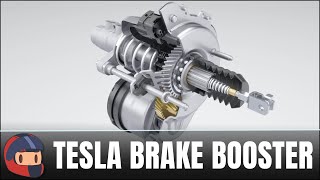
Electromechanical iBooster unit with integrated master cylinder and fluid reservoir. Operates on the vehicle's low-voltage system.
We Have This Part in Stock
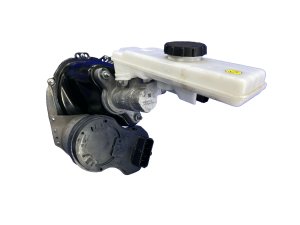
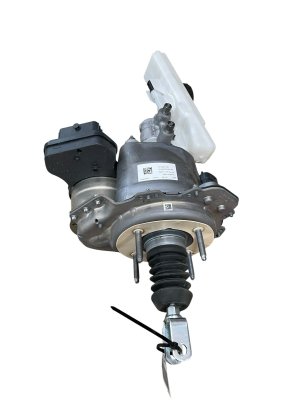
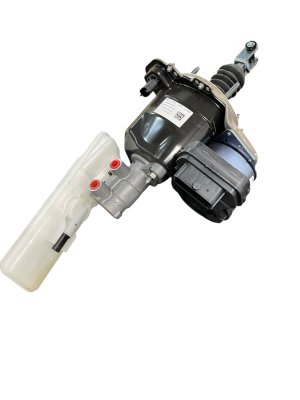
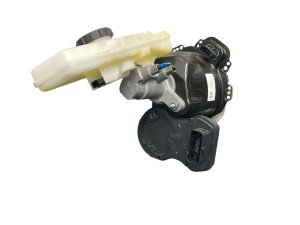

The information in this article is provided for general reference and educational purposes only. Vehicle specifications, procedures, and part compatibility can vary by production date, trim level, and region. Always consult your vehicle's factory service manual and verify part numbers before purchasing or performing repairs. Safety-critical components such as airbags, seat belts, and braking systems should be installed by a qualified professional.
- Tesla Model 3:
- 🎬 Helpful Videos
- 🛍️ Shop This Part
- Key Failure Symptoms
- 1. Hard or Stiff Brake Pedal
- 2. 'Power Braking Assist Reduced' Warning
- 3. Red 'Brake System' Alert
- Known Issues, Recalls, and Technical Service Bulletins (TSBs)
- Buying a Used Power Brake Booster
- Compatibility: First Generation vs. 'Highland'
- Inspection Checklist
- Replacement Procedure Overview
- Torque Specifications
- Cost to Replace a Model 3 Brake Booster
- Frequently Asked Questions (FAQ)
- 🎟️ Get 5% Off