

2010-2013 Toyota Prius Parking Aid Module: Why Calibration is Key
This guide covers the common failures, diagnostic codes, and critical calibration requirements for the parking assist control module in the 2010-2013 Toyota Prius.
- A replacement module (new or used) MUST be calibrated to the vehicle with a professional scan tool; it is not a plug-and-play part.
- Failures are more commonly caused by faulty sensors or damaged bumper wiring than by the module itself. Always diagnose with a proper scan tool first.
- This module is for the standard park assist system. Ensure you buy the correct part number (86792-47190) for models without adaptive cruise control.
- There are no specific recalls or TSBs for this module, meaning failures are not part of a widespread, recognized defect.
Symptoms of a Failing Parking Aid Control Module

When the parking aid module fails, the entire system typically shuts down. However, because the sensors and wiring are exposed to the elements, they are far more common failure points than the module itself. Always perform a full diagnosis before replacing the module.
- "Check Sonar System" or "Parking Assist Malfunction" Message: The most common symptom is a warning message appearing on the multi-information display.
- System Inoperative: The parking assist button may not respond, and no beeps will sound when the vehicle is in reverse or approaching an object at low speed.
- False Alerts or No Alerts: While often a sensor issue, a faulty module could theoretically cause constant beeping or fail to detect objects.
- Diagnostic Trouble Codes (DTCs): A professional scan tool (not a basic OBD-II reader) is required to read codes from the parking assist system. Common codes often point to a specific sensor or a circuit break, which should be investigated first. Codes like C1AE7 indicate a specific sensor malfunction, while C1AED points to a general open or short in the sensor circuit. If the module itself has an internal failure or cannot communicate, module-specific codes may be present.
Known Issues, Recalls, and Technical Service Bulletins (TSBs)

As of mid-2026, there are no specific recalls or TSBs issued by Toyota or the NHTSA for the parking aid control module itself on the 2010-2013 Prius. Recalls for this generation pertain to other systems like the hybrid inverter, airbags, and ABS brake software.
The most common real-world problems with this system are not with the module, but with the external components:
- Dirty Sensors: Mud, ice, snow, or even heavy rain can obstruct the sensors and cause a temporary system malfunction message. Cleaning the sensors often resolves the issue.
- Faulty Bumper Sensors: The ultrasonic sensors in the bumpers can fail from moisture intrusion or minor impacts.
- Damaged Wiring Harness: The sensors are connected in a 'daisy-chain' style, where they are wired one to the next. The wiring, especially on the rear bumper, is thin and can become brittle or damaged, causing the entire system to fail. A single broken wire can make all sensors downstream from the break stop communicating with the module.
Pro Tip: Before condemning the control module, always have a technician with a bidirectional scan tool read the specific trouble codes. The codes will often pinpoint a faulty sensor or a break in the wiring harness, which are much more common and less expensive to fix.
Replacement and Calibration Requirements

Replacing the parking aid control module is a critical task that requires a final, mandatory calibration step for the system to function.
Module Location
The Parking Aid Control Module is located behind the glove box assembly on the passenger side of the dashboard. To access it, the upper and lower glove box compartments must be removed. This process typically involves carefully prying off trim panels and unclipping the glove box assemblies, and does not require special tools.
Programming and Calibration: The Most Important Step
Warning: A replacement module, whether new or used, will not work correctly by simply plugging it in. The system requires calibration using a compatible diagnostic tool.
This is not a simple plug-and-play part. The control module needs to know the precise angle of each individual sensor on the bumpers to accurately calculate object distance. This information is programmed into the module during a calibration procedure.
- What is required: The calibration must be performed with Toyota's official Techstream software or a high-end professional bidirectional scan tool (such as certain Autel or Snap-on models) that has this specific function.
- Who can do it: A Toyota dealership or an independent repair shop with the proper diagnostic equipment can perform the calibration. A DIY mechanic without access to these tools will not be able to complete the job.
- The Process: The technician uses the scan tool to enter the calibration utility. The tool then prompts for the angle of each sensor (e.g., center sensors are typically 3 degrees, corner sensors are 4 degrees). Once this data is written to the module, the system becomes operational.
Buying a Used Parking Aid Control Module
Given the high cost of a new OEM module, a used unit is a cost-effective and reliable option, provided you verify compatibility. Aftermarket modules for this specific part are generally not available.
- Verify the Part Number: The most critical step is to match the part number exactly. The correct OEM part number for a standard 2010-2013 Prius without adaptive cruise control is 86792-47190. Modules for vehicles with adaptive cruise or for the Prius V wagon have different part numbers (e.g., 86792-47160 or 86792-47230) and are not interchangeable.
- Check VIN-Specific Fitment: For 2012-2013 models, the part number 86792-47190 fits the standard liftback model, identified by the 7th and 8th digits of the VIN being 'DU'. The Prius V wagon uses 'EU' in the VIN and requires a different module.
- Inspect for Damage: When buying a used module, check the casing for any signs of cracks or water damage. Ensure all connector pins are straight and free of corrosion.
- Factor in Calibration Cost: Remember that you will need to pay a shop to calibrate the used module to your vehicle. Call local independent shops specializing in Toyota or your dealer beforehand to get a quote for this service.
Cost to Replace Parking Aid Control Module
The total cost can vary significantly based on the price of the part and local labor rates for diagnosis and calibration.
| Part / Service | Estimated Cost |
|---|---|
| New OEM Module | $600 - $1,000 |
| Used OEM Module | $50 - $150 |
| New Aftermarket Module | Not Generally Available |
| Shop Labor (Replacement & Calibration) | $100 - $250 |
Labor costs typically include 0.5-1.0 hour for physical replacement and another 0.5 hour for the electronic calibration procedure.
Frequently Asked Questions (FAQ)
Does a 2010-2013 Prius parking aid module need to be programmed?
Yes. A new or used replacement module must be calibrated to the vehicle using a professional scan tool like Toyota Techstream. Without this step, the system will not function, and a warning light will remain on the dash.
Where is the parking aid control module located on a 2011 Prius?
The module is located behind the upper and lower glove box compartments on the passenger side of the dashboard. The glove box assembly must be removed to gain access.
Why did my park assist stop working after changing the 12V battery?
Sometimes, after a power loss from a battery change, the system may simply be turned off. First, check that the parking assist system is enabled using the button on the dash. In some cases, other related systems may lose their memory, triggering a fault. A steering angle sensor calibration, which can sometimes be performed without a scan tool, may be required.
Can I fix a "Check Sonar System" warning myself?
You can perform basic troubleshooting. First, thoroughly clean all parking sensors on the front and rear bumpers with a soft cloth, as dirt or ice is a common cause. Check for any visible damage to the sensors or their wiring. However, to diagnose the problem accurately, you need a scan tool that can read Toyota-specific body codes (C-codes). Without the codes, you will only be guessing at the cause.
Technical Specifications
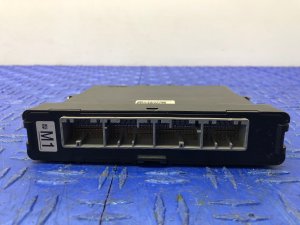
OEM Part Numbers: 86792-47190 8679247190
Controls front and rear ultrasonic parking sensors. Located behind the glove box assembly. Requires electronic calibration after installation.
We Have This Part in Stock




The information in this article is provided for general reference and educational purposes only. Vehicle specifications, procedures, and part compatibility can vary by production date, trim level, and region. Always consult your vehicle's factory service manual and verify part numbers before purchasing or performing repairs. Safety-critical components such as airbags, seat belts, and braking systems should be installed by a qualified professional.
- Toyota Prius:
- 🛍️ Shop This Part
- Symptoms of a Failing Parking Aid Control Module
- Known Issues, Recalls, and Technical Service Bulletins (TSBs)
- Replacement and Calibration Requirements
- Module Location
- Programming and Calibration: The Most Important Step
- Buying a Used Parking Aid Control Module
- Cost to Replace Parking Aid Control Module
- Frequently Asked Questions (FAQ)
- 🎟️ Get 5% Off