

2018-2023 Jeep Wrangler TPMS Module: Decoding Failures and the Critical Mid-2021 System Change
This guide clarifies the common confusion between the TPMS and Park Assist modules and details the crucial system differences before and after mid-2021.
- A critical system change occurred on June 7, 2021; TPMS modules and sensors are not interchangeable between pre- and post-date vehicles.
- This module is for the Tire Pressure Monitoring System (TPMS) ONLY, not the Park Assist (parking sensor) system.
- A flashing TPMS light indicates a system fault (like a bad module), while a solid light means low tire pressure.
- Replacement of the module is plug-and-play and does not require dealer programming; the system relearns wheel sensors automatically by driving.
Urgent: Is It a TPMS Module or Park Assist Module?
Before diagnosing any issue, it's critical to identify the correct part. There is significant confusion between two separate systems on the 2018-2023 Jeep Wrangler: the Tire Pressure Monitoring System (TPMS) and the ParkSense® Park Assist system.
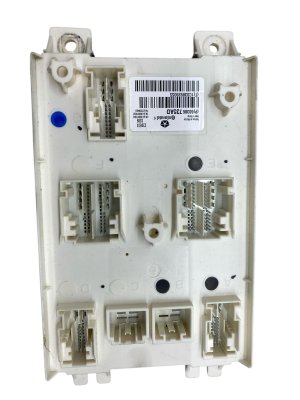
- TPMS Module (This Article's Focus): This module, OEM part number 52112206AC, exclusively handles tire pressure monitoring. It listens for signals from the sensors in your wheels.
- Park Assist Module: This is a completely different part (e.g., part number 68289847AE) that controls the ultrasonic sensors in your bumpers for parking.
Warning: The part number 6828947AE, sometimes associated with this system in databases, is incorrect. It is a Mopar part number for a headlamp, typically for a Chrysler Pacifica, and has no relation to the Wrangler's TPMS or Park Assist systems.
The Critical Mid-2021 System Change
The most important factor when replacing this module is the vehicle's build date. The entire TPMS architecture changed in the middle of the 2021 model year.
A forum post containing technical service information highlights this crucial split.
| Build Date | System Type | Key Details |
|---|---|---|
| Before June 7, 2021 | Dedicated TPMS Module | Uses a standalone TPMS receiver module (Part No. 52112206AC). This is the part most people are looking for when they have a module failure on an earlier JL. |
| After June 7, 2021 | Integrated RF Hub | The TPMS function is integrated directly into the Radio Frequency Hub (RF Hub). A 'dummy' module is installed only as a wiring pass-through and has no electronic function. The in-wheel sensors for this system are also different and are not compatible with the earlier system. |
This change means parts are not interchangeable across this date. You must match the module to the correct system based on your Wrangler's manufacturing date.
Symptoms of a Failing TPMS Module
When the TPMS module itself fails, it creates a system-wide fault, not just a low-pressure warning. Look for these specific symptoms:
- Flashing TPMS Light: This is the primary indicator of a system malfunction. The TPMS warning light will flash for 60 to 90 seconds when you start the vehicle and then remain on steadily. A light that is always solid from the start typically just indicates one or more tires are low on air.
- "Tire Pressure Unavailable" Message: The instrument cluster display will be unable to show the pressures for any of the tires.
- Inability to Learn New Sensors: If you've replaced the in-wheel sensors and the system refuses to recognize them after driving, the central module could be the culprit.
- OBD-II Trouble Codes: A scanner may reveal codes related to the TPMS. A common code is C1710, indicating "no data" from a sensor. While this often points to a bad sensor, if multiple sensors stop reporting simultaneously, the fault is more likely with the central module or its wiring.
Pro Tip: An interesting issue noted by owners is that the TPMS sensor in the rear-mounted spare tire can sometimes cause radio frequency interference with the ParkSense® rear parking sensors, leading to false obstacle alerts. If you experience phantom beeping when in reverse, try rotating the spare tire 180 degrees to move the sensor away from the park assist hardware.
Buying a Used TPMS Module (Pre-June 2021 Models)
A used OEM module is an excellent, cost-effective solution for Wranglers built before mid-2021. Here’s what to look for:
- Verify the Donor Vehicle: The single most important step is to ensure the used module comes from a 2018 to early-2021 Jeep Wrangler JL. A module from a later model will not work.
- Inspect the Connectors: Check the electrical connector pins. They should be straight, clean, and free of any green or white corrosion, which indicates water damage.
- Check the Casing: Look for cracks or signs that the plastic casing has been pried open. The module is a sealed unit, and any breach can allow moisture inside, leading to failure.
- Why Used OEM is a Good Choice: The TPMS module is a simple receiver. Unlike complex engine computers, these modules have a low failure rate and are not mileage-sensitive. A used OEM unit is often more reliable than a new, unproven aftermarket part and avoids potential compatibility issues.
Programming and Relearn Requirements
Good news for DIY mechanics: the Jeep Wrangler JL system is designed to be user-friendly.
- Module Replacement: The central TPMS module itself does not require special programming or a dealer visit. It is a plug-and-play component.
- Sensor Relearn: The 2018-2023 Wrangler uses an "auto relearn" system for the in-wheel sensors. After installing new sensors (or a new module), you simply need to drive the vehicle. The system will automatically detect and register the sensors' unique IDs, usually within 20 minutes of driving at speeds above 15 mph. There is no manual reset button.
Cost of Replacement
Costs are for the pre-June 2021 standalone module. Labor costs are minimal as the part is relatively easy to access.
| Part Source | Estimated Cost |
|---|---|
| New OEM (Mopar 52112206AC) | $70 - $120 |
| New Aftermarket | $50 - $90 |
| Used OEM | $25 - $60 |
| Shop Labor to Replace | $50 - $100 |
Frequently Asked Questions (FAQ)
Do I need to program a new or used TPMS module?
No. For the 2018-2023 Jeep Wrangler JL, the main TPMS module (on pre-2021.5 models) is a plug-and-play part and does not require programming or a dealer visit for installation.
What's the difference between a solid and a flashing TPMS light?
A solid, non-flashing light simply means one or more of your tires has low air pressure. A light that flashes for about a minute upon startup and then stays solid indicates a malfunction within the TPMS system itself, such as a dead sensor battery, a bad sensor, or a failed main module.
Why did my TPMS light start flashing after I got new tires?
This can happen for a few reasons. The tire shop may have damaged one of the old sensors during the change, installed incompatible aftermarket sensors, or installed sensors designed for the wrong model year (e.g., putting post-2021.5 sensors in a 2019 vehicle). The in-wheel sensors have batteries that last about 5-10 years, so it's also possible one simply failed by coincidence.
Can a bad TPMS module affect my parking sensors?
Directly, no. They are separate systems. However, owners have reported that radio interference from the TPMS sensor in the spare tire can cause the rear ParkSense® system to give false warnings. This is an interference issue, not a module failure.
Technical Specifications
OEM Part Numbers: 52112206AC
System Frequency: 433 MHz
We Have This Part in Stock




The information in this article is provided for general reference and educational purposes only. Vehicle specifications, procedures, and part compatibility can vary by production date, trim level, and region. Always consult your vehicle's factory service manual and verify part numbers before purchasing or performing repairs. Safety-critical components such as airbags, seat belts, and braking systems should be installed by a qualified professional.
- Jeep Wrangler: