

2009-2014 Hyundai Genesis Park Assist Module: Fixing Sensor Faults & Programming Issues
Your definitive guide to diagnosing, replacing, and sourcing the correct Park Assist Control Module for your 2009-2014 Hyundai Genesis sedan.
- There are two main, non-interchangeable modules. You MUST match the part number from your original part (95770-3M100 for camera models, 95700-3M000/1 for non-camera models).
- A replacement module will likely require programming by a Hyundai dealer or a specialized shop to function correctly.
- Most park assist failures are caused by bad sensors or wiring, not the module. Diagnose the system properly before buying a new module.
- The module is located in the trunk behind the side liner, making physical replacement a straightforward DIY job.
Symptoms of a Failing Park Assist Module
When the Park Assist Control Module in a 2009-2014 Hyundai Genesis begins to fail, you'll notice issues with the parking sensor system. However, it's important to remember that faulty sensors or wiring can cause identical symptoms. Always check the sensors and their connections before condemning the module.
- "Service Park Assist" Message: The most common sign is a warning message appearing on the instrument cluster display, such as "Check Parking Assist." This indicates the system has detected a fault and has been disabled.
- System is Completely Inoperative: The system does not activate at all when you put the car in reverse. You won't hear the initial beep, and there will be no warning sounds as you approach an object.
- Constant or False Beeping: The system may emit a constant, solid tone as soon as it's activated, or it might beep erratically even when there are no obstacles nearby. This can sometimes be caused by a single faulty sensor sending a bad signal to the module.
- Intermittent Functionality: The system works sometimes but not others. This can point to a failing module, but is also a classic sign of a loose wiring connection or a sensor that is beginning to fail.
Common Diagnostic Trouble Codes (DTCs)
A professional scan tool that can read Body Control Module (BCM) codes is necessary for proper diagnosis. While generic code readers may not show these, a more advanced tool might find the following:
- B1214 - B1217: These codes typically point to failures in specific park assist sensors. Diagnosing which sensor is faulty can help you avoid replacing the entire module unnecessarily.
- B1602 (CAN Error) / B1603 (CAN Communication Bus Off): These are communication codes. If the park assist module can no longer communicate with the vehicle's other computer systems, it may be due to an internal failure of the module or a wiring issue leading to it.
Pro Tip: Before assuming the module is bad, first clean all parking sensors on the bumpers with soap and water. Dirt, ice, or road grime can obstruct the sensors and cause false warnings or system errors. Also, inspect the wiring harness behind the bumpers for any damage, especially if the vehicle has had any previous collision repair.
Known Issues, TSBs, and Recalls
As of mid-2026, there are no specific recalls or widespread Technical Service Bulletins (TSBs) from Hyundai or the NHTSA concerning the Park Assist Control Module for the 2009-2014 Genesis sedan in the North American market. Recalls found online for Hyundai "Smart Parking Assist" apply to much newer models (2020 and later) and refer to a different, more advanced self-parking system. These should not be confused with the sensor-based alert system in the 2009-2014 Genesis.
Buying a Used Park Assist Control Module
This is the most critical section for anyone replacing this part. Getting the wrong module will result in it not working. Follow these steps carefully.
1. Verify Your EXACT Part Number
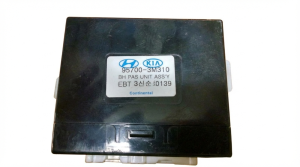
There are two primary park assist modules for the 2009-2014 Genesis, and they are NOT interchangeable. You must remove your original module to read the part number printed on its label. The module is located inside the trunk, behind the trunk liner on either the driver's (LH) or passenger's (RH) side rear quarter panel.
- Part Number 95770-3M100: This module is typically for Genesis models equipped with both parking sensors and a backup camera system. It is often described as the "Unit Assembly Back Blind."
- Part Number 95700-3M000 (or its successor 95700-3M001): This module is typically for models with the audible parking sensor system but without the integrated backup camera. It is described as the "Module Assembly-Front Back Waring."
Warning: Do not purchase a module based on your vehicle year alone. A module for a car with a backup camera will not work correctly in a car without one, and vice-versa. Matching the OEM part number is the only way to guarantee compatibility.
2. Physical Inspection
When buying a used module, inspect it for:
- No Corrosion: Check the pins in the electrical connectors for any green or white crusty buildup. Water intrusion is a common cause of failure for electronics located in the trunk.
- Intact Connectors: Ensure the plastic surrounding the connector pins is not cracked or broken.
- Undamaged Casing: Look for cracks or signs that the module's case has been pried open.
3. Programming and Installation
While not definitively confirmed by Hyundai service documents, many used parts sellers indicate that this module may require programming to the vehicle. This is a common procedure for modern vehicle electronics to ensure all systems can communicate correctly.
- What this means: After installing the replacement module, the park assist system may not function until it is coded to your car's VIN.
- Who can do it: This programming typically requires a trip to a Hyundai dealership or a well-equipped independent repair shop with advanced diagnostic tools. Most DIY-level OBD-II scanners cannot perform this function.
- Recommendation: Be prepared for the potential added cost and time of having the module programmed after installation.
Replacement Cost Breakdown
Prices can vary based on your location and the supplier. The cost of programming, if needed, is an additional expense.
| Part Source | Estimated Cost |
|---|---|
| New OEM (Dealer) | $370 - $750 |
| New Aftermarket | Not commonly available |
| Used OEM (Recycled) | $40 - $100 |
| Shop Labor (Installation) | $100 - $270 (1.0-1.5 hours) |
| Shop Labor (Programming) | $75 - $180 (0.5-1.0 hour, if required) |
Frequently Asked Questions (FAQ)
Does the Park Assist Control Module need to be programmed?
It is highly likely. While some electronic modules are plug-and-play, many sellers of this specific part state that programming is required for it to function correctly with the vehicle. You should anticipate needing a Hyundai dealer or a specialized independent shop to code the replacement module to your car after installation.
Where is the park assist module located on a 2009-2014 Genesis?
The module is located inside the trunk. You will need to remove the trunk liner on either the left (driver) or right (passenger) side to access it. It is a small black box bolted to the vehicle's body in the rear quarter panel area.
Can I just replace a bad sensor instead of the whole module?
Yes, and you should. Most park assist system failures are due to a single bad sensor or its wiring, not the control module. A proper diagnosis with a scan tool can often identify the specific faulty sensor, which is a much cheaper and easier repair. Only replace the module if it has been confirmed as the point of failure.
What's the difference between part number 95770-3M100 and 95700-3M000?
They are for different vehicle options and are not interchangeable. Part number 95770-3M100 is generally for models that have both parking sensors and a backup camera. Part number 95700-3M000 (and its replacement, 95700-3M001) is for models with only the audible parking sensor system. You must match the number from your original part.
Technical Specifications
OEM Part Numbers: 95770-3M100 95700-3M000 95700-3M001
Location: Rear quarter panel, inside trunk.
We Have This Part in Stock




The information in this article is provided for general reference and educational purposes only. Vehicle specifications, procedures, and part compatibility can vary by production date, trim level, and region. Always consult your vehicle's factory service manual and verify part numbers before purchasing or performing repairs. Safety-critical components such as airbags, seat belts, and braking systems should be installed by a qualified professional.
- Hyundai Genesis:
- 🛍️ Shop This Part
- Symptoms of a Failing Park Assist Module
- Common Diagnostic Trouble Codes (DTCs)
- Known Issues, TSBs, and Recalls
- Buying a Used Park Assist Control Module
- 1. Verify Your EXACT Part Number
- 2. Physical Inspection
- 3. Programming and Installation
- Replacement Cost Breakdown
- Frequently Asked Questions (FAQ)
- 🎟️ Get 5% Off