

2005-2008 Boxster & 2006-2008 Cayman Oxygen Sensors: Symptoms, Codes, and Replacement
Learn to spot the signs of a failing oxygen sensor, understand the OBD-II codes, and see what's involved in replacing them on your Porsche 987.
- Your car has four sensors: two 'upstream' (pre-cat) and two 'downstream' (post-cat), which use different part numbers and are not interchangeable.
- A Check Engine Light combined with poor fuel economy and a rough idle are the classic signs of a failing O2 sensor.
- Always use a direct-fit sensor from an OEM supplier like Bosch; avoid universal 'splice-in' sensors which often cause problems on these vehicles.
- Replacement is a manageable DIY job, but the sensors can seize in the exhaust; using penetrating oil and a special 22mm O2 sensor socket is essential for success.
Symptoms of a Failing Oxygen Sensor
A failing oxygen sensor rarely causes a sudden breakdown, but it will degrade your car's performance and can lead to more expensive repairs if ignored. The symptoms often start subtly and worsen over time. Here are the most common signs that one or more of your O2 sensors are bad:
- Check Engine Light (CEL): This is the most common indicator. The car's computer will store fault codes related to the sensor's performance or its circuit.
- Poor Fuel Economy: A bad sensor can cause the engine to run rich (too much fuel), leading to a noticeable drop in gas mileage.
- Rough Idle and Hesitation: You may notice an erratic idle, engine hesitation, or stumbling during acceleration. This can be especially noticeable during a hot start after the car has been sitting for a short time.
- Loss of Power: The engine may feel sluggish or struggle to accelerate, particularly at higher RPMs.
- Failed Emissions Test: A malfunctioning O2 sensor will almost certainly cause your vehicle to fail an emissions inspection due to high levels of pollutants.
- Rotten Egg Smell: A strong sulfur or rotten egg smell from the exhaust can indicate that the catalytic converter is being damaged by an incorrect air-fuel mixture, which is often caused by a bad O2 sensor.
Common diagnostic trouble codes (DTCs) associated with oxygen sensor failure on the 987 Boxster and Cayman include:
- P0030 - P0056: Codes related to the heater circuit within the sensors.
- P0130 - P0167: General codes for sensor circuit malfunctions, slow response, or no activity.
- P2196: O2 Sensor Signal Stuck Rich (Bank 1, Sensor 1).
- P0420 / P0431: Catalyst System Efficiency Below Threshold. While this points to the catalytic converter, it is often triggered by a faulty downstream O2 sensor giving an incorrect reading.
Known Issues and Bulletins
Extended Warranty for Upstream Oxygen Sensors
Porsche issued a technical bulletin (ENU 22/21) that extended the warranty for the upstream oxygen sensors on certain vehicles to 10 years or 150,000 miles. While this warranty period has likely expired for all 2005-2008 models, it indicates that Porsche recognized a higher-than-normal failure rate for these specific pre-catalyst sensors. This makes it especially important to check their condition if you are diagnosing an issue.
Buying a Used Oxygen Sensor Set
While oxygen sensors are considered a wear item, a low-mileage used OEM sensor can be a reliable and cost-effective alternative to a new part, and a much safer bet than a cheap, unbranded aftermarket sensor.
Why Used OEM is a Smart Choice
The original equipment (OE) supplier for these sensors is Bosch. Porsche's engine management system is sensitive and designed to work with the specific voltage ranges and response times of the Bosch sensors. Many generic or universal aftermarket sensors fail to communicate properly, leading to persistent Check Engine Lights and performance issues. A used sensor from a low-mileage donor car is a genuine Bosch part that is proven to work correctly with your vehicle's electronics.
What to Inspect Before Buying
- Verify the Part Number: Upstream and downstream sensors are not interchangeable. Ensure you are buying the correct part for the intended location. See the part number table below.
- Check the Connector: Make sure the plastic electrical connector is not cracked, broken, or filled with dirt or oil. The pins should be straight and clean.
- Inspect the Wiring: The wire harness should be free of cuts, fraying, or heat damage. The shielding should be intact.
- Examine the Sensor Tip: The metal sensor tip should be free of physical damage or heavy, oily deposits. A light coating of black soot is normal, but heavy oil or coolant residue could indicate a major engine problem with the donor car.
- Ask About Mileage: O2 sensors have a finite lifespan, often recommended for replacement every 60,000 to 90,000 miles. Always prioritize a sensor from a vehicle with the lowest possible mileage.
Warning: Avoid "universal" oxygen sensors that require you to cut and splice wires. These are a common source of failure and electrical problems. Always choose a direct-fit sensor with the correct factory connector.
Replacement Information
Replacing the oxygen sensors on a 987 Boxster or Cayman is a straightforward job for a DIY mechanic with the right tools. Access is relatively good compared to many other vehicles.
- Difficulty Rating: 2 out of 5
- Estimated Time: 1.5 - 2.5 hours to replace all four sensors.
- Required Tools:
- 22mm (or 7/8") slotted oxygen sensor socket
- Ratchet with extensions
- Torque wrench
- Penetrating oil (PB Blaster, etc.)
- Jack and jack stands
Step-by-Step Walkthrough
- Safely lift and support the vehicle on jack stands. Removing the rear wheels can provide better access.
- Locate the sensors. On each side of the engine, you will find one sensor before the catalytic converter (upstream) and one after it (downstream).
- Spray penetrating oil on the base of each sensor where it threads into the exhaust and let it soak. This is the most critical step to prevent stripping the threads or breaking the sensor.
- Follow the wire from the sensor to its electrical connector. Disconnect the electrical plug before attempting to unscrew the sensor. Twisting the wires can damage them permanently. Some connectors may be tucked behind underbody panels that need to be loosened or removed for access.
- Using the 22mm oxygen sensor socket, carefully loosen and remove the sensor.
- Check that your new sensor has anti-seize compound on the threads. If not, apply a small amount, being careful not to get any on the sensor tip itself.
- Thread the new sensor in by hand to avoid cross-threading, then tighten with the torque wrench to 37-44 ft-lbs (50-60 Nm).
- Route the new sensor's wire away from hot exhaust components and plug in the electrical connector until it clicks.
- Repeat for the other three sensors, lower the vehicle, and clear any stored fault codes with an OBD-II scanner.
Pro Tip: When replacing one failed sensor, it's often wise to replace all four, especially if the vehicle has over 80,000 miles. They all have a similar lifespan, and replacing them at once can prevent future failures and ensure the engine management system is getting consistent readings from all sensors.
Cost to Replace Oxygen Sensors
The cost can vary significantly depending on whether you use Porsche-branded parts, OEM-supplier parts, or do the labor yourself.
| Part/Service | Estimated Cost (for a set of 4) |
|---|---|
| New OEM (Porsche Branded) | $750 - $1,000 |
| New Aftermarket (Bosch Direct-Fit) | $400 - $650 |
| Used OEM (Low Mileage) | $80 - $200 |
| Shop Labor | $200 - $450 |
Technical Specifications & Part Numbers
The 2005-2008 Boxster and 2006-2008 Cayman use four oxygen sensors across all 2.7L, 3.2L, and 3.4L engines. The upstream and downstream sensors are different parts and are not interchangeable.
Part Number Note: The part number 98760612400 is sometimes incorrectly listed as an oxygen sensor. It is actually the part number for the Mass Air Flow (MAF) sensor.
| Position | Porsche Part Numbers (including supersessions) | Bosch Part Number |
|---|---|---|
| Upstream (Pre-Cat) | 98760612301, 98760612303, 98760612304 | 17276 |
| Downstream (Post-Cat) | 98760612302, 98760612305 | 0258006810 |
Frequently Asked Questions
How many oxygen sensors do the Boxster and Cayman have?
All 2005-2008 Boxster and 2006-2008 Cayman models have four oxygen sensors: two upstream (before the catalytic converters) and two downstream (after the catalytic converters).
Can I replace just the one bad sensor?
Yes, you can replace only the failed sensor. However, since oxygen sensors wear out over time, it is often recommended to replace them in pairs (both upstream or both downstream) or all four at once if they are high-mileage to ensure balanced engine operation and prevent another failure soon after.
What is the difference between an upstream and downstream O2 sensor?
The upstream (pre-cat) sensor is the primary sensor used by the engine computer to adjust the air-fuel ratio. The downstream (post-cat) sensor's main job is to monitor the health and efficiency of the catalytic converter. They have different part numbers and are not interchangeable.
Is a Bosch sensor the same as a Porsche OEM sensor?
Yes, Bosch is the Original Equipment Manufacturer (OEM) for Porsche's oxygen sensors. A Bosch-branded direct-fit sensor is functionally identical to the part you would buy from a Porsche dealer, but typically costs significantly less.
Technical Specifications
OEM Part Numbers: 98760612301 (Upstream) 98760612303 (Upstream) 98760612304 (Upstream) 98760612302 (Downstream) 98760612305 (Downstream)
Hex Size: 22mm (7/8 inch). Tightening Torque: 37-44 ft-lbs (50-60 Nm).
We Have This Part in Stock
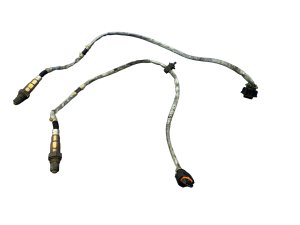
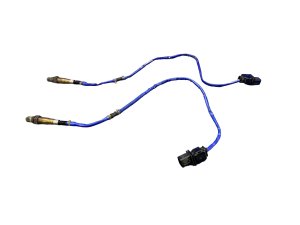

The information in this article is provided for general reference and educational purposes only. Vehicle specifications, procedures, and part compatibility can vary by production date, trim level, and region. Always consult your vehicle's factory service manual and verify part numbers before purchasing or performing repairs. Safety-critical components such as airbags, seat belts, and braking systems should be installed by a qualified professional.
- Porsche Boxster:
- Porsche Cayman:
- 🛍️ Shop This Part
- Symptoms of a Failing Oxygen Sensor
- Known Issues and Bulletins
- Extended Warranty for Upstream Oxygen Sensors
- Buying a Used Oxygen Sensor Set
- Why Used OEM is a Smart Choice
- What to Inspect Before Buying
- Replacement Information
- Step-by-Step Walkthrough
- Cost to Replace Oxygen Sensors
- Technical Specifications & Part Numbers
- Frequently Asked Questions
- 🎟️ Get 5% Off