

2012-2015 ML63 AMG Oxygen Sensor Guide: Fixing Fuel Trim & Failure Codes
This guide covers the common failure symptoms, replacement costs, and vital inspection tips for the oxygen sensors on the M157 twin-turbo V8 engine.
- A failing oxygen sensor will most commonly cause a Check Engine Light, poor fuel economy, and rough engine performance.
- Bank 1 is the passenger side. This set includes one upstream (pre-cat) and one downstream (post-cat) sensor.
- Failure is often caused by contamination from oil or coolant leaks; fix any leaks before replacing the sensor.
- Replacement is difficult due to very tight access, especially for the upstream sensor. A special 22mm slotted socket is required.
Understanding Oxygen Sensor Banks
When diagnosing oxygen sensor issues, you will see references to "Bank 1" and "Bank 2". On the 2012-2015 ML63 AMG with the M157 engine, these correspond to the sides of the engine:
- Bank 1: This is the right side of the engine, which is the passenger side on North American vehicles.
- Bank 2: This is the left side of the engine, which is the driver's side on North American vehicles.
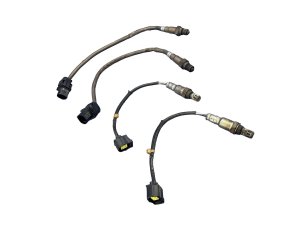
A sensor set for the right side, therefore, refers to the Bank 1 upstream and downstream sensors.
Compatibility Warning: These oxygen sensors are specific to the ML63 AMG model with the 5.5L twin-turbo V8 engine. They will not fit ML350, ML550, or diesel models like the ML250 BlueTec.
Common Symptoms of Failure
A failing oxygen sensor can cause a range of noticeable problems as the engine's computer loses the ability to properly regulate the air-fuel mixture.
1. Check Engine Light
This is the most common symptom. An OBD-II scanner will typically show codes related to the oxygen sensor heater circuit, sensor performance, or fuel trim. Common codes include P0130-P0135 for Bank 1 sensors, P0171 (System Too Lean), and P0172 (System Too Rich).
2. Poor Fuel Economy
When the ECU receives incorrect data, it may default to a rich fuel mixture (too much fuel) to be safe, causing a noticeable drop in your miles per gallon.
3. Rough Idle and Engine Hesitation
An imbalanced air-fuel ratio can lead to a rough or unstable idle, engine misfires, hesitation when accelerating, and even stalling. Some owners describe it as a stuttering feeling during light acceleration that can feel like a transmission issue.
4. Rotten Egg Smell
A smell of sulfur or rotten eggs from the exhaust can indicate that excess, unburned fuel is overheating the catalytic converter, a common result of a failed upstream oxygen sensor.
5. Failed Emissions Test
A bad oxygen sensor prevents the engine from managing its emissions correctly, often leading to high levels of hydrocarbons (HC) and carbon monoxide (CO) that will cause the vehicle to fail an emissions inspection.
Buying a Used Oxygen Sensor Set
While oxygen sensors are considered a wear item, a low-mileage used OEM sensor can be a reliable and cost-effective alternative to a new part, and is often a better choice than a cheap, new aftermarket sensor which may not meet the precise calibration needs of a high-performance Mercedes engine. Here’s what to look for:
- Verify Part Numbers: Match the OEM part number exactly. Common numbers for this vehicle include A0065422018. Bosch is the original equipment manufacturer, so a Bosch-branded part is equivalent to a genuine Mercedes part.
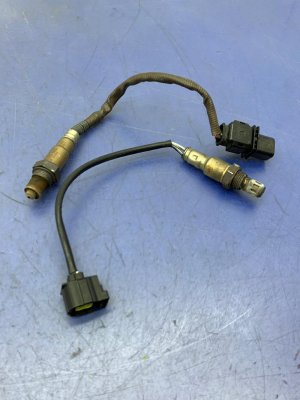
- Inspect the Sensor Tip: The condition of the sensor's tip can tell you about the engine it came from. Avoid sensors with heavy, black, sooty deposits (indicating a rich-running engine) or a white, chalky coating (indicating coolant or silicone contamination). A light tan or grayish color is normal.
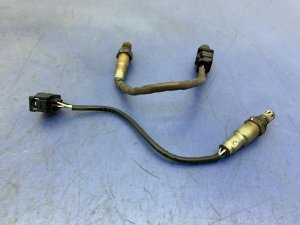
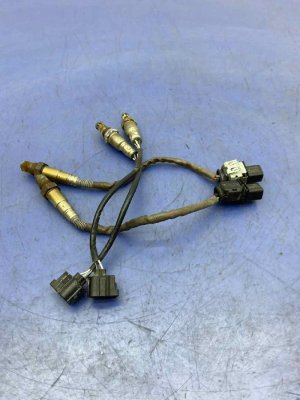
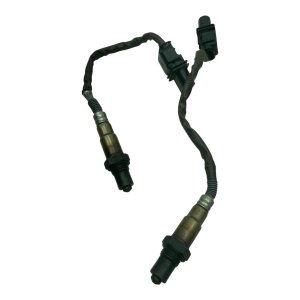
- Check the Wiring and Connector: Inspect the full length of the wire harness for any cuts, melting, or brittleness. Ensure the plastic connector is not cracked or damaged and that all pins are straight and clean.
- Ask About Mileage: Oxygen sensors have a typical lifespan of 60,000 to 100,000 miles. A sensor from a low-mileage vehicle (under 50,000 miles) is a much better value than one from a high-mileage car.
- Prefer OEM Brands: Stick to used OEM Mercedes-Benz or Bosch parts. Avoid generic, unbranded aftermarket sensors, as they are known to cause performance and compatibility issues with sensitive European fuel injection systems.
Known Issues, TSBs, and Recalls
While there are no recalls specifically for the oxygen sensors on the 2012-2015 ML63 AMG, there are related items and other vehicle-specific issues to be aware of.
- Fluid Contamination: Oxygen sensor failure can be caused by contamination from engine oil or coolant leaks. The M157 engine is known to sometimes develop oil leaks from timing covers or coolant leaks from turbo lines. If you are replacing a failed sensor, it is critical to first identify and repair any leaks, or the new sensor will likely fail prematurely.
- TSB LI49.10-P-054725: Mercedes-Benz issued a technical service bulletin that notes a fault code for the upstream oxygen sensor may be stored in the engine control unit, indicating this is a known issue.
- Recall 2022120011 (NHTSA 22V-955): This major recall affects 2012-2015 ML63 AMG models. Water can accumulate in the spare tire well and damage the fuel pump control unit, potentially causing the engine to stall while driving. While not an O2 sensor issue, an engine stall can trigger various fault codes. Owners should ensure this recall has been performed.
Cost Comparison
| Part Type | Estimated Cost (for a set of two) |
|---|---|
| New OEM (Mercedes-Benz) | $350 - $650 |
| New Aftermarket (Bosch, NTK, Denso) | $140 - $300 |
| Used OEM | $60 - $140 |
| Shop Labor (for one side) | $150 - $350 |
Pro Tip: The total cost for a professional replacement of one bank's sensors can range from $833 to $891 according to some estimates, which includes diagnostics and parts. This highlights the significant savings possible with used OEM parts or a DIY approach.
Replacement Overview
Replacing the oxygen sensors on the M157 engine is considered moderately difficult due to tight access.
- Difficulty: 4 out of 5.
- Estimated Time: 1.5 - 2.5 hours for one side.
- Tools Required: Jack and jack stands, basic metric sockets, and a special 22mm slotted oxygen sensor socket or crow's foot wrench.
The downstream (post-cat) sensor is generally easier to access from underneath the vehicle. The upstream (pre-cat) sensor is much more challenging. It is located high up on the downpipe, near the turbocharger. Access is very tight, and it may be necessary to remove a small heat shield to gain clearance. Many technicians access it from underneath the car. The electrical connectors can also be difficult to reach and disconnect.
Frequently Asked Questions (FAQ)
Can I drive with a bad oxygen sensor?
Yes, but it is not recommended for an extended period. The vehicle will run poorly, get bad gas mileage, and produce high emissions. Continuing to drive with a bad sensor can eventually damage the expensive catalytic converters.
Do I need to replace all four oxygen sensors at once?
Not necessarily. You only need to replace the sensor that has failed. However, oxygen sensors age at a similar rate. If one has failed due to high mileage, the others may not be far behind. Some mechanics recommend replacing them in pairs (e.g., both upstream sensors or both sensors on the same bank).
What is the difference between an upstream and downstream oxygen sensor?
The upstream sensor (Sensor 1) is before the catalytic converter and is used by the ECU to control the air-fuel mixture. The downstream sensor (Sensor 2) is after the catalytic converter and is used to monitor the converter's health and efficiency. The upstream sensor has a much greater impact on how the engine runs.
Will a cheap universal oxygen sensor work?
It is highly discouraged. Universal sensors require you to splice wires and often do not have the correct resistance or response rate for a high-performance Mercedes engine, leading to persistent check engine lights and performance problems. Always use a direct-fit sensor from an OEM brand like Bosch or NTK.
Technical Specifications
OEM Part Numbers: A0065422018 0065422018 0095425818 A0095425818 0065421718 A0065421718
Position: Bank 1 (Right/Passenger Side), Upstream and Downstream. Thread Size: M18x1.5. Connector Type: Varies by position, typically 5 or 6-pin for upstream.
We Have This Part in Stock


The information in this article is provided for general reference and educational purposes only. Vehicle specifications, procedures, and part compatibility can vary by production date, trim level, and region. Always consult your vehicle's factory service manual and verify part numbers before purchasing or performing repairs. Safety-critical components such as airbags, seat belts, and braking systems should be installed by a qualified professional.
- Mercedes-Benz ML63 AMG:
- 🛍️ Shop This Part
- Understanding Oxygen Sensor Banks
- Common Symptoms of Failure
- 1. Check Engine Light
- 2. Poor Fuel Economy
- 3. Rough Idle and Engine Hesitation
- 4. Rotten Egg Smell
- 5. Failed Emissions Test
- Buying a Used Oxygen Sensor Set
- Known Issues, TSBs, and Recalls
- Cost Comparison
- Replacement Overview
- Frequently Asked Questions (FAQ)
- 🎟️ Get 5% Off