

2017-2019 GLE500e Oxygen Sensors: Decoding CELs and Replacement Guide
This guide covers common failure symptoms, diagnostic codes, and replacement costs for the oxygen sensors on your Mercedes-Benz GLE500e hybrid.
- A Check Engine Light with codes like P0135 or P0150 is the most common sign of a failing oxygen sensor.
- The GLE500e uses the same upstream oxygen sensors (Part No. 0095426018) as the GLE43 AMG, but NOT the V8-powered GLE63 AMG.
- Ignoring a bad oxygen sensor can lead to costly damage to the catalytic converters over time.
- Used OEM sensors from a reputable source are often a better choice than cheap new aftermarket sensors due to superior calibration and reliability.
Compatibility and Part Numbers
Important: The 2017-2019 GLE500e uses a 3.0L V6 biturbo plug-in hybrid engine (M276). The oxygen sensors for this engine are also compatible with the GLE43 AMG, which shares the same base engine. However, they will NOT fit the V8-powered GLE63 or GLE63 S AMG models, which use different parts. Always verify part numbers before purchasing.
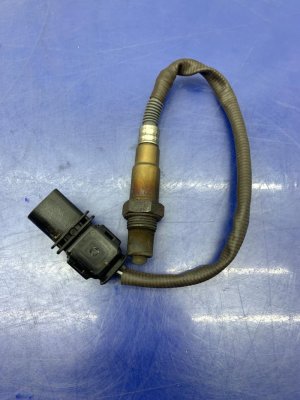
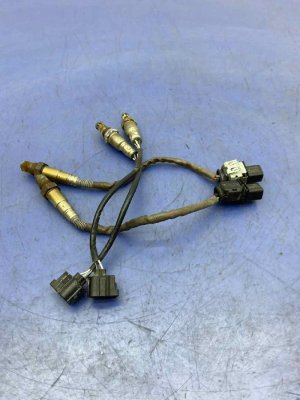
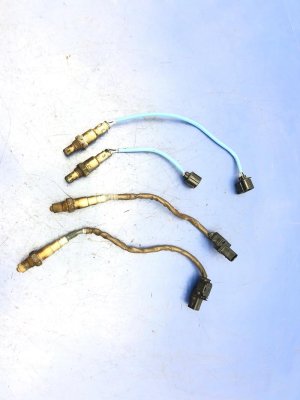
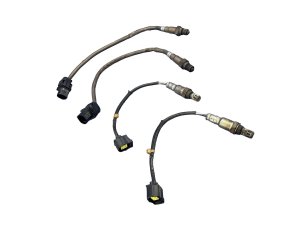
Your GLE500e has four oxygen sensors: two upstream (before the catalytic converter) and two downstream (after the catalytic converter). They are often different parts. The most common OEM part number for the upstream (front) sensor is 0095426018. Downstream sensors may have a different part number, so it is critical to identify which sensor has failed before ordering a replacement.
Symptoms of Failure
A failing oxygen sensor will almost always trigger the Check Engine Light (CEL). Using an OBD-II scanner is the best way to confirm the issue. Beyond the light on your dash, you may also notice:
- Reduced Fuel Economy: One of the most common symptoms. A bad sensor sends incorrect data to the engine computer, causing it to use more fuel than necessary.
- Rough Idle or Engine Misfires: The engine may stutter, shake, or run unevenly, especially at idle.
- Poor Engine Performance: You might experience sluggish acceleration or a general lack of power.
- Failed Emissions Test: A bad O2 sensor can lead to higher levels of harmful emissions, causing your vehicle to fail a smog check.
- Rotten Egg Smell: In some cases, a very rich fuel mixture caused by a sensor failure can lead to a sulfur-like smell from the exhaust as the catalytic converter becomes overwhelmed.
Common Diagnostic Trouble Codes (DTCs):
If your Check Engine Light is on, a scanner may show one of these codes related to O2 sensor failure:
- P0130-P0135: These codes relate to malfunctions in the Bank 1, Sensor 1 (upstream) circuit. P0135 specifically points to a heater circuit malfunction.
- P0150-P0155: These codes point to malfunctions in the Bank 2, Sensor 1 (upstream) circuit.
- P0136-P0141 / P0156-P0161: These ranges typically refer to the downstream (Sensor 2) sensors for Bank 1 and Bank 2, respectively. P0141, for example, is a common code for a downstream heater circuit failure.
- P0171 (System Too Lean) / P0172 (System Too Rich): While not exclusively O2 sensor codes, a failing sensor can cause the engine to run too lean or rich, triggering these faults.
Known Issues, TSBs, and Recalls
As of late 2024, there are no specific recalls for oxygen sensors on the 2017-2019 GLE-Class. However, Mercedes-Benz has issued Technical Service Bulletins (TSBs) for related components. For example, a warranty extension was issued for the Fuel System Control Module (FSCM) software on some 2019-2021 GLE models, which could cause a Check Engine Light. It is always a good practice to have a dealership check for any available engine control unit (ECU) software updates before replacing sensors, as software fixes can sometimes resolve issues that appear to be sensor-related.
Buying a Used Oxygen Sensor
For a component like an oxygen sensor, a high-quality used OEM part is often a better choice than a cheap, new aftermarket part. OEM sensors, even when used, are calibrated precisely for your vehicle's engine management system, ensuring accurate readings and performance. Many aftermarket sensors can cause persistent performance issues or fail prematurely.
Physical Inspection Checklist:
Before buying a used sensor, inspect it carefully:
- Connector and Wires: Check for any cut, frayed, or melted wires. Ensure the plastic connector is not cracked and the pins inside are straight and free of corrosion.
- Sensor Body: Look for major dents or damage to the metal housing. A heavily damaged body could indicate the delicate ceramic element inside is broken.
- Sensor Tip: The tip should be free of heavy, oily soot or white, chalky deposits. Such contamination indicates it came from an engine with other problems (like burning oil or coolant) and the sensor itself may be compromised.
- Threads: Ensure the threads are in good condition and not stripped or cross-threaded.
Pro Tip: Never buy a sensor if the seller has applied anti-seize compound to the sensor's tip (the part with the holes). Anti-seize should only be applied to the threads, and getting it on the sensor element will ruin it.
Cost Comparison
| Part Type | Estimated Price (Per Sensor) | Notes |
|---|---|---|
| New Genuine Mercedes-Benz | $185 - $350 | Highest quality and cost, purchased from a dealership. |
| New OEM (Bosch) | $100 - $150 | Bosch is a known OEM supplier for Mercedes-Benz. Offers the same quality as Genuine at a lower price. |
| New Aftermarket | $25 - $120 | Price and quality vary widely. Reputable brands like NTK or Denso are better choices than no-name brands. |
| Used OEM | $40 - $80 | A cost-effective option that retains OEM quality and calibration. |
| Shop Labor | $100 - $250 | Labor cost can vary based on sensor location. Upstream sensors are often harder to access and cost more to replace. |
Replacement Overview
Replacing an oxygen sensor can be straightforward or very difficult, depending on its location and how corroded it is. The upstream sensors on the GLE500e are located high on the exhaust manifolds near the firewall and can be difficult to access. The downstream sensors are located under the vehicle after the catalytic converters and are generally easier to reach.
- Difficulty: 3/5 (Moderate). The main challenge is often breaking the old sensor free from the exhaust pipe without damaging the threads.
- Tools Required: 22mm (or 7/8") oxygen sensor socket (a special socket with a slot for the wire), ratchet with extensions, penetrating oil, and possibly a torch for stubborn sensors.
- Procedure: Let the exhaust cool completely. Disconnect the sensor's electrical plug first. Apply penetrating oil to the sensor's threads and let it soak. Use the O2 sensor socket to remove the old sensor. Apply anti-seize compound to the threads of the new sensor (if not pre-applied) and install. Reconnect the electrical plug and clear any fault codes with a scanner.
Warning: Never cut the wires of the old sensor until you are certain you can mechanically loosen it. If you cut the wires and then find the sensor is seized, you cannot drive the car to a shop for help.
Frequently Asked Questions (FAQ)
Do I need to replace all four oxygen sensors at once?
No, you only need to replace the sensor that has failed. However, oxygen sensors tend to have a similar lifespan (around 60,000-100,000 miles). If one has failed on a higher-mileage vehicle, the others may not be far behind. For this reason, some mechanics recommend replacing them in pairs (e.g., both upstream sensors at the same time).
Can I clean an old oxygen sensor?
While some people attempt to clean sensors by soaking them in gasoline or other cleaners, it is generally not a reliable or long-term solution. Contaminants can penetrate the porous ceramic element, and cleaning the surface rarely restores proper function. Replacement is the only guaranteed fix.
What happens if I ignore a bad oxygen sensor?
While you can drive with a bad O2 sensor, it's not recommended. You will experience poor fuel mileage and higher emissions. Over time, running a consistently rich fuel mixture can overheat and destroy your catalytic converters, a repair that can cost thousands of dollars.
Does the GLE500e's hybrid system affect the oxygen sensors?
The hybrid system itself does not directly alter the function of the oxygen sensors, which are part of the gasoline engine's exhaust system. However, the engine may run less frequently than in a non-hybrid, which could theoretically change the rate of wear or contamination, but the fundamental operation and failure modes remain the same.
Technical Specifications
OEM Part Numbers: 0095426018 A0095426018 0095425918 0095425518
Heated 4-wire sensors. Upstream sensors are wideband, while downstream sensors are typically narrow-band. Bosch is a primary OEM supplier.
We Have This Part in Stock


The information in this article is provided for general reference and educational purposes only. Vehicle specifications, procedures, and part compatibility can vary by production date, trim level, and region. Always consult your vehicle's factory service manual and verify part numbers before purchasing or performing repairs. Safety-critical components such as airbags, seat belts, and braking systems should be installed by a qualified professional.
- Mercedes-Benz GLE500e: