

2020-2024 Pacifica & 2022 Voyager AWD Oxygen Sensor Set: Diagnosis and Replacement
This guide covers the specific four-sensor oxygen sensor set for All-Wheel Drive (AWD) models, helping you diagnose check engine lights and avoid critical compatibility mistakes.
- These sensors are ONLY for All-Wheel Drive (AWD) models; FWD and Hybrid parts are not compatible.
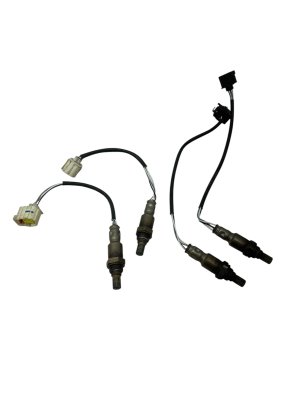
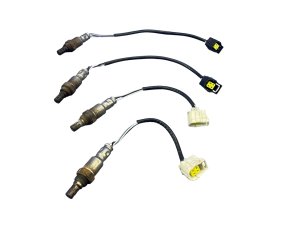
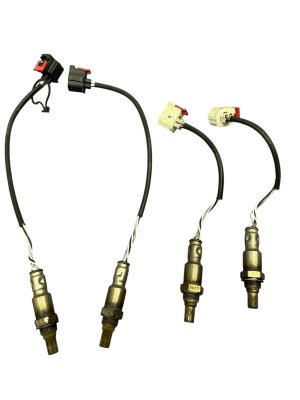
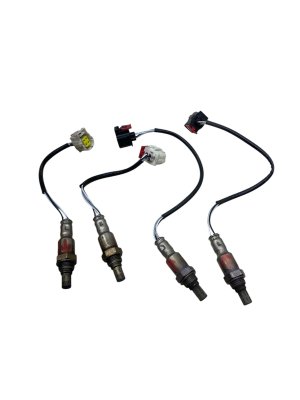
- A complete set requires two different part numbers: two upstream (#5149171AB) and two downstream (#5149180AB).
- The most common symptoms of failure are a check engine light, poor fuel economy, and a rough idle.
- Replacement of the rear (Bank 1) sensors near the firewall is significantly more difficult than the front (Bank 2) sensors.
Identifying Oxygen Sensor Failure
The most common sign of a failing oxygen sensor is a Check Engine Light (CEL) on your dashboard. However, other symptoms may appear even before the light comes on. Paying attention to these signs can help you address the problem before it leads to more expensive repairs, like a damaged catalytic converter.
Primary Symptoms of Failure:
- Check Engine Light: The ECU will trigger a CEL when it detects a problem with an O2 sensor's signal or its internal heater circuit. Common codes include P0137, P0152, and others in the P0130-P0167 range.
- Poor Fuel Economy: A faulty upstream sensor can send incorrect information to the computer, causing it to inject more fuel than necessary. This results in you visiting the gas station more often.
- Rough Idle or Engine Misfires: Incorrect air-fuel mixture adjustments can disrupt combustion, leading to a shaky idle, engine hesitation, or misfires.
- Reduced Engine Performance: Your vehicle may feel sluggish or slow to accelerate because the engine isn't running at its optimal air-fuel ratio.
- Failed Emissions Test: A bad O2 sensor, particularly a downstream one, will often cause the vehicle to fail a state emissions inspection.
- Rotten Egg Smell or Black Smoke: In severe cases, an overly rich fuel mixture can lead to the smell of unburned fuel (like rotten eggs) or black smoke from the exhaust pipe.
Compatibility Warning: This oxygen sensor set is exclusively for All-Wheel Drive (AWD) models of the 2020-2024 Chrysler Pacifica and 2022 Chrysler Voyager. The exhaust system on AWD models is routed differently to accommodate the driveshaft and rear differential, meaning sensors for Front-Wheel Drive (FWD) or Hybrid models have different wire lengths and will not fit. Always verify your vehicle's drivetrain before purchasing.
Known Issues, TSBs, and Recalls
As of mid-2024, there are no widespread recalls or Technical Service Bulletins (TSBs) specifically for premature oxygen sensor failure on the 2020-2024 Chrysler Pacifica or 2022 Chrysler Voyager. Failures are typically due to normal wear and tear over time or contamination. O2 sensors have a general lifespan of around 100,000 miles.
In some isolated cases, owners have reported that replacing oxygen sensors did not solve performance issues like engine bogging. This suggests that underlying problems, such as a faulty Engine Control Module (ECM) or damaged wiring, can sometimes mimic the symptoms of a bad sensor. If you replace a sensor and the code or symptom returns, a thorough diagnosis of the sensor's circuit is necessary.
Buying a Used Oxygen Sensor Set
Purchasing used oxygen sensors can be a way to save money, but it comes with significant risks. O2 sensors are wear-and-tear components, and their performance degrades over time. Unlike a solid mechanical part, a used sensor has a limited and unknown remaining lifespan.
What to Check Before You Buy:
- Verify Part Numbers Exactly: The 3.6L V6 in these vans uses two different part numbers for its four sensors. You need two upstream sensors (Mopar Part # 5149171AB) and two downstream sensors (Mopar Part # 5149180AB). They are not interchangeable. Ensure the used set includes two of each.
- Inspect the Ceramic Tip: Look at the sensor's tip. It should be free of obvious cracks or heavy, oily contamination. A light grey or tan coating is normal, but thick black soot or a white, chalky appearance can indicate engine problems in the donor vehicle.
- Check Wires and Connectors: Inspect the full length of the wire pigtail for any cuts, melting, or brittleness. Ensure the plastic connector is not cracked or broken and that the pins inside are straight and free of corrosion.
- Prefer Low-Mileage Donors: If possible, source sensors from a vehicle with the lowest possible mileage. A sensor from a 30,000-mile vehicle is a much safer bet than one from a 120,000-mile vehicle.
- Avoid Cleaning: Do not attempt to clean a used oxygen sensor with chemicals or wire brushes. The internal sensing element is extremely delicate and can be easily damaged.
Pro Tip: Be extremely wary of cheap "new" oxygen sensors from online marketplaces like eBay and Amazon. These are often counterfeit parts that are wired incorrectly or use low-quality materials. They frequently fail immediately or cause new diagnostic trouble codes. A quality used OEM sensor from a reputable recycler is often a more reliable choice than a questionable new aftermarket part.
Cost Comparison
Prices can vary based on brand and supplier. This table provides an estimated cost for a complete set of four sensors (two upstream, two downstream).
| Part Type | Estimated Price (Set of 4) | Notes |
|---|---|---|
| New OEM (Mopar) | $350 - $500 | Highest quality and guaranteed compatibility, but most expensive. |
| New Aftermarket (Name Brand) | $150 - $250 | Brands like NTK, Denso, and Bosch offer good quality. Prices vary by retailer. |
| New Aftermarket (Value) | $100 - $140 | Kits are available online, but quality can be inconsistent. |
| Used OEM (Recycled) | $80 - $160 | A cost-effective option, but carries risks. Price depends on mileage and condition. |
| Shop Labor | $150 - $300 | Labor costs can vary. RepairPal estimates 1.5-2.5 hours for the job. |
Replacement Overview
Replacing the oxygen sensors on the Pacifica and Voyager AWD is a moderately difficult job. While mechanically straightforward, access to some of the sensors can be challenging.
- Difficulty: 3/5
- Estimated Time: 1.5 - 2.5 hours
- Tools Required: Ratchet, extensions, penetrating oil, and a specialized 22mm (or 7/8") oxygen sensor socket. The socket has a slit on the side to fit over the sensor's wire.
Sensor Locations & Difficulty:
The 3.6L V6 is mounted transversely (sideways) in the engine bay.
- Bank 2 (Front): This is the cylinder bank closest to the radiator. The upstream (Sensor 1) and downstream (Sensor 2) sensors on this bank are relatively easy to access from underneath the vehicle.
- Bank 1 (Rear): This is the cylinder bank against the firewall. The sensors here are much more difficult to reach due to tight space between the engine and the firewall. Access may require working from both the top and bottom of the vehicle.
Pro Tip: Before attempting to remove the old sensors, spray them with a quality penetrating oil and let it soak. Oxygen sensors are notorious for seizing in the exhaust pipe due to constant heat cycles and corrosion. Trying to force a seized sensor can damage the threads in the exhaust pipe, leading to a much more difficult and expensive repair.
Frequently Asked Questions (FAQ)
Do I have to replace all four oxygen sensors at once?
Not necessarily. You can replace only the sensor that has failed. However, since oxygen sensors have a similar lifespan, if one original sensor fails at high mileage, the others are likely not far behind. If you are paying for labor, it can be more cost-effective to replace them all at the same time, especially the hard-to-reach Bank 1 sensors.
Which sensor is more important to replace, upstream or downstream?
The upstream (Sensor 1) sensors are the most critical. They directly control the engine's air-fuel mixture, and a failure will impact performance and fuel economy. A faulty downstream (Sensor 2) sensor will trigger a check engine light but typically won't affect how the vehicle drives, as its main job is to monitor the catalytic converter. If you're on a tight budget, prioritize replacing a faulty upstream sensor.
Can I use an oxygen sensor from a FWD or Hybrid Pacifica on my AWD model?
No. The exhaust pipes are physically different on AWD models to make room for the rear driveshaft. This means the sensor locations and wire harness lengths are different. Using a sensor from a FWD or Hybrid model will likely result in a wire that is too short to reach the connector or has too much slack, risking damage.
What are Bank 1 and Bank 2 on my Pacifica's V6 engine?
Because the engine is mounted transversely, Bank 1 is the cylinder bank at the rear of the engine bay, closest to the firewall. Bank 2 is the cylinder bank at the front, closest to the radiator. This is important for identifying the correct sensor when you have a diagnostic code like "Bank 1, Sensor 2".
Technical Specifications
OEM Part Numbers: 5149171AB (Upstream, requires 2) 5149180AB (Downstream, requires 2)
4-wire heated zirconia sensors. Requires a 22mm (7/8") oxygen sensor socket for removal and installation.
We Have This Part in Stock

The information in this article is provided for general reference and educational purposes only. Vehicle specifications, procedures, and part compatibility can vary by production date, trim level, and region. Always consult your vehicle's factory service manual and verify part numbers before purchasing or performing repairs. Safety-critical components such as airbags, seat belts, and braking systems should be installed by a qualified professional.
- Chrysler Pacifica:
- Chrysler Voyager: