

2012-2015 ML63 AMG Oxygen Sensor Guide: Codes, Costs, and Replacement Tips
This guide covers the common failure symptoms, replacement costs, and buying advice for oxygen sensors on the Mercedes-Benz ML63 AMG with the 5.5L M157 engine.
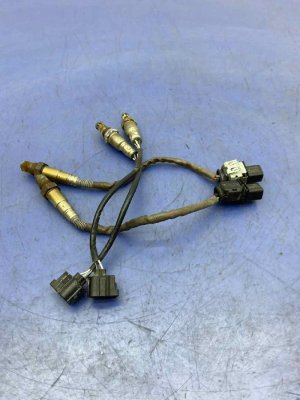
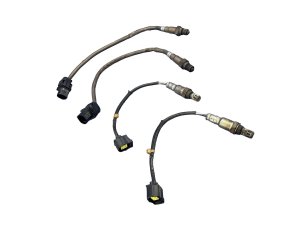
- The 2012-2015 ML63 AMG has four O2 sensors; two upstream (wideband, for fuel mixture) and two downstream (narrowband, for catalyst monitoring).
- Upstream sensor replacement is difficult due to the electrical connector's location high on the transmission; some mechanics remove the downpipes for access.
- Common failure symptoms include a check engine light (codes P0130-P0161, P2626), poor fuel economy, and rough idle.
- When buying used, always verify the OEM part number and inspect the connector and wiring for damage. A quality used OEM part is preferable to a cheap new aftermarket one.
Symptoms of a Failing Oxygen Sensor
A failing oxygen sensor on your ML63 AMG can cause a range of issues, from a simple check engine light to noticeable performance problems. Because the upstream and downstream sensors perform different roles, the symptoms can vary.
- Check Engine Light: This is the most common symptom. An OBD-II scanner will typically reveal codes pointing to a specific sensor's circuit, heater, or performance. Common codes include P0130-P0161, P2626, and P2629. 🎬 Watch this step-by-step W166 Mercedes O2 sensor replacement video.
- Reduced Fuel Economy: A faulty upstream sensor can send incorrect data to the ECU, causing the engine to run too rich (using too much fuel) or too lean (not enough fuel). This often results in a noticeable drop in MPG.
- Rough Idle and Engine Misfires: 🎬 Watch how a hidden O2 sensor glitch causes engine hesitation. An imbalanced air-fuel mixture can lead to rough or irregular idling, engine hesitation, and misfires. In some cases, this can be felt as a stutter or vibration when the vehicle is stopped.
- Poor Engine Performance: You might notice sluggish acceleration or a general lack of power. This happens because the engine isn't receiving the optimal fuel mixture for combustion.
- Failed Emissions Test: A bad O2 sensor is a common reason for failing a state-mandated emissions test, as it directly impacts the vehicle's ability to control harmful pollutants.
- Rotten Egg Smell: A strong smell of sulfur or rotten eggs from the exhaust can indicate a rich fuel mixture that is overwhelming the catalytic converters, often due to a bad O2 sensor.
Known Issues, TSBs, and Recalls
While there are no specific recalls for oxygen sensors on the 2012-2015 ML63 AMG, a few technical service bulletins (TSBs) and related issues are worth noting.
- TSB LI49.00-P-054888: This bulletin addresses the engine diagnosis warning lamp being active with fault codes P262600 or P262900 stored in the engine control unit. These codes relate to the oxygen sensor upstream of the catalytic converter.
- TSB for Low-Mileage Vehicles: Another TSB notes that on vehicles with very low mileage (under 5,000 miles), codes P013E00 and P014A00 for the downstream sensors may appear. This can be caused by fumes from the catalytic converter's break-in period and may not indicate a faulty sensor.
- Recall 22V-955 - Fuel Pump Control Unit: While not directly related to O2 sensors, it's important for owners to be aware of this recall. Water can accumulate in the spare tire well and damage the fuel pump control unit, potentially causing the engine to stall while driving. The fix involves installing a drain plug and replacing the control unit if necessary.
Pro Tip: Before replacing a sensor, check for other potential causes. A diagnostic code for an O2 sensor can sometimes be triggered by an exhaust leak, a wiring problem, or a contaminated sensor from an oil or coolant leak. A forum user noted that it's odd for both downstream sensors to fail at once, and this could point to a problem with the catalytic converters themselves rather than the sensors.
Buying a Used Oxygen Sensor
Purchasing a used OEM oxygen sensor can be a cost-effective option, but careful inspection is key. Given their role in engine management, a quality used OEM part from a low-mileage vehicle is often a better choice than a cheap, new aftermarket sensor.
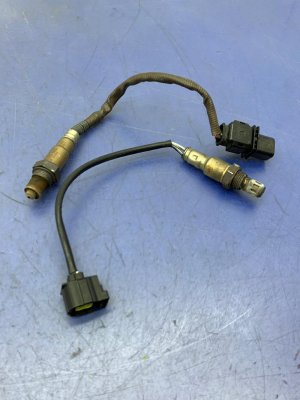
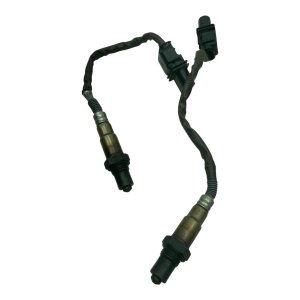
- Verify the Part Number: The most critical step is to match the OEM part number exactly. The ML63 AMG uses different sensors for the upstream (wideband) and downstream (narrowband) positions. Do not interchange them. Check the number stamped on the sensor housing against the one you are replacing.
- Inspect the Connector: The plastic electrical connector should be free of cracks, and the pins inside should be clean and straight. Any signs of melting, corrosion, or oil contamination are red flags.
- Check the Wiring: The wire harness between the sensor and the plug should be intact with no cuts, frays, or signs of heat damage.
- Examine the Sensor Tip: The protective metal shroud on the sensor tip should be intact. While some discoloration is normal, heavy, oily, or white deposits can indicate contamination from a leaking engine, which may have damaged the sensor.
- Ask About Mileage: Oxygen sensors are wear items. A sensor from a vehicle with 50,000 miles is a much better bet than one from a vehicle with 150,000 miles. Always inquire about the donor vehicle's mileage.
Replacement Overview & Difficulty
Replacing the oxygen sensors on an M157-powered ML63 AMG is a moderately difficult job that requires patience and the right tools.
- Difficulty: 3.5 out of 5
- Time: 1.5 - 3 hours (depending on which sensor and mechanic's experience)
- Tools Needed: Jack and jack stands, 8mm socket, 22mm (or 7/8") oxygen sensor socket (a slotted version is best), ratchet with extensions, penetrating oil, torque wrench.
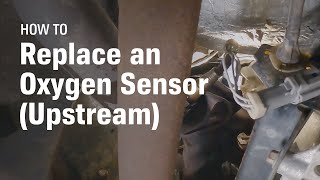
The general process involves safely lifting the vehicle, removing the underbody splash shields, and locating the faulty sensor. The downstream sensors are generally easier to access. The upstream sensors are notoriously difficult, 🎬 See this video guide on replacing an upstream oxygen sensor. as their electrical connectors are located high up on the transmission bell housing, making them very hard to reach. Some mechanics find it easier to disconnect the downpipes from the turbochargers to gain better access. The sensors can be very tight in the exhaust pipe; liberal use of penetrating oil and the correct O2 sensor socket is highly recommended. The new sensor should be torqued to approximately 55 Nm (40 ft-lbs).
Warning: Always let the exhaust system cool down completely before attempting this repair to avoid severe burns. The electrical connectors for the upstream sensors are in a very tight space; some forum users report needing to remove the downpipes to access them.
Cost Breakdown
The cost to replace an oxygen sensor on the ML63 AMG can vary significantly based on the part's position (upstream is more expensive) and who performs the labor.
| Cost Category | Price Range |
|---|---|
| New OEM (Dealer) | $250 - $400+ per sensor |
| New Aftermarket (Bosch, Denso) | $100 - $160 (Upstream) / $35 - $70 (Downstream) |
| Used OEM | $40 - $100 per sensor |
| Shop Labor Cost | $150 - $400 (independent shop, per sensor) |
| Total Professional Replacement | $400 - $900+ (depending on sensor and shop) |
Frequently Asked Questions (FAQ)
Can I use a universal oxygen sensor?
It is strongly advised not to use a universal sensor on this vehicle. The ML63 AMG's engine management system is highly sensitive. Universal sensors require splicing wires, which can create resistance issues and lead to incorrect readings, poor performance, and recurring check engine lights. Always use a direct-fit sensor with the correct OEM-style connector.
Should I replace all four sensors at once?
It is not necessary to replace all four sensors if only one has failed. However, oxygen sensors age and degrade over time. If one sensor fails due to high mileage (e.g., over 80,000-100,000 miles), the others are likely nearing the end of their service life. It's common practice to replace them in pairs (e.g., both upstream sensors or both downstream sensors).
What is the difference between Bank 1 and Bank 2?
On a V8 engine like the M157, the two cylinder heads are referred to as banks. For Mercedes-Benz, Bank 1 is the passenger side (right side) of the engine, and Bank 2 is the driver side (left side). So, a code for "Bank 1, Sensor 2" refers to the downstream (post-catalytic converter) sensor on the passenger side.
Do I need to apply anti-seize to the new sensor?
Most new high-quality sensors (like Bosch or Denso) come with anti-seize compound pre-applied to the threads. If your sensor does not have it, apply a small amount of high-temperature anti-seize to the threads only. Be very careful not to get any on the sensor tip, as this will contaminate and ruin it.
Helpful Videos


Technical Specifications
OEM Part Numbers: A0081539928 A0065427218 A0095425618 A0075426418
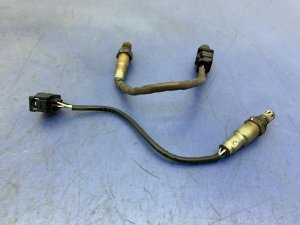
Upstream Sensor: Wideband, 5-wire/6-pin connector. Downstream Sensor: Narrowband, 4-wire connector. Thread Size: M18-1.5. Wrench Size: 22mm (7/8").
We Have This Part in Stock


The information in this article is provided for general reference and educational purposes only. Vehicle specifications, procedures, and part compatibility can vary by production date, trim level, and region. Always consult your vehicle's factory service manual and verify part numbers before purchasing or performing repairs. Safety-critical components such as airbags, seat belts, and braking systems should be installed by a qualified professional.
- MERCEDES-BENZ ML63 AMG: