

2015-2024 Huracan & 2017-2023 R8 Oxygen Sensors: Fixing the V10 Check Engine Light
A complete guide to diagnosing, replacing, and buying used oxygen sensors for the Lamborghini Huracan and Audi R8 5.2L V10 platform.
- The most common sign of failure is a Check Engine Light, often with codes like P0420, P0430, P2096, or P2098.
- Ignoring a bad oxygen sensor can lead to the destruction of the very expensive catalytic converters.
- The rear (downstream) sensor is part number 4S0906262H for both sides. The front (upstream) sensors are different for the left and right banks.
- Replacement is moderately difficult (3/5) due to tight engine bay access, requiring removal of heat shields and trim.
Symptoms of a Failing Oxygen Sensor
A bad oxygen sensor in a Huracan or R8 will almost always trigger a Check Engine Light. However, other performance issues may appear first. Ignoring these symptoms can lead to poor performance, failed emissions tests, and costly damage to the catalytic converters.
- Check Engine Light: This is the most common symptom. A steady light indicates a fault has been stored. A flashing light signals a severe engine misfire that is dumping unburned fuel into the exhaust, which can quickly destroy the catalytic converters. If the light is flashing, pull over and shut off the engine as soon as it is safe to do so.
- Poor Fuel Economy: A faulty upstream sensor can send incorrect data to the ECU, causing the engine to run too rich (using too much fuel).
- Rough Idle and Hesitation: The engine may idle erratically, hesitate during acceleration, or feel generally sluggish and down on power.
- Rotten Egg Smell: A strong sulfur or 'rotten egg' smell from the exhaust indicates that the engine is running too rich, overwhelming the catalytic converters.
- Failed Emissions Test: A bad sensor will prevent the emissions system from operating correctly, leading to an automatic failure.
Common Diagnostic Trouble Codes (DTCs)
Using an OBD-II scanner, you can retrieve codes that point to a specific sensor or problem. Common codes include:
- P0130 to P0167: General O2 Sensor circuit malfunctions. These codes often specify the bank and sensor number (e.g., P0153 - O2 Sensor Circuit Slow Response Bank 2 Sensor 1).
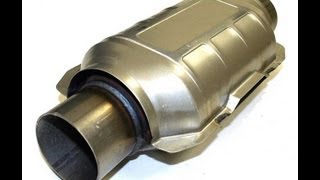
- P0420 & P0430: Catalyst System Efficiency Below Threshold (Bank 1 and Bank 2). While these codes point to the catalytic converter, they are often caused by a failing downstream oxygen sensor providing an inaccurate reading. 🎬 Watch this video to diagnose P0420 and P0430 codes.
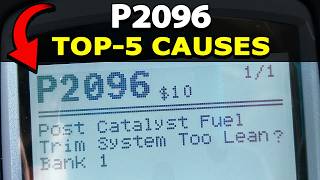
- P2096 & P2098: Post Catalyst Fuel Trim System Too Lean (Bank 1 and Bank 2). This often points to a problem with the downstream sensor.
- P2629: O2 Sensor Pumping Current Trim Circuit/Open. This indicates an electrical issue with an upstream (air-fuel ratio) sensor.
Pro Tip: Bank 1 is the passenger side of the engine (cylinders 1-5), and Bank 2 is the driver side (cylinders 6-10) on these V10 models. Sensor 1 is the upstream (pre-catalytic converter) sensor, and Sensor 2 is the downstream (post-catalytic converter) sensor.
Known Issues: TSB for Lean Codes
Audi has issued Technical Service Bulletin (TSB) 2046611/5 for related models that can apply to the R8. This TSB addresses fault codes P209600 or P209800 (Post Catalyst Fuel Trim Too Lean). It notes that the cause can be a contaminated rear (downstream) oxygen sensor. The bulletin advises replacing only the affected rear sensor and specifically warns against replacing the front (upstream) sensor for this particular fault.
🎬 See this video explaining the P2096 lean code.Buying a Used Oxygen Sensor
While buying a used oxygen sensor can save money, it comes with risks. These sensors have a finite lifespan, typically around 100,000 miles. A used sensor may be near the end of its life. However, for a low-mileage car, a used OEM sensor can be a viable option. Here’s what to check:
- Source Vehicle Mileage: Only consider sensors from vehicles with low mileage. A sensor from a 60,000-mile car may not have much life left.
- Physical Inspection:
- Sensor Tip: The ceramic tip should be clean and free of heavy black soot, white deposits (from coolant), or oily residue. A light gray or tan color is normal.
- Wiring and Connector: Inspect the entire wire harness for any cuts, melting, or fraying. Ensure the connector pins are clean, straight, and free of corrosion.
- Sensor Body: Check for any signs of physical damage or severe rust that could indicate it was difficult to remove.
- OEM vs. Aftermarket: For a critical component like an oxygen sensor, a new high-quality aftermarket part from an OEM supplier like Bosch or NGK is often a better value and more reliable choice than a used OEM sensor with unknown history. Cheap, unbranded aftermarket sensors should be avoided as they can fail quickly or provide inaccurate readings.
Replacement Overview
Replacing the oxygen sensors on the mid-engine Huracan and R8 is more involved than on a typical front-engine car due to tight access.
- Difficulty: 3 out of 5 (Moderate)
- DIY Feasibility: Possible for experienced DIY mechanics. Not recommended for beginners.
- Tools Required: Basic hand tools, torque wrench, penetrating oil, and a specialized oxygen sensor socket set.
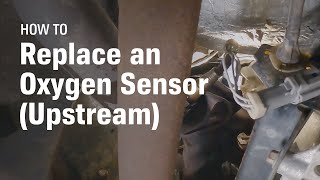
- Procedure: Accessing the sensors typically requires removing several engine bay trim panels and exhaust heat shields. The upstream sensors are located on the exhaust manifolds near the engine, while the downstream sensors are further back, after the catalytic converters. Once accessed, the sensors are unscrewed from the exhaust bungs. Applying penetrating oil beforehand is highly recommended, as they can be seized from heat cycles. 🎬 Watch this Audi R8 oxygen sensor replacement walkthrough.
Technical Specifications & Part Numbers
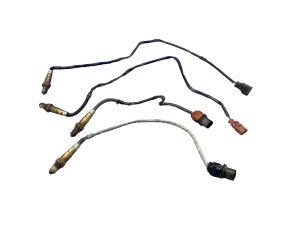
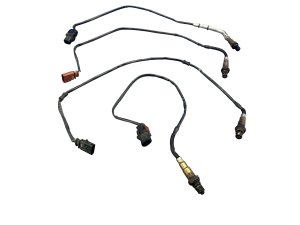
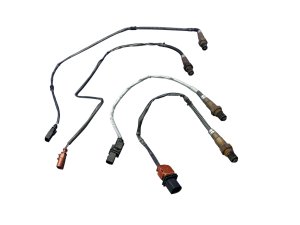
The 5.2L V10 uses four oxygen sensors in total: two upstream and two downstream. They are not all interchangeable.
| Position | OEM Part Number | Notes |
|---|---|---|
| Downstream (Rear) | 4S0906262H | This is the current part number for both Bank 1 and Bank 2 downstream sensors. It supersedes part number 4S0906262D. |
| Upstream (Front) | Varies by Bank | The upstream sensors for Bank 1 (passenger side) and Bank 2 (driver side) are different parts. You must verify the correct part number for the specific position you are replacing. |
Cost to Replace Oxygen Sensors
Prices can vary significantly based on your location and whether you choose OEM or aftermarket parts. These are estimates for a single sensor replacement.
| Part/Service | Estimated Cost |
|---|---|
| New OEM Sensor (Dealer) | $300 - $600 per sensor |
| New Aftermarket Sensor (Bosch, NGK, etc.) | $80 - $150 per sensor |
| Used OEM Sensor | $50 - $100 per sensor (or ~$200 for a set of 4) |
| Shop Labor | $150 - $300 per sensor |
Warning: Due to the high-performance nature of these vehicles, using correct, high-quality sensors is critical. Inaccurate sensor readings can lead to poor engine performance and potential engine or catalytic converter damage.
Frequently Asked Questions
Can I replace just one bad oxygen sensor?
Yes, you only need to replace the sensor that has failed. However, oxygen sensors tend to age at a similar rate. If one has failed due to high mileage, the others may not be far behind. If you are paying for labor to access a difficult-to-reach sensor, it may be cost-effective to replace others in the same area at the same time.
What is the difference between an upstream and a downstream oxygen sensor?
The upstream (or front) sensor is the primary sensor used by the engine computer to adjust the air-fuel mixture. It is the most critical for performance and fuel economy. The downstream (or rear) sensor's main job is to monitor the health of the catalytic converter. They are not interchangeable.
What happens if I don't replace a bad oxygen sensor?
You will experience poor fuel economy, rough running, and will fail an emissions test. More critically, a bad upstream sensor can cause a rich fuel condition that overheats and melts the internal structure of the catalytic converter, a very expensive component to replace.
Why is the replacement cost so high on a Huracan or R8?
The cost is driven by two factors: higher labor time due to the difficult access in the mid-engine layout, and the higher price of OEM parts for exotic vehicles. Even at an independent shop, labor rates for these cars are typically higher than for standard passenger cars.
Helpful Videos


Technical Specifications
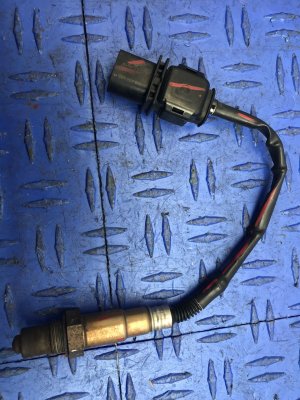
OEM Part Numbers: 4S0906262H 4S0906262G 4S0906262F 4S0906262D
The 5.2L V10 uses four heated oxygen sensors. The upstream sensors are wideband 5-wire or 6-wire types for precise air-fuel ratio measurement. The downstream sensors are typically 4-wire narrowband types for catalyst monitoring. Thread size is M18x1.5.
We Have This Part in Stock



The information in this article is provided for general reference and educational purposes only. Vehicle specifications, procedures, and part compatibility can vary by production date, trim level, and region. Always consult your vehicle's factory service manual and verify part numbers before purchasing or performing repairs. Safety-critical components such as airbags, seat belts, and braking systems should be installed by a qualified professional.
- Lamborghini Huracan:
- Audi R8:
- 🎬 Helpful Videos
- 🛍️ Shop This Part
- Symptoms of a Failing Oxygen Sensor
- Common Diagnostic Trouble Codes (DTCs)
- Known Issues: TSB for Lean Codes
- Buying a Used Oxygen Sensor
- Replacement Overview
- Technical Specifications & Part Numbers
- Cost to Replace Oxygen Sensors
- Frequently Asked Questions
- 🎟️ Get 5% Off