

2017-2020 Genesis G80 Oxygen Sensor: Failures, Part Numbers & Engine Variants
This guide covers the unique oxygen sensor part numbers for the 3.8L, 3.3T, and 5.0L engines, common failure symptoms, and critical diagnostic warnings.
- The G80 uses different upstream oxygen sensor part numbers for the 3.8L and 3.3T engines; you must match the part number to your specific engine and bank.
- On the 3.8L V6, Check Engine Light codes P0171 or P0174 are often caused by a cracked air intake hose, not a bad oxygen sensor.
- On the 3.3L Turbo V6, code P0030 is common and usually means the sensor's internal heater has failed due to high heat from the turbo.
- A low-mileage used OEM sensor is often a more reliable and cost-effective choice than a new, cheap aftermarket sensor due to better ECU compatibility.
Part Number & Engine Variant Guide
The 2017-2020 Genesis G80 uses different upstream (front) oxygen sensors depending on the engine and cylinder bank. Using the correct part number is critical for proper function. Downstream (rear) sensors are different and not covered by these part numbers.
Warning: Bank 1 is the passenger side (Right Hand) of the engine. Bank 2 is the driver side (Left Hand).
| Engine | Position | OEM Part Number |
|---|---|---|
| 3.8L V6 | Upstream, Bank 1 (Passenger Side) | 39210-3L200 |
| 3.8L V6 | Upstream, Bank 2 (Driver Side) | 39210-3L210 |
| 3.3L V6 Turbo | Upstream, Bank 1 (Passenger Side) | 39210-3L000 |
| 3.3L V6 Turbo | Upstream, Bank 2 (Driver Side) | 39210-3L010 |
| 5.0L V8 | Upstream, Bank 1 (Passenger Side) | Data unavailable, verify with dealer |
| 5.0L V8 | Upstream, Bank 2 (Driver Side) | Data unavailable, verify with dealer |
Some aftermarket suppliers suggest that the upstream left sensor for the 3.8L V6 also fits the 5.0L V8, but this is not confirmed with OEM data. Always verify compatibility by matching the part number from your old sensor or by checking with a dealer.
Known Issues & Diagnostic Clues
Before replacing an oxygen sensor, be aware of these common issues specific to the Genesis G80, which can mimic a sensor failure.
3.8L V6: Check for Vacuum Leaks Before Replacing Sensors
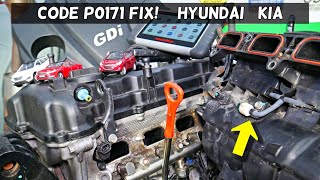
If your 3.8L G80 has a Check Engine Light with codes P0171 (System Too Lean, Bank 1) or P0174 (System Too Lean, Bank 2), do not immediately assume the oxygen sensor is bad. A very common cause for these codes on this engine is a vacuum leak from cracked plastic air intake components. The oxygen sensor is often just doing its job 🎬 Watch: How to diagnose and fix a P0171 lean code by correctly reporting the lean condition. Visually inspect the air intake hose and plastic resonator box for cracks, and listen for a hissing sound with the engine running. A smoke test is the most effective way to find these leaks.
3.3L V6 Turbo: P0030 Heater Circuit Failure
On the 3.3T engine, it is common for the internal heating element of the upstream oxygen sensor to fail, triggering a P0030 (HO2S Heater Control Circuit Bank 1) code. This happens because of the extreme heat from the nearby turbocharger. While the sensor itself is the most likely cause, the wiring and connector are also vulnerable to melting or becoming brittle from the heat. Before replacing the sensor, always check the 'SENSOR 2' 15A fuse in the engine bay fuse box and visually inspect the sensor's wiring for damage.
Symptoms of a Failing Oxygen Sensor
When an upstream oxygen sensor fails, it can no longer provide accurate data to the engine's computer, leading to a range of performance problems.
- Check Engine Light: This is the most common symptom. Codes related to the sensor circuit (e.g., P0150-P0155) or heater circuit (P0030) will be stored.
- Poor Fuel Economy: A bad sensor can cause the engine to run too rich (using too much fuel), leading to a noticeable drop in gas mileage.
- Rough Idle and Engine Misfires: An incorrect air-fuel mixture disrupts smooth combustion, which can cause the engine to shake, idle poorly, or misfire.
- Sluggish Performance: You may notice hesitant acceleration, jerking, or a general loss of engine power because the ECU cannot properly manage the fuel mixture.
- Failed Emissions Test: An engine running rich due to a bad sensor will release excess hydrocarbons, causing the vehicle to fail an emissions inspection.
- Rotten Egg or Gas Smell: In some cases, an extremely rich fuel mixture can overwhelm the catalytic converter, producing a sulfur or raw gasoline smell from the exhaust.
Buying a Used Oxygen Sensor
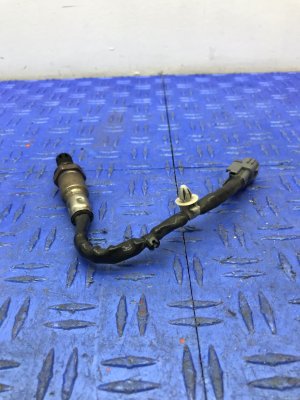
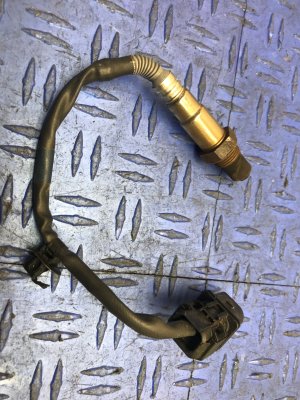
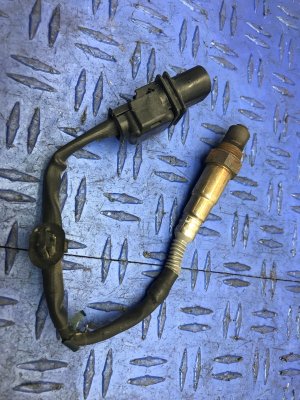
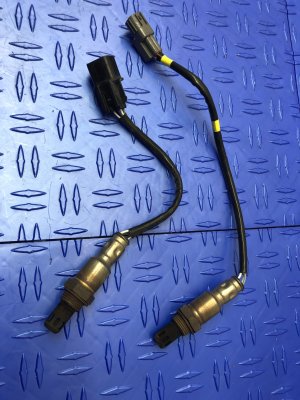
A low-mileage, used OEM oxygen sensor can be a smart purchase, offering the precise calibration of a factory part at a significant discount. Cheap new aftermarket sensors can sometimes cause compatibility issues with the G80's sensitive ECU. Here’s what to inspect before buying a used one.
- Verify the Part Number: This is the most important step. Make sure the number stamped on the sensor body exactly matches the required OEM part number for your engine and bank position.
- Inspect the Connector: Check the plastic electrical connector for any cracks, broken locking tabs, or corrosion on the pins. The wiring pigtail should be flexible, not brittle or melted.
- Examine the Sensor Tip: The condition of the sensor's tip can tell you about the engine it came from.
- A light gray or tan coating is normal.
- A thick, black, sooty deposit indicates the donor car was running rich.
- A white, chalky coating can be a sign of silicone or antifreeze contamination from the donor car. Avoid these sensors.
- Check the Threads: Ensure the threads are clean and undamaged for proper installation. The sensor should come with its sealing washer if possible.
Cost Comparison
The cost to replace a Genesis G80 oxygen sensor varies significantly between OEM, aftermarket, and used parts. Note that some online estimators show extremely high repair costs, likely based on inflated OEM part prices. A more realistic labor cost is between $75 and $225, depending on the sensor's location and shop rates.
| Part Source | Estimated Cost (Per Sensor) |
|---|---|
| New OEM | $300 - $460 |
| New Aftermarket (Name Brand) | $100 - $170 |
| Used OEM | $40 - $90 |
| Shop Labor | $75 - $225 |
Replacement Guide
Replacing an upstream oxygen sensor on the G80 is a moderately difficult task that a DIYer with the right tools can perform.
- Difficulty: 3 out of 5. Access can be tight, especially on the passenger side near other components. Rust can make removal difficult.
- Estimated Time: 0.5 - 1.5 hours.
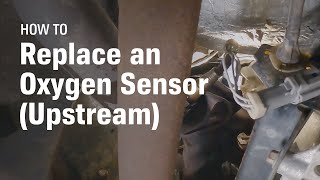
- Required Tools: A special 22mm (or 7/8") oxygen sensor socket with a slit for the wire is essential. You will also need ratchets and extensions. Applying anti-seize compound to the threads of the new sensor is highly recommended. 🎬 See this step-by-step upstream oxygen sensor replacement guide
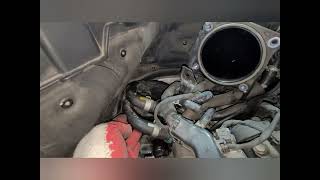
Pro Tip: The upstream sensors on the 3.8L V6 are located on the exhaust manifolds, accessible from the top of the engine bay. 🎬 Watch: Locate the upstream sensors on a 3.8L V6 The Bank 2 (driver side) sensor is generally easier to reach than the Bank 1 (passenger side) sensor.
Frequently Asked Questions (FAQ)
How many oxygen sensors does a 2017-2020 Genesis G80 have?
All G80 models (3.8L, 3.3T, 5.0L) have four oxygen sensors: two upstream (one for each engine bank) and two downstream (one for each engine bank after the catalytic converter).
Can I drive my G80 with a bad oxygen sensor?
Yes, you can drive the car, but it is not recommended for an extended period. You will experience poor fuel economy and performance, and the incorrect fuel mixture can eventually damage the expensive catalytic converters.
What is the difference between an upstream and a downstream oxygen sensor?
Upstream sensors (also called Sensor 1 or air-fuel ratio sensors) are located before the catalytic converter and are used by the ECU to make real-time adjustments to the air-fuel mixture. Downstream sensors (Sensor 2) are located after the catalytic converter and are used only to monitor the converter's efficiency. A bad upstream sensor causes immediate drivability problems, while a bad downstream sensor will typically only turn on the check engine light with a code like P0420 or P0430.
Do I need to replace oxygen sensors in pairs?
No, you only need to replace the sensor that has failed. However, since they have a similar lifespan (often around 100,000 miles), if one fails on a high-mileage vehicle, the other may not be far behind.
Relevant Recalls
While there are no recalls specifically for the oxygen sensors themselves, two recalls for the 2017-2020 G80 are worth noting as they can cause related electrical or contamination issues:
- Starter Solenoid Water Entry (NHTSA Campaign 20V746000): Affects 2015-2016 Genesis and 2017-2020 G80 models. Water can enter the starter solenoid, potentially causing an electrical short and an engine compartment fire. This could theoretically affect sensor-related circuits.
- Turbocharger Oil Pipe Leak (NHTSA Campaign 22V612000): Affects 2018-2020 G80 models with the 3.3L V6 Turbo engine. The left turbocharger oil feed pipe may leak, which could lead to oil contaminating the nearby oxygen sensor or its wiring.
Owners can check the NHTSA website with their VIN to see if their specific vehicle is affected by these or any other recalls.
Helpful Videos

Technical Specifications
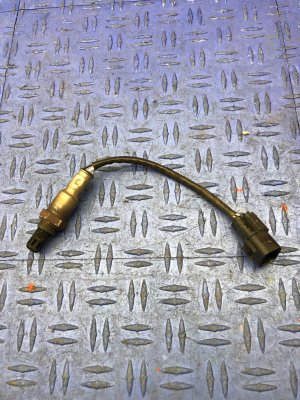
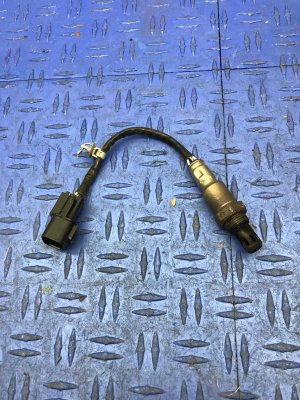
OEM Part Numbers: 39210-3L200 39210-3L210 39210-3L000 39210-3L010
Heated, 4-wire planar or wide-band type sensor. Requires a 22mm (7/8") slotted socket for removal and installation.
We Have This Part in Stock

The information in this article is provided for general reference and educational purposes only. Vehicle specifications, procedures, and part compatibility can vary by production date, trim level, and region. Always consult your vehicle's factory service manual and verify part numbers before purchasing or performing repairs. Safety-critical components such as airbags, seat belts, and braking systems should be installed by a qualified professional.
- Genesis G80:
- 🎬 Helpful Videos
- 🛍️ Shop This Part
- Part Number & Engine Variant Guide
- Known Issues & Diagnostic Clues
- 3.8L V6: Check for Vacuum Leaks Before Replacing Sensors
- 3.3L V6 Turbo: P0030 Heater Circuit Failure
- Symptoms of a Failing Oxygen Sensor
- Buying a Used Oxygen Sensor
- Cost Comparison
- Replacement Guide
- Frequently Asked Questions (FAQ)
- Relevant Recalls
- 🎟️ Get 5% Off