

2015-2017 Ford F-150 Oxygen Sensors: A Guide to Part Numbers, Codes, and Replacement
This guide decodes the four different oxygen sensors used on 2.7L, 3.5L, and 5.0L engines, helping you diagnose failures and buy the correct used part.
- Your F-150 has four oxygen sensors, and part numbers are specific to engine and location (upstream/downstream). You must match the part number exactly.
- If all four heater circuit codes (P0135, P0141, P0155, P0161) appear at once, check Fuse #95 in the under-hood fuse box before replacing any sensors.
- On 2.7L EcoBoost models, persistent upstream O2 sensor codes can be a symptom of a cracked exhaust manifold, not a bad sensor.
- A low-mileage used OEM sensor is often a better choice than a new, cheap aftermarket sensor due to specific factory calibration.
Symptoms of a Failing Oxygen Sensor

A failing oxygen sensor can cause a range of noticeable issues. The most common sign is an illuminated Check Engine Light on your dashboard, but other performance problems may also appear.
- Check Engine Light: This is the most frequent symptom. The truck's computer will store a diagnostic trouble code (DTC) related to the specific sensor that is failing.
- Poor Fuel Economy: When an upstream sensor fails, the engine computer can't properly regulate the air-fuel mixture, often running a rich mixture (too much fuel) which wastes gas.
- Rough Idle or Misfires: An incorrect air-fuel ratio can lead to unstable engine operation, especially at idle.
- Failed Emissions Test: O2 sensors are a primary component of the emissions system. A faulty sensor will almost always result in a failed test.
- Rotten Egg Smell: A very rich fuel mixture can overwhelm the catalytic converter, producing a distinct sulfur or rotten egg smell from the exhaust.
Common Diagnostic Trouble Codes (DTCs)
If your Check Engine Light is on, a code scanner will likely show one of the following codes related to oxygen sensors:
- P0131 / P0151: Low Voltage for Bank 1 Sensor 1 / Bank 2 Sensor 1 (Upstream sensors). This often points to a failing sensor, but can also be caused by an exhaust or vacuum leak.
- P0135 / P0155: Heater Circuit Malfunction for Bank 1 Sensor 1 / Bank 2 Sensor 1 (Upstream).
- P0141 / P0161: Heater Circuit Malfunction for Bank 1 Sensor 2 / Bank 2 Sensor 2 (Downstream).
- P219A: Bank 1 Air-Fuel Ratio Imbalance.
Decoding 2015-2017 F-150 Oxygen Sensor Part Numbers

One of the biggest challenges is buying the correct sensor. The 2015-2017 F-150 uses four sensors, and the part numbers vary by engine and location. Using the wrong sensor, even if it plugs in, can cause persistent Check Engine Lights and performance issues. Always verify the part number on your old sensor before ordering.
Pro Tip: "Bank 1" is always the passenger side of the engine. "Bank 2" is the driver's side. "Sensor 1" is the upstream sensor (before the catalytic converter, closer to the engine). "Sensor 2" is the downstream sensor (after the catalytic converter).
| Engine | Location | OEM Part Number | Motorcraft Service # |
|---|---|---|---|
| 5.0L V8 | Upstream Right (Bank 1, Sensor 1) | FR3Z-9F472-A | DY-1306 |
| 5.0L V8 | Upstream Left (Bank 2, Sensor 1) | FL3Z-9F472-C | DY-1354 |
| 5.0L V8 | Downstream (Left & Right) | FL3Z-9G444-D | DY-1325 |
| 3.5L EcoBoost | Upstream (Left & Right) | FR3Z-9F472-A | DY-1306 |
| 3.5L EcoBoost | Downstream (Left & Right) | FL3Z-9G444-C | DY-1295 |
| 2.7L EcoBoost | Upstream (Left & Right) | FR3Z-9F472-A | DY-1306 |
| 2.7L EcoBoost | Downstream (Left & Right) | FL3Z-9G444-D | DY-1325 |
Note: This table is based on extensive research from Ford parts catalogs. Always double-check the number printed on your specific sensor, as variations can exist.
Known Issues & Advanced Diagnostics


Sometimes, an O2 sensor code doesn't mean the sensor itself is bad. Here are some known issues specific to the 2015-2017 F-150.
All Four Heater Circuit Codes at Once? Check the Fuse!
Warning: If you suddenly get codes for all four oxygen sensor heater circuits (P0135, P0141, P0155, and P0161), it is extremely unlikely that all four sensors failed simultaneously. The most common cause is a single blown fuse.
Before replacing any parts, check Fuse #95 (a 25A fuse) in the under-hood fuse box (Power Distribution Box). This fuse powers the heater elements in all four O2 sensors. A short in one sensor's wiring or the sensor itself can blow this fuse, causing codes for all four. Replacing the fuse is the first and most important diagnostic step.
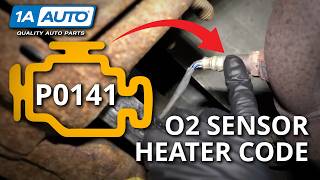
🎬 Watch: Troubleshooting O2 sensor heater circuit codes and malfunctionsPersistent Codes on 2.7L EcoBoost
Owners of the 2.7L EcoBoost engine have reported persistent O2 sensor codes that are not fixed by replacing the sensor. A known, but less common, cause for this is a cracked exhaust manifold. The crack allows fresh, unmetered air into the exhaust stream, which the oxygen sensor reads as a lean condition, triggering a code like P0131 or P0151. If you have replaced a sensor and the code returns, carefully inspect the exhaust manifolds for cracks, especially near the mounting flanges.
🎬 See this 2.7L EcoBoost oxygen sensor replacement walkthroughMelted Wiring Harness
On some trucks, the oxygen sensor wiring harness may have been improperly routed from the factory, allowing it to rest on or too close to the hot exhaust pipe. Over time, this can melt the wiring insulation, causing a short circuit. This often leads to heater circuit codes and a blown Fuse #95. When diagnosing any O2 sensor issue, always trace the wiring from the sensor to the main harness, looking for any signs of melting or damage.
Buying a Used Oxygen Sensor: What to Check
A low-mileage used OEM oxygen sensor can be a reliable and cost-effective alternative to a new aftermarket part. OEM sensors are specifically calibrated for your truck's computer, while some aftermarket sensors can cause compatibility issues. Here’s what to look for:
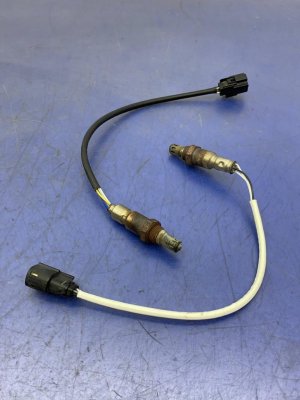
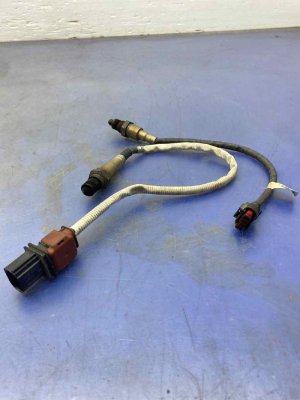
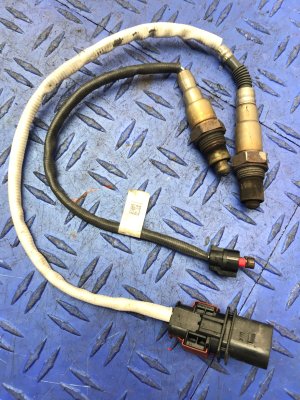
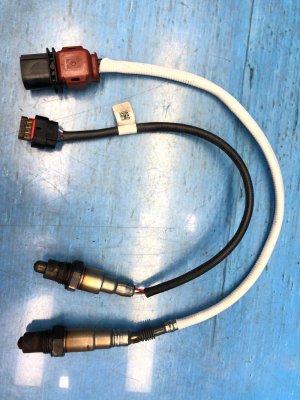
- Verify the Part Number: This is the most critical step. Match the OEM part number (e.g., FL3Z-9G444-D) from your old sensor to the used one. Do not rely on visual similarity alone.
- Inspect the Connector: Check the plastic electrical connector for any cracks, broken locking tabs, or corrosion on the pins. A damaged connector will not provide a reliable signal.
- Examine the Wiring: Look for any cuts, fraying, or signs of melting along the entire length of the wire harness. A damaged wire is an immediate red flag.
- Check the Sensor Tip: The condition of the sensor tip can tell a story. Avoid sensors with heavy, thick white or black deposits, as this can indicate contamination from a poorly running engine (coolant or oil burning). A light gray or tan coating is normal.
- Ask for Mileage: Oxygen sensors are a wear item, typically lasting up to 100,000 miles. A sensor from a low-mileage donor vehicle (under 70,000 miles) is a much safer bet than one from a high-mileage truck.
Replacement Overview & Difficulty
- Difficulty Rating: 2/5 (Upstream can be 3/5)
- Estimated Time: 0.5 - 1.5 hours per sensor
- DIY Feasible: Yes
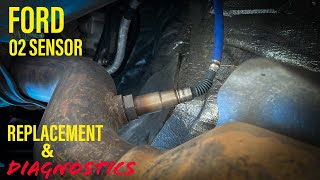
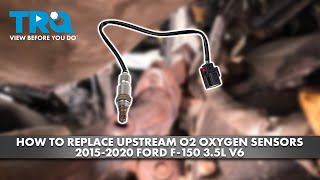
Replacing an oxygen sensor is generally straightforward for a DIY mechanic. The downstream (Sensor 2) locations are typically easy to access. The upstream (Sensor 1) locations can be more challenging due to tighter spaces near the engine and transmission. The biggest hurdle is often the sensor being seized in the exhaust pipe due to rust. Always apply a quality penetrating oil to the threads and let it soak before attempting removal. A special oxygen sensor socket, which has a slot for the wire, is highly recommended to avoid stripping the sensor body. 🎬 Watch: How to replace upstream sensors on a 3.5L F-150 The torque spec for tightening the new sensor is approximately 35 ft-lbs.
Cost Comparison
| Part Source | Estimated Cost (Per Sensor) |
|---|---|
| New OEM (Dealer) | $90 - $275 |
| New Aftermarket | $40 - $180 |
| Used OEM | $25 - $75 |
| Shop Labor | $100 - $150 |
Frequently Asked Questions (FAQ)
How many oxygen sensors does my 2015-2017 F-150 have?
All 2015-2017 F-150s with gasoline engines (2.7L, 3.5L, 5.0L) have four oxygen sensors: two upstream (one on each bank) and two downstream (one on each bank).
What is the difference between an upstream and a downstream oxygen sensor?
Upstream sensors (Sensor 1) are located before the catalytic converter and are the primary sensors used by the engine computer to adjust the air-fuel mixture. Downstream sensors (Sensor 2) are located after the catalytic converter and are used to monitor the converter's efficiency. Upstream sensors are typically more expensive wideband sensors, while downstream are often simpler narrowband sensors.
Can I clean a failing oxygen sensor?
While some people attempt to clean O2 sensors, it is generally not a reliable or long-term fix. The delicate internal sensing element can be damaged by chemicals or brushing, and contamination often penetrates deep into the sensor's ceramic core. Replacement is the only guaranteed solution for a failing sensor.
Do I need to reset the computer after replacing an oxygen sensor?
It is highly recommended. After replacing the sensor, you should clear the diagnostic trouble codes using an OBD-II scanner. This will turn off the Check Engine Light and force the engine computer to immediately start using the readings from the new sensor. If you don't clear the codes, the light may stay on for several drive cycles before turning off on its own.
Helpful Videos

Technical Specifications
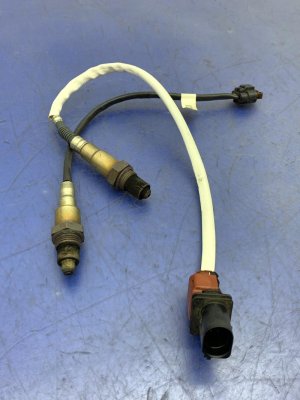
OEM Part Numbers: FL3Z-9G444-D FR3Z-9F472-A FL3Z-9F472-C FL3Z-9G444-C DY-1325 DY-1306 DY-1354 DY-1295
Four sensors total: two upstream (wideband type) and two downstream (narrowband type). Connectors and wire lengths are specific to location and engine.
We Have This Part in Stock


The information in this article is provided for general reference and educational purposes only. Vehicle specifications, procedures, and part compatibility can vary by production date, trim level, and region. Always consult your vehicle's factory service manual and verify part numbers before purchasing or performing repairs. Safety-critical components such as airbags, seat belts, and braking systems should be installed by a qualified professional.
- Ford F-150:
- 🎬 Helpful Videos
- 🛍️ Shop This Part
- Symptoms of a Failing Oxygen Sensor
- Common Diagnostic Trouble Codes (DTCs)
- Decoding 2015-2017 F-150 Oxygen Sensor Part Numbers
- Known Issues & Advanced Diagnostics
- All Four Heater Circuit Codes at Once? Check the Fuse!
- Persistent Codes on 2.7L EcoBoost
- Melted Wiring Harness
- Buying a Used Oxygen Sensor: What to Check
- Replacement Overview & Difficulty
- Cost Comparison
- Frequently Asked Questions (FAQ)
- 🎟️ Get 5% Off