

2013-2016 M5 & 2012-2019 M6 Rear Oxygen Sensor Failure and Diagnosis
A guide to diagnosing and replacing the post-catalyst oxygen sensors in your BMW M5 or M6, including a critical warranty extension you need to know about.
- Check with a BMW dealer about the 10-year/120,000-mile extended warranty (SIB 01 03 19) for rear O2 sensors before paying for a repair.
- The most common sign of failure is a Check Engine Light. Ignoring it can lead to reduced fuel economy and expensive catalytic converter damage.
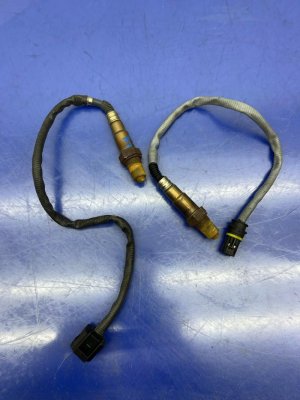
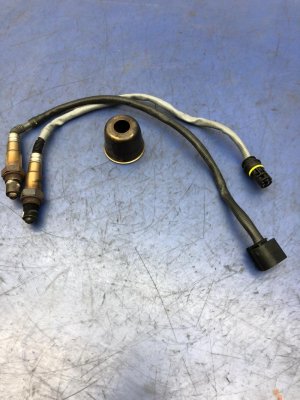
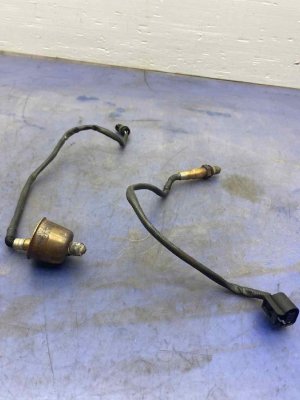
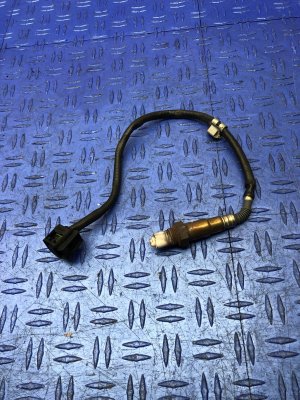
- This part fits both the 2013-2016 M5 and 2012-2019 M6 with the 4.4L V8, and the same sensor (part #11787539137) is used for both the left and right rear positions.
- A new Bosch sensor (the OEM supplier) offers the best value, while a used OEM part is a better choice than a cheap, unbranded aftermarket sensor.
Symptoms of a Failing Rear Oxygen Sensor
When a rear oxygen sensor fails on your 2013-2016 BMW M5 or 2012-2019 BMW M6, your first warning is almost always the check engine light illuminating on your dashboard. Since these sensors monitor emissions, a failure can lead to several noticeable problems:
- Check Engine Light (CEL/MIL): This is the most common symptom. A code scanner will typically show faults related to the sensor's heater circuit or its signal.
- Reduced Fuel Economy: While the rear sensors have less impact on fuel mixture than the front ones, a faulty sensor can still cause the system to run inefficiently, leading to a drop in MPG.
- Rough Idle or Engine Hesitation: In some cases, incorrect data from a failing sensor can contribute to poor engine performance, including a rough idle or hesitation during acceleration.
- Rotten Egg Smell: A strong smell of sulfur or rotten eggs from the exhaust can indicate that the catalytic converter isn't working properly, a problem that a failing O2 sensor can cause or fail to report.
- Failed Emissions Test: A bad rear O2 sensor will prevent your vehicle's emissions system from passing inspection, as it cannot verify that the catalytic converter is functioning correctly.
Warning: Driving with a bad oxygen sensor for an extended period is not recommended. The engine may run rich, potentially damaging the expensive catalytic converters over time.
Known Issues: BMW's Rear Oxygen Sensor Warranty Extension (SIB 01 03 19)
A significant issue for owners is the premature failure of these rear oxygen sensors. In response, BMW of North America issued Service Information Bulletin (SIB) 01 03 19, which extends the warranty for the rear monitoring oxygen sensors.
This warranty extension covers the parts and labor for replacement for 10 years or 120,000 miles from the vehicle's original in-service date, whichever comes first. This is not a recall; it is an extended warranty for a known issue. The repair is only performed if the vehicle is currently experiencing the problem.
The TSB specifically applies to vehicles with the N63T engine and covers fault codes such as:
- 12A101 - oxygen sensor after catalytic converter, system check: signal stationary at rich
- 12A102 - oxygen sensor after catalytic converter, system check: signal stationary at lean
- 12A201 - oxygen sensor after catalytic converter, system check: signal stationary at rich
Pro Tip: The S63 engine in the M5 and M6 is a high-performance variant of the N63 engine family. If your M5 or M6 is within the mileage/age limit and has a check engine light for a rear O2 sensor, you should contact a BMW dealer with your VIN. Mention SIB 01 03 19 to see if your vehicle qualifies for a free repair.
Diagnosing and Replacing the Sensor
Diagnosing a bad rear O2 sensor usually starts with reading the fault codes using an OBD2 scanner. If the codes point to a rear sensor failure, replacement is the typical solution.
Replacement is a feasible DIY job for those with some mechanical experience and the right tools. The sensors are located on the exhaust pipes after the catalytic converters. Access requires safely lifting the vehicle and removing a large aluminum undertray to get to the exhaust system.
Tools Required:
- Jack and jack stands
- Socket set for removing the undertray
- A special 22mm (or 7/8") oxygen sensor socket. This socket has a slot for the wire to pass through.
- Ratchet and possibly a swivel adapter or flexible wrench for better access.
The most challenging part of the job is often breaking the old sensor loose, as it can become seized in the exhaust pipe due to thousands of heat cycles. Applying penetrating oil beforehand can help. The new sensor should be threaded in by hand to avoid cross-threading and then tightened to specification (typically around 35-40 ft-lbs).
Buying a Used Oxygen Sensor
While buying a used oxygen sensor is an option, it comes with risks. As a critical emissions component that degrades over time, a new sensor is often a better investment. However, if you are considering a used OEM sensor to save money over a new dealer part, here’s what to look for:
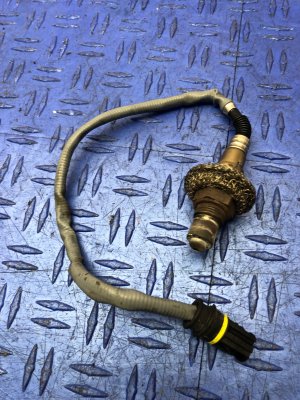
- Verify the Part Number: Ensure the part is a genuine BMW sensor with part number 11787539137.
- Inspect the Connector: Check the electrical connector pins for any signs of corrosion, moisture, or damage. The connector should be clean and dry.
- Check the Wiring: Look for any cuts, fraying, or melted sections on the wire harness. Damage to the wiring is a major red flag.
- Mileage and Source: If possible, choose a sensor from a low-mileage vehicle. A sensor with 30,000 miles has significantly more life left than one with 90,000 miles.
- OEM vs. Aftermarket: A used OEM sensor from a reputable recycler is generally a safer bet than a new, cheap, no-name aftermarket sensor. However, the best value is often a new sensor from Bosch, who is the original equipment manufacturer for BMW.
| Part Type | Estimated Cost |
|---|---|
| New Genuine BMW (OEM) | $225 - $280 |
| New Aftermarket (Bosch - OEM Supplier) | $120 - $150 |
| Used OEM | $35 - $75 |
| Shop Labor for Replacement | $150 - $300 |
Frequently Asked Questions
Do I need to replace both rear oxygen sensors at the same time?
It is not strictly necessary, but it is often recommended. Oxygen sensors degrade over time, so if one has failed due to age, the other may not be far behind. Replacing them in pairs ensures balanced and accurate readings for the emissions system.
Is the rear oxygen sensor the same as the front one?
No. The front (pre-catalyst) sensors are different from the rear (post-catalyst) sensors. They have different part numbers and functions. The front sensors are wideband sensors used for air-fuel ratio control, while the rear sensors are for monitoring catalyst efficiency.
What happens if I don't replace a bad oxygen sensor?
Your vehicle will have an illuminated check engine light, will fail an emissions test, and may experience reduced fuel economy. The most significant risk is long-term damage to the catalytic converters, which are very expensive to replace.
Does my car qualify for the BMW warranty extension?
The warranty extension (SIB 01 03 19) covers the rear sensors for 10 years or 120,000 miles. While it specifically mentions the N63T engine, the S63 in your M5/M6 is closely related. The best way to confirm is to call a BMW dealership with your Vehicle Identification Number (VIN) and ask them to check for eligibility under this service bulletin.
Technical Specifications
OEM Part Numbers: 11787539137 7539137
Position: Rear (Post-Catalyst), Left or Right. Thread Size: M18x1.5. Connector Type: 6-pin.
We Have This Part in Stock


The information in this article is provided for general reference and educational purposes only. Vehicle specifications, procedures, and part compatibility can vary by production date, trim level, and region. Always consult your vehicle's factory service manual and verify part numbers before purchasing or performing repairs. Safety-critical components such as airbags, seat belts, and braking systems should be installed by a qualified professional.
- BMW M5:
- BMW M6: