

Audi 3.0T & 4.2L V8 Oxygen Sensor Guide: 2005-2020 A4, S4, A6, Q7 & More
Diagnosing check engine lights and poor fuel economy by identifying, testing, and replacing the correct upstream or downstream O2 sensor for your specific Audi engine.
- The correct sensor depends entirely on your engine (4.2L V8, 3.0T Supercharged, etc.) and location (upstream/downstream). There is no 'one-size-fits-all'.
- Upstream sensors are critical for fuel control; downstream sensors monitor the catalytic converter. They are not interchangeable.
- Access for replacement is often very tight, especially for upstream sensors, making it a challenging DIY job that requires special tools.
- Driving with a bad O2 sensor will decrease fuel economy and can lead to expensive damage to the catalytic converter.
Common Failure Symptoms
A failing oxygen sensor can cause a range of issues, from annoying to potentially damaging. The most common sign is an illuminated Check Engine Light (CEL) on your dashboard. If the sensor is providing incorrect data, you'll likely notice a significant drop in fuel economy, as the ECU may be injecting more fuel than necessary. Other common symptoms include a rough or unstable idle, engine hesitation or misfires, a noticeable loss of power and slow acceleration, and a rotten egg or sulfur smell from the exhaust. A faulty O2 sensor is also a common reason for failing a state emissions test.
Important: While you can drive with a bad oxygen sensor, it's not recommended for long. An overly rich fuel mixture can overheat and damage your expensive catalytic converter, turning a relatively small repair into a very costly one.
Which Oxygen Sensor Does My Audi Use?
Identifying the correct oxygen sensor is the most critical step. Audi used several engine families across this wide range of vehicles, and the sensors are not interchangeable. They differ by engine, location (upstream/downstream), and cylinder bank (Bank 1/Bank 2). Always verify the part number on your old sensor before ordering a replacement.
Engine Family 1: 4.2L FSI V8
Found in: Early Audi S5 (2008-2012), A6 (approx. 2005-2011), Q7 (approx. 2007-2010), A8.
- Identification: These engines have four oxygen sensors: an upstream and a downstream sensor for each bank. Bank 1 is the passenger side in North America, and Bank 2 is the driver's side.
- Replacement Notes: The upstream sensors are notoriously difficult to access. They are located at the top rear of the engine, deep in the engine bay. Replacement often requires removing the airbox and coolant expansion tank and working by feel with long extensions and a specialized O2 sensor socket. This is a challenging DIY job.
- Common Part Numbers: 07L906262N, 07L906262S, 079906262F.
Engine Family 2: 3.0L TFSI Supercharged V6 ("3.0T")
Found in: Audi S4 (2010-2016), S5 (2013-2017), A6 (2009-2018), A7 (2012-2018), Q5/SQ5 (2013-2017), Q7 (2011-2015).
- Identification: This is one of the most common engines in this group. Like the V8, it uses four sensors. Bank 1 (cylinders 1-2-3) is on the passenger side, and Bank 2 (cylinders 4-5-6) is on the driver's side.
- Replacement Notes: The downstream (post-catalyst) sensors are accessible from underneath the car with long extensions. The upstream (pre-catalyst) sensors are more difficult, located on the top of the catalytic converters, deep in the engine bay. The passenger side may require removing the air intake for access.
- Common Part Numbers: 06E906265AJ (Upstream), 06E906262E (Downstream).
Engine Family 3: 2.9L / 3.0L TFSI Turbocharged V6 (B9 Platform)
Found in: Later model Audi S4 (2018+), S5 (2018+), SQ5 (2018+), RS5 (2018+).
- Identification: These modern turbocharged engines also use a four-sensor setup.
- Replacement Notes: Access is similar to the supercharged V6, though component layout differs. Over-torquing these sensors during installation can damage them internally, so using a torque wrench is highly recommended.
- Common Part Numbers: 06M906265 (Upstream), 8W0906265 (Downstream).
Engine Family 4: 3.2L FSI V6
Found in: Early Audi A4/A5 (2008-2010), A6 (2005-2010), Q5 (2009-2012).
- Identification: A naturally aspirated predecessor to the 3.0T, this engine also uses four sensors.
- Replacement Notes: Access is generally similar to the 4.2L V8 and 3.0T engines, with the upstream sensors being tight to reach from the top of the engine bay.
- Common Part Numbers: 06E906265S (Upstream).
Buying a Used Oxygen Sensor: What to Look For
While oxygen sensors are wear items, a low-mileage used OEM sensor can be a smart value compared to a new aftermarket part. For sensitive electronics like these, a used genuine part from Bosch (the original equipment manufacturer for Audi) is often more reliable than a cheap new alternative.
- Part Number is Everything: Match the OEM part number from your old sensor exactly. A sensor from a 4.2L V8 will not work correctly on a 3.0T V6, even if it physically threads in.
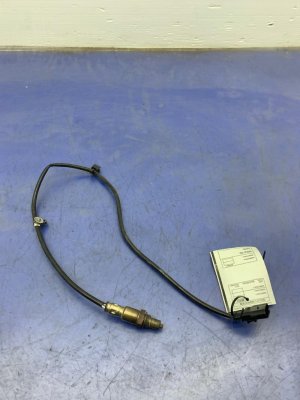
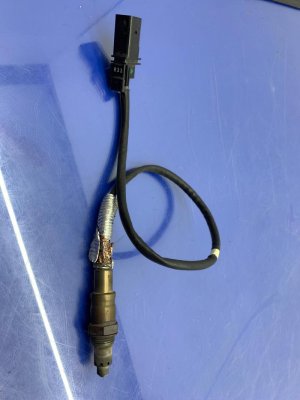
- Physical Inspection: Before buying, inspect the sensor tip. A light gray or tan coating is normal. Avoid sensors with heavy, black, sooty deposits (ran in a rich engine), a white, chalky coating (coolant contamination), or an oily sheen (oil contamination). These contaminants can permanently damage the sensor.
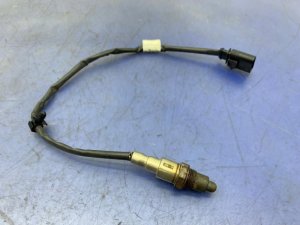
- Connector and Wires: Check that the electrical connector and the wires leading to it are free of damage, cuts, or melting. A damaged wire harness is a common failure point, especially on sensors that have been removed carelessly.
- Mileage and Source: Ask for the mileage of the donor vehicle. A sensor from a 50,000-mile vehicle is a much better bet than one from a 150,000-mile vehicle. Purchase from a reputable recycler that offers a warranty.
Pro Tip: The color of the deposits on your old sensor can help diagnose other engine problems. A white, crusty sensor might mean you have a coolant leak, while a black, oily sensor points to piston ring or valve seal issues.
Step-by-Step Replacement Guide (General)
While the exact procedure varies by engine, the basic steps are the same. This is a moderately difficult job due to tight access.
- Safety First: Ensure the engine is completely cool. The exhaust components get extremely hot. Disconnect the negative battery terminal.
- Locate the Sensor: Identify the correct sensor (Bank 1/2, Upstream/Downstream) for the code you have.
- Access and Disconnect: You may need to remove engine covers, the air intake box, or the coolant expansion tank to gain access. Trace the wire from the sensor to its electrical connector and unplug it.
- Remove the Old Sensor: Spray the base of the sensor with a quality penetrating oil and let it soak. These sensors are often seized in the exhaust pipe. Use a special O2 sensor socket (which has a slot for the wire) and a long-handled ratchet or breaker bar to break it loose.
- Install the New Sensor: Most new and good used sensors come with anti-seize compound on the threads. If not, apply a small amount to the threads only, avoiding the sensor tip. Thread the new sensor in by hand to avoid cross-threading, then tighten it to the manufacturer's specified torque (typically around 35-40 ft-lbs).
- Reconnect and Reassemble: Plug in the electrical connector, secure the wiring away from hot exhaust parts, and reinstall any components you removed. Reconnect the battery.
- Clear Codes: Use an OBD-II scanner to clear the fault codes from the ECU.
Cost of Replacing an Audi Oxygen Sensor
Prices can vary significantly based on which of the four sensors has failed and the engine type, as labor times differ.
| Item | Estimated Cost |
|---|---|
| New OEM (Genuine Audi) | $250 - $450 per sensor |
| New Aftermarket (Bosch, NTK/NGK) | $75 - $200 per sensor |
| Used OEM | $40 - $100 per sensor |
| Shop Labor | $100 - $250 per sensor |
Prices are estimates and can vary by location and vehicle model. Labor costs are higher for the more difficult-to-access upstream sensors.
Frequently Asked Questions (FAQ)
What's the difference between an upstream and downstream sensor?
The upstream sensor (also called Sensor 1 or pre-catalytic) is for fuel control. The downstream sensor (Sensor 2 or post-catalytic) is to check if the catalytic converter is working. They have different functions and part numbers and are not interchangeable.
What are Bank 1 and Bank 2?
On a V-engine like Audi's V6 and V8, "Bank 1" refers to the cylinder bank that contains cylinder #1. In North American Audis, this is the passenger side. "Bank 2" is the opposite bank, the driver's side.
Can I just clean my old oxygen sensor?
While some online sources suggest cleaning, it is generally not an effective or long-lasting solution. The internal sensing elements wear out or get contaminated in ways that cleaning the exterior cannot fix. Replacement is the only reliable repair.
Why should I use a Bosch/OEM sensor instead of a cheaper one?
Audi's engine management systems are precisely calibrated for the voltage readings and response times of the OEM Bosch sensors. Cheaper aftermarket sensors may not respond as quickly or accurately, leading to persistent check engine lights, poor performance, and incorrect fuel trims, even after replacement. A good used OEM sensor is often a better choice than a new, no-name part.
Technical Specifications
OEM Part Numbers: 06E906265AA 06E906265AJ 06E906265F 06E906265S 06M906265 07L906262 07L906262H 07L906262J 07L906262L 07L906262N 07L906262R 07L906262S 4H0-906-262-P 4M0-906-265-F 8T0-907-568B 8W0906265
Most upstream sensors are 5-wire wideband types. Downstream sensors are typically 4-wire narrowband types. Connectors and wire lengths are specific to the application.
We Have This Part in Stock



The information in this article is provided for general reference and educational purposes only. Vehicle specifications, procedures, and part compatibility can vary by production date, trim level, and region. Always consult your vehicle's factory service manual and verify part numbers before purchasing or performing repairs. Safety-critical components such as airbags, seat belts, and braking systems should be installed by a qualified professional.
- Audi S5:
- Audi S4:
- Audi SQ5:
- Audi A6:
- Audi Q5:
- Audi A7:
- Audi RS5:
- Audi A4:
- Audi A8:
- Audi Q7:
- Audi A5:
- Audi A6 Quattro:
- Audi Q8:
- Porsche Cayenne:
- Audi A4 Quattro:
- Audi A5 Quattro:
- Audi A7 Quattro:
- Audi A8 Quattro:
- Audi allroad:
- Audi R8:
- Lamborghini Urus:
- Porsche Macan:
- Porsche Panamera:
- 🛍️ Shop This Part
- Common Failure Symptoms
- Which Oxygen Sensor Does My Audi Use?
- Engine Family 1: 4.2L FSI V8
- Engine Family 2: 3.0L TFSI Supercharged V6 ("3.0T")
- Engine Family 3: 2.9L / 3.0L TFSI Turbocharged V6 (B9 Platform)
- Engine Family 4: 3.2L FSI V6
- Buying a Used Oxygen Sensor: What to Look For
- Step-by-Step Replacement Guide (General)
- Cost of Replacing an Audi Oxygen Sensor
- Frequently Asked Questions (FAQ)
- 🎟️ Get 5% Off