

Audi & Porsche 3.0T/2.9T Oxygen Sensor Failure: 2016-2026 Q7, Q8, A6, A7, Cayenne & More
Diagnosing common oxygen sensor issues, fault codes, and replacement challenges on modern Audi and Porsche V6 engines.
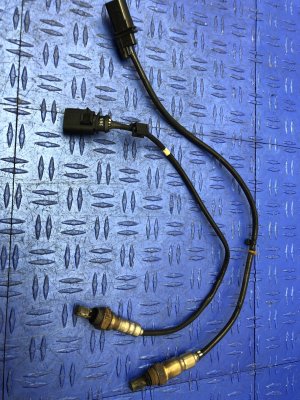
- These vehicles use four O2 sensors; upstream (air/fuel) and downstream (monitoring) sensors are not interchangeable.
- Bank 1 is the passenger side, Bank 2 is the driver side. Matching the location to the fault code is critical.
- Ignoring a bad O2 sensor can lead to costly catalytic converter damage.
- A quality used OEM sensor is often a better choice than a cheap new aftermarket sensor for these sensitive engines.
Symptoms of a Failing Oxygen Sensor


A failing oxygen sensor can cause a range of issues, from subtle annoyances to serious performance problems. Here are the most common signs that one or more of your O2 sensors may be faulty:
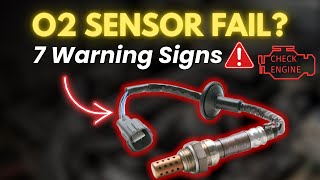
🎬 Watch this overview of common bad oxygen sensor symptoms- Check Engine Light: This is the most common symptom. The light will illuminate when the ECU detects a problem with the sensor's signal or its internal heater circuit.
- Increased Fuel Consumption: If an upstream sensor fails, the ECU may default to a rich fuel mixture to be safe, causing a noticeable drop in gas mileage. Replacing a faulty sensor can improve fuel economy significantly.
- Rough Idle and Engine Misfires: An incorrect air-fuel ratio can lead to unstable combustion, causing the engine to idle roughly, shake, or misfire. You might feel this as a vibration or stumbling at a stop.
- Sluggish Acceleration and Poor Performance: Your vehicle may feel hesitant or weak when you press the gas pedal. This happens because the ECU can't properly adjust the fuel mixture for optimal power.
- Failed Emissions Test: A bad O2 sensor is a common reason for failing a state emissions inspection, as it directly impacts the vehicle's exhaust output.
- Rotten Egg Smell: An overly rich fuel mixture can cause unburned fuel to enter the exhaust, sometimes resulting in a sulfur or "rotten egg" smell from the tailpipe.
Common Diagnostic Trouble Codes (DTCs)
If your Check Engine Light is on, a code scanner will likely show one of these common O2 sensor-related codes:
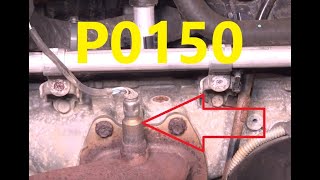
- P0130 / P0150: O2 Sensor Circuit Malfunction (Bank 1 Sensor 1 / Bank 2 Sensor 1). This indicates a problem with the upstream sensor circuit.
- P0135 / P0155: O2 Sensor Heater Circuit Malfunction (Bank 1 Sensor 1 / Bank 2 Sensor 1). A common failure point where the internal heater that brings the sensor to operating temperature stops working.
- P0420 / P0430: Catalyst System Efficiency Below Threshold (Bank 1 / Bank 2). While this code points to the catalytic converter, it can often be triggered by a faulty downstream O2 sensor giving inaccurate readings.
Understanding Sensor Locations: Bank 1 vs. Bank 2

These V6 engines have two banks of cylinders and two sets of oxygen sensors. Understanding the terminology is key to replacing the correct part.
🎬 See a video explaining sensor locations, bank numbers, and stream types- Bank 1: This is the cylinder bank that contains cylinder #1. On these Audi and Porsche models, Bank 1 is on the passenger side of the engine.
- Bank 2: This is the opposite bank, located on the driver's side of the engine.
- Sensor 1: This is the upstream sensor, located in the exhaust manifold or downpipe before the catalytic converter. It is the primary sensor for air-fuel ratio control.
- Sensor 2: This is the downstream sensor, located after the catalytic converter. Its job is to monitor the converter's efficiency.
Pro Tip: A code like "P0150 Bank 2 Sensor 1" means the problem is with the upstream (Sensor 1) oxygen sensor on the driver's side (Bank 2) of the engine.
Known Issues & TSBs

While widespread recalls for oxygen sensors on these specific models are not common, some related issues and service bulletins exist. For example, on some 4.0L engines, Audi issued a TSB (2053268/5) for lean codes (P209600, P209800) where the fix was to replace the rear O2 sensor, even though diagnostics might point to the front one, due to internal contamination. It's also noted that on some earlier supercharged 3.0T engines, oil leaks from the oil filter housing gasket could drip onto and damage the oxygen sensor wiring, causing premature failure. While the engines in the listed vehicles are a newer generation (turbocharged EA839), checking for oil or coolant leaks around the sensors is always a good diagnostic step.
Buying a Used Oxygen Sensor
While O2 sensors are wear items, a low-mileage used OEM sensor can be a reliable and cost-effective alternative to a new aftermarket part, which may not meet the precise calibration needs of these high-performance engines. Here’s what to check:
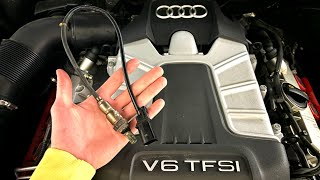
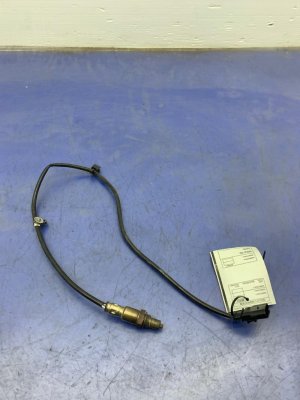
- Verify the Part Number: This is the most critical step. Upstream, downstream, Bank 1, and Bank 2 sensors are NOT interchangeable. Match the OEM part number from your old sensor exactly. Common OEM part numbers for these vehicles include 4M0906265F and 4M8906265H.
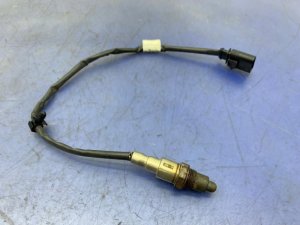
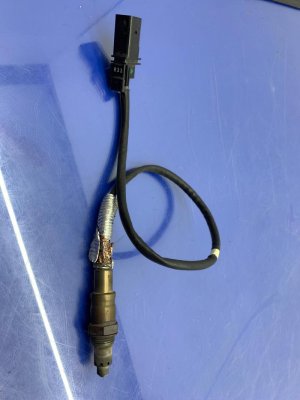
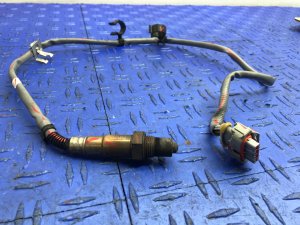
- Physical Inspection: Examine the sensor for any physical damage. Look for a bent or crushed sensor tip, damaged threads, or cracks in the ceramic insulator.
- Check the Wires and Connector: The wiring harness should be intact with no cuts, fraying, or signs of melting. The connector pins should be clean and free of corrosion. Avoid any sensor with a damaged connector.
- Inspect the Sensor Tip: The condition of the tip can tell a story. A light gray or tan coating is normal. Heavy, black, oily soot can indicate the donor car was running rich. A white, ashy deposit could mean it was burning oil or coolant. Avoid sensors with heavy or unusual deposits.
- Ask About Mileage: If possible, choose a sensor from a lower-mileage vehicle. While they can last over 100,000 miles, a sensor with 30,000 miles is a much safer bet than one with 130,000.
Replacement Overview & Difficulty

Replacing an oxygen sensor on these vehicles can range from straightforward to challenging, depending on its location.
- Difficulty Rating: 2-4 out of 5.
- Upstream Sensors (Sensor 1): These are often the most difficult to access. They are tucked high up on the exhaust, near the engine block. On some models, you may need to remove the coolant expansion tank or other components to gain access. The space is tight, and getting leverage can be difficult. 🎬 Watch a step-by-step video on replacing an upstream O2 sensor on Audi models
- Downstream Sensors (Sensor 2): These are generally easier to replace. They are located under the vehicle, after the catalytic converters, and are usually more exposed. You will need to safely lift the vehicle to access them.
Required Tools:
- A special 22mm (or 7/8") Oxygen Sensor Socket. This socket has a slot cut into the side to accommodate the sensor's wire. An offset version can be very helpful for tight spaces.
- Ratchet and various extensions.
- Penetrating oil (to help loosen a stuck sensor).
- Anti-seize compound (for the new sensor's threads, though most new and some used ones come with it pre-applied).
- Torque wrench.
Warning: Always let the exhaust system cool down completely before attempting to replace an O2 sensor. The exhaust components get extremely hot and can cause severe burns.
Cost to Replace an Oxygen Sensor
The cost can vary significantly based on the sensor's position and whether you do the work yourself or go to a shop. Upstream (A/F) sensors are typically more expensive than downstream sensors.
| Item | Estimated Cost |
|---|---|
| New OEM Sensor (Dealer) | $250 - $450+ per sensor |
| New Aftermarket Sensor (Bosch, NTK) | $80 - $200 per sensor |
| Used OEM Sensor | $40 - $100 per sensor |
| Shop Labor Cost | $130 - $250 per sensor |
| Total Professional Replacement (1 Sensor) | $400 - $1,100+ |
Frequently Asked Questions (FAQ)
How many oxygen sensors do these vehicles have?
Most V6 models covered in this guide have four oxygen sensors: two upstream (Bank 1 and Bank 2) and two downstream (Bank 1 and Bank 2).
Can I clean a faulty oxygen sensor?
Generally, no. While some online sources suggest cleaning, it's rarely a permanent or effective fix. The delicate internal components of the sensor are what fail, and no amount of cleaning can repair them. Replacement is the only reliable solution.
What happens if I ignore a bad oxygen sensor?
Driving with a bad O2 sensor can lead to poor fuel economy, failed emissions tests, and sluggish performance. In the long term, a consistently rich fuel mixture can overheat and damage the catalytic converter, turning a relatively inexpensive sensor replacement into a very costly repair.
Do I need to reset the ECU after replacing the sensor?
After replacing the faulty sensor, the Check Engine Light should turn off on its own after a few drive cycles. However, it is best practice to use an OBD-II scanner to clear the diagnostic trouble codes after the repair is complete.
Is a cheap aftermarket sensor okay for my Audi or Porsche?
While tempting, ultra-cheap, no-name aftermarket sensors are not recommended for these vehicles. The engine management systems are highly sophisticated and calibrated for the specific response of OEM sensors (often made by Bosch or NTK). A cheap sensor may clear the code initially but can cause subtle performance issues, poor fuel economy, or fail prematurely. A quality used OEM sensor is often a better choice than a new, cheap aftermarket one.
Helpful Videos
Technical Specifications
OEM Part Numbers: 06M906265 0P2906265AE 4H0906262P 4M0906265F 4M8906265H 4K0907807E
Socket Size: 22mm (7/8 inch)
We Have This Part in Stock


The information in this article is provided for general reference and educational purposes only. Vehicle specifications, procedures, and part compatibility can vary by production date, trim level, and region. Always consult your vehicle's factory service manual and verify part numbers before purchasing or performing repairs. Safety-critical components such as airbags, seat belts, and braking systems should be installed by a qualified professional.
- Audi Q8:
- Audi Q7:
- Audi A7:
- Audi A6:
- Audi SQ5:
- Audi S4:
- Audi S5:
- Porsche Cayenne:
- Audi A8:
- Audi RS Q8:
- Audi A6 Quattro:
- Audi A8 Quattro:
- Audi RS5:
- Audi SQ8:
- Lamborghini Urus:
- Porsche Panamera:
- Audi A7 Quattro:
- Audi SQ5 Sportback:
- Bentley Bentayga:
- 🎬 Helpful Videos
- 🛍️ Shop This Part
- Symptoms of a Failing Oxygen Sensor
- Common Diagnostic Trouble Codes (DTCs)
- Understanding Sensor Locations: Bank 1 vs. Bank 2
- Known Issues & TSBs
- Buying a Used Oxygen Sensor
- Replacement Overview & Difficulty
- Required Tools:
- Cost to Replace an Oxygen Sensor
- Frequently Asked Questions (FAQ)
- 🎟️ Get 5% Off