

2015-2018 Audi Q5 & Porsche Macan Oxygen Sensor Failure: Codes, Costs, and Replacement
A complete guide to diagnosing and replacing the oxygen sensors on your 2.0T Audi Q5 or Porsche Macan to fix poor fuel economy, check engine lights, and rough running.
- A failing oxygen sensor will trigger a Check Engine Light and cause poor fuel economy, rough running, and failed emissions tests.
- For the 2.0T engine, the Audi Q5 and Porsche Macan use the same sensors, but Porsche-branded parts are significantly more expensive. Buying the Bosch (OEM supplier) part offers the best value.
- The most common failures are the sensor itself or its internal heater circuit, identified by codes like P0131, P0135, or P0137.
- Replacement is a manageable DIY task (Difficulty 3/5), but requires a special 22mm oxygen sensor socket and penetrating oil, as the sensor is often seized in the exhaust.
Symptoms of a Failing Oxygen Sensor
A failing oxygen sensor can cause a variety of symptoms, ranging from a simple warning light to noticeable performance problems. The most common sign is an illuminated Check Engine Light on your dashboard. If you scan the vehicle's computer, you will likely find specific trouble codes related to the sensor's performance or its internal heater circuit.
- Reduced Fuel Economy: One of the first things you might notice is needing to fill up your gas tank more often. A bad sensor provides incorrect data to the engine computer, causing it to use more fuel than necessary.
- Rough Idle and Poor Performance: You may experience a shaky or unstable idle, engine hesitation, misfires, or a general lack of power, especially during acceleration. This happens because the air-fuel ratio is not being properly regulated.
- Failed Emissions Test: A faulty oxygen sensor is a very common reason for failing a state-mandated emissions test. The sensor's primary role is to help control emissions, so a failure directly impacts this function.
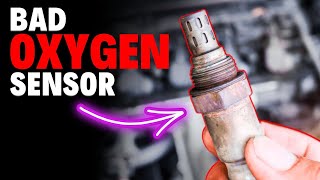
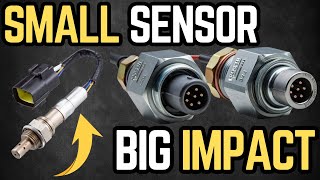
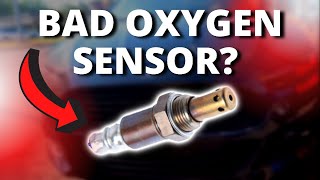
- "Rotten Egg" Smell: In some cases, a strong sulfur or "rotten egg" smell from the exhaust can indicate a problem. This smell is often a sign that the catalytic converter is being damaged by an incorrect fuel mixture, which can be caused by a bad oxygen sensor. 🎬 Watch: Learn more about bad oxygen sensor symptoms
Common Diagnostic Trouble Codes (DTCs)
Using an OBD-II scanner can reveal specific codes that point to an oxygen sensor issue. These vehicles most commonly use the 2.0L 4-cylinder engine, which has one upstream and one downstream sensor. V6 models have four sensors (two upstream, two downstream).
| Code | Meaning | Common Cause |
|---|---|---|
| P0131, P0132 | O2 Sensor Circuit Low/High Voltage (Bank 1, Sensor 1) | Indicates a problem with the upstream sensor signal. Often caused by a failed sensor, but can also point to a rich/lean running condition. |
| P0137, P0139 | O2 Sensor Circuit Low Voltage / Slow Response (Bank 1, Sensor 2) | Points to a failing downstream sensor. Slow response is a classic sign of an aged or contaminated sensor. |
| P0135, P0031 | O2 Sensor Heater Circuit Malfunction (Bank 1, Sensor 1) | A very common failure. The sensor's internal heater has failed, preventing it from warming up quickly. This almost always requires sensor replacement. |
| P0141 | O2 Sensor Heater Circuit Malfunction (Bank 1, Sensor 2) | The same heater failure, but for the downstream sensor. |
| P0420 | Catalyst System Efficiency Below Threshold (Bank 1) | While this code often means a bad catalytic converter, it can also be triggered by a faulty downstream O2 sensor that is providing incorrect readings. It's wise to diagnose the sensor before replacing the expensive converter. |
Buying a Used Oxygen Sensor: What to Check
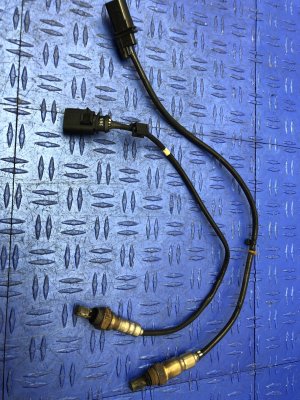
While oxygen sensors are considered a wear-and-tear item, a low-mileage used OEM sensor can be a smart purchase, offering factory performance for a fraction of the price of a new dealer part. It is often a safer bet than a cheap, unbranded new aftermarket sensor which may not have the correct calibration for your vehicle's sensitive ECU.
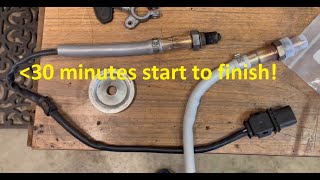
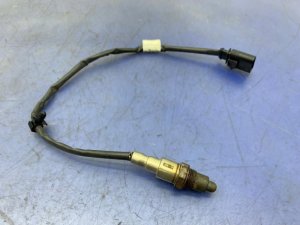
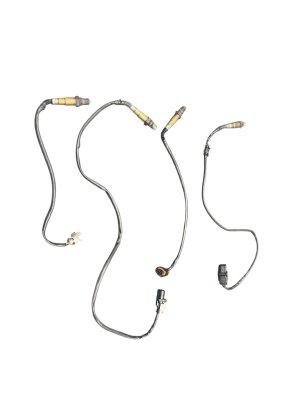
- Verify the Part Number: This is the most critical step. The part number is stamped on the sensor's metal body or printed on the plastic connector. For the 2.0T engine, you are looking for specific numbers for the upstream vs. downstream position. 🎬 See this step-by-step upstream sensor replacement guide Do not rely on visual appearance alone.
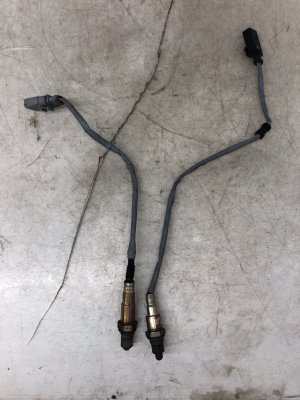
- Physical Inspection: Examine the sensor tip. A light grey or tan powdery coating is normal. Avoid sensors with heavy, black, oily soot, as this may indicate it came from an engine with serious problems like high oil consumption. Check that the ceramic insulator is not cracked and that the protective metal cage is not damaged.
- Wiring and Connector: Inspect the full length of the wire for any cuts, melting, or fraying. Ensure the plastic connector is not cracked or broken and that the pins inside are clean and free of corrosion.
- Mileage is Key: The typical lifespan of an O2 sensor is 60,000 to 100,000 miles. A used sensor from a vehicle with 50,000 miles or less represents excellent value. Avoid sensors from high-mileage vehicles, as their remaining service life is questionable.
Known Issues and Vehicle Differences
For the 2015-2017 Audi Q5 and 2017-2018 Porsche Macan with the 2.0T gasoline engine, there are no widespread recalls or technical service bulletins (TSBs) for premature oxygen sensor failure. The primary issues are standard wear-and-tear failures and part number confusion.
- Platform Sharing: These vehicles are built on the same Volkswagen Group MLB platform and share the same 2.0T engine and exhaust components. The replacement procedure, sensor locations, and failure symptoms are identical for both models.
- The "Porsche Tax": While the parts are functionally identical, be aware that the same sensor in a Porsche-branded box can cost significantly more than the Audi or Bosch-branded equivalent. Since Bosch is the original equipment manufacturer (OEM), buying the Bosch part is the most cost-effective way to get OEM quality.
- TDI Diesel Models: Note that 2014-2016 Audi Q5 TDI (diesel) models were subject to an emissions service action (23Z8) that involved relocating the oxygen sensor to prevent soot buildup. This does not apply to the gasoline models covered in this guide.
Cost of Oxygen Sensor Replacement
The cost can vary significantly based on which sensor has failed (upstream sensors are more expensive) and whether you buy OEM, aftermarket, or used parts.
Pro Tip: The upstream sensor is a more complex wideband air-fuel ratio sensor, which is why it costs significantly more than the simpler downstream sensor.
| Part Type | Estimated Cost (Per Sensor) | Notes |
|---|---|---|
| New OEM (Porsche Dealer) | $350 - $520 (Upstream) $150 - $380 (Downstream) |
The most expensive option. The upstream sensor (PAC-906-262-A) has a very high MSRP. |
| New OEM (Audi Dealer) | $110 - $170 (Upstream) $100 - $200 (Downstream) |
More reasonably priced for the same essential part. |
| New Aftermarket (Bosch, NTK, Denso) | $90 - $210 (Upstream) $55 - $150 (Downstream) |
Excellent value, as brands like Bosch are the original manufacturer. |
| Used OEM | $30 - $75 | A cost-effective option if sourced from a low-mileage vehicle. |
| Shop Labor | $100 - $250 | Typically 0.5 to 1.5 hours of labor per sensor. Dealer rates will be higher. |
Replacement Difficulty: 3/5
Replacing an oxygen sensor is a feasible DIY job for someone with moderate mechanical experience. Access can be tight, and the sensors are often seized in the exhaust pipe, which can make removal difficult.
- Estimated Time: 0.5 - 1.5 hours per sensor.
- Essential Tools:
- A specialized 22mm (or 7/8") slotted oxygen sensor socket is crucial for removal and installation.
- Ratchet with various extensions.
- High-quality penetrating oil (like PB Blaster or Kroil).
- Torque wrench.
- Anti-seize compound (often included with new sensors 🎬 Watch: Tips for removing stubborn hot vs cold sensors).
Warning: Always work on a cold exhaust system to prevent severe burns. Sensors can be extremely difficult to remove. Liberally apply penetrating oil to the threads and let it soak for several hours or even overnight before attempting removal. In severe cases, a torch may be needed to heat the exhaust pipe bung to break the sensor free.
General Replacement Steps
- Safely lift and support the vehicle on jack stands if accessing from below.
- Locate the faulty sensor. The upstream sensor is on the exhaust manifold or turbo downpipe before the catalytic converter. The downstream sensor is located after the catalytic converter.
- Follow the wire from the sensor to its electrical connector. Carefully disconnect it, taking care not to break the locking tab.
- Fit the O2 sensor socket over the sensor and use a long ratchet or breaker bar to break it loose.
- Apply a small amount of anti-seize compound to the threads of the new sensor, being careful not to get any on the sensor tip.
- Thread the new sensor in by hand to avoid cross-threading, then tighten to the manufacturer's specified torque (typically around 35-40 ft-lbs).
- Reconnect the electrical connector and clear the trouble codes with a scan tool.
Frequently Asked Questions (FAQ)
How many oxygen sensors does my 2.0T Q5 or Macan have?
The 2.0L 4-cylinder turbocharged engine has two oxygen sensors: one upstream (before the catalytic converter) and one downstream (after the catalytic converter). V6 models have four sensors in total (two upstream and two downstream).
What is the difference between an upstream and downstream sensor?
The upstream sensor (also called Sensor 1 or an Air-Fuel Ratio Sensor) is the primary sensor used by the computer to control the engine's air-fuel mixture. The downstream sensor (Sensor 2) is used mainly to monitor the efficiency of the catalytic converter.
Can I clean an oxygen sensor instead of replacing it?
While some people attempt to clean sensors, it is generally not a reliable or long-term solution. The internal sensing element degrades over time and cannot be restored by cleaning the exterior. Given the labor involved in removal, replacement with a new or low-mileage used part is the recommended repair.
Do I need to reset the computer after replacing the sensor?
Yes, after replacing the sensor, you should use an OBD-II scan tool to clear the stored fault codes from the engine computer. This will turn off the check engine light and allow the system to re-adapt to the new, functioning sensor.
Helpful Videos
Technical Specifications
OEM Part Numbers: 06L906265B 06L906262D 8K0906262G 95890626200 PAC-906-262-A PAC906262A
For 2.0T Engine: Upstream Sensor (Air/Fuel Ratio, Wideband), Downstream Sensor (Switching Type). Thread Size: M18x1.5. Connector: Vehicle-specific, typically 5 or 6-pin for upstream, 4-pin for downstream.
We Have This Part in Stock


The information in this article is provided for general reference and educational purposes only. Vehicle specifications, procedures, and part compatibility can vary by production date, trim level, and region. Always consult your vehicle's factory service manual and verify part numbers before purchasing or performing repairs. Safety-critical components such as airbags, seat belts, and braking systems should be installed by a qualified professional.
- AUDI Q5:
- Porsche Macan:
- 🎬 Helpful Videos
- 🛍️ Shop This Part
- Symptoms of a Failing Oxygen Sensor
- Common Diagnostic Trouble Codes (DTCs)
- Buying a Used Oxygen Sensor: What to Check
- Known Issues and Vehicle Differences
- Cost of Oxygen Sensor Replacement
- Replacement Difficulty: 3/5
- General Replacement Steps
- Frequently Asked Questions (FAQ)
- 🎟️ Get 5% Off